
After Fuel Price Hike, Pakistan Introduces ‘Gobar Tax’ In Punjab
Days after sharply raising petrol and diesel prices amid the escalating Iran war, Pakistan has rolled out a controversial ‘gobar tax’ in Punjab, fuelling debate over rising public burden and deepening fiscal stress.
- World News
- 3 min read

;'%3e%3cpath%20d='m8,15.99c4.41,0,7.99-3.58,7.99-7.99S12.41,0,8,0,0,3.59,0,8s3.58,7.99,7.99,7.99Z'%20style='stroke:%23fff;%20stroke-miterlimit:10;%20stroke-width:.02px;'/%3e%3cpath%20d='m3.08,3.37l3.82,5.11-3.84,4.15h.87l3.37-3.64,2.72,3.64h2.94l-4.04-5.39,3.58-3.87h-.86l-3.1,3.35-2.5-3.35h-2.94Zm1.27.64h1.35l5.97,7.99h-1.35l-5.97-7.99Z'%20style='fill:%23fff;'/%3e%3c/g%3e%3c/svg%3e)


Even as Pakistan grapples with mounting economic distress and regional instability linked to the escalating Iran war, a new policy in Punjab has drawn attention and criticism for “fiscal desperation”.
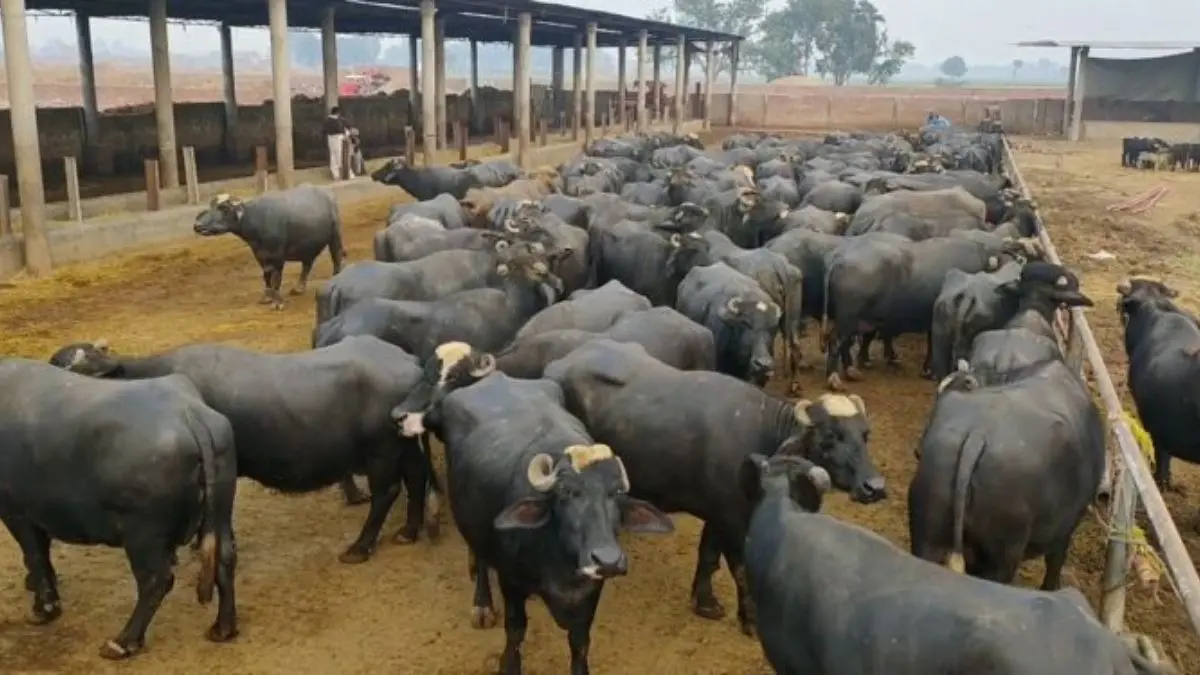
The provincial government in Punjab has introduced a daily “gobar tax” of PKR 30 per cow or buffalo under its “Suthra Punjab” (Clean Punjab) initiative. Officially, however, it has been insisted that the levy is a service fee aimed at waste management and renewable energy generation, rather than a conventional tax.
The move comes at a time when Pakistan hiked fuel prices as Iran war apparently sees no end. It’s the second increase in less than a month, amid rising global oil prices spurred by the conflict in the Middle East. The price of diesel would be raised by 54.9% to 520.35 rupees ($1.88) per litre, and petrol by 42.7% to 458.40 rupees per litre. "It was inevitable to raise the prices due to the international market prices going out of control after the US-Iran war," Pakistan's petroleum minister, Ali Pervaiz Malik, had said. Last month, the nation raised consumer prices for diesel and petrol by about 20%, citing higher oil prices driven by the US-Israeli war on Iran.
What is ‘Gobar Tax’?
Under the pilot phase, authorities are targeting 168 cattle colonies, beginning with areas like Harbanspura and Gujjarpura in Lahore. The fee will fund the daily collection and processing of animal waste.
Advertisement
The programme has reportedly been designed to convert dung into biogas for cooking and electricity, while also producing organic fertiliser as a sustainable alternative for farmers.
This is part of a “waste-to-value” model, officially.
Advertisement
Pakistan’s economy is under intense pressure, with signals of a deepening fiscal crisis amid global energy shocks and disrupted trade routes linked to tensions in West Asia.
The situation has been exacerbated by fears of supply chain disruptions in key maritime corridors, as Iran signals potential escalation beyond the Strait of Hormuz to other strategic routes. Any sustained disruption could sharply increase fuel and commodity costs for import-dependent economies like Pakistan.
The introduction of micro-levies such as the gobar tax reflects the government’s struggle to widen its revenue base.
Pakistan has been walking a tightrope, balancing domestic economic reforms with external pressures, including rising import bills and currency volatility. The added strain of a potential regional conflict involving Iran could further squeeze public finances.
As geopolitical tensions simmer and fiscal pressures mount, policies such as gobar tax, rising fuel prices are likely to remain under scrutiny.