
Updated 3 November 2024 at 11:11 IST
Archaeologists Discover 4,000-Year-Old Ancient Town 'Al-Natah' in Saudi Arabian Oasis
The discovery of a 4,000-year-old town hidden in a beautiful oasis in today's Saudi Arabia has been discovered by archaeologists.
- World News
- 2 min read

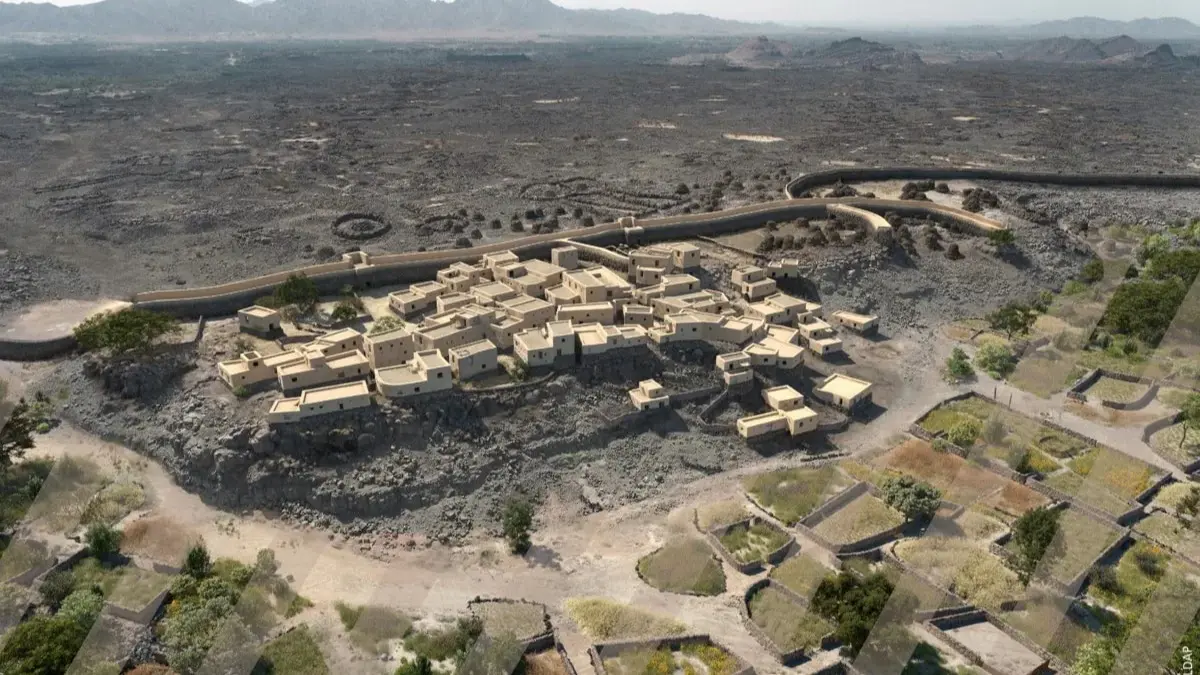
Archaeologists have discovered a 4,000-year-old town hidden within a lush oasis in present-day Saudi Arabia, highlighting the transition from a nomadic to urban lifestyle in the region.
The town, Al-Natah, remained a secret within Khaybar's walled oasis—a fertile enclave surrounded by arid desert.
The discovery, led by French archaeologist Guillaume Charloux and his team, included a 14.5-kilometer wall. These ancient barriers encircled a residential area, providing tangible evidence of organized settlement, according to a recent study.
Dating back to around 2400 BCE during the early Bronze Age, Al-Natah is believed to have housed nearly 500 people, emphasizing its importance in the historical landscape. The findings reveal significant insights into the social and architectural developments of the time and mark a pivotal shift toward urbanization in this part of the Arabian Peninsula.
Advertisement
The study's authors noted, “Preliminary archaeological surveys and soundings have revealed a fortified 2.6-hectare town built around 2400-2000 BCE, lasting until at least 1500 BCE, possibly 1300 BCE, though potentially with interruptions. It was functionally divided into residential areas, a likely decision-making zone, and a necropolis.
When Al-Natah was established, cities were developing in the Levant along the Mediterranean coast, from present-day Syria to Jordan.
Advertisement
The town's walls, hidden by black volcanic basalt rocks, were so well camouflaged that they remained untouched by illegal excavations, according to archaeologist Guillaume Charloux.
Observing the area from above allowed researchers to identify paths and house foundations, guiding their excavation efforts.
The town's clustered dwellings followed a uniform layout, connected by narrow streets. Comparing Al-Natah with neighboring oasis settlements, researchers believe that Bronze Age northwestern Arabia dominated by pastoral nomadic communities and already part of expansive trade routes was dotted with fortified oases centered around small, walled towns.
In contrast to the larger, more advanced cities of Mesopotamia or Egypt, the urbanization in northwestern Arabia followed a unique path. Researchers propose that this "slow urbanism," which they describe as a slow shift from nomadic to settled life, was distinct to the region. Fortified oases like Al-Natah likely encouraged interaction among nomadic pastoralists, fostering a subtle but increasing social complexity from the Early to Middle Bronze Age. This fast paced growth of urbanization in northwest Arabia reflects a process shaped by the region’s environment and culture.
Published By : Srujani Mohinta
Published On: 3 November 2024 at 09:18 IST