
All You Need to Know About Tomahawk Cruise Missiles Spearheading US Strikes on Iran
The Tomahawk cruise missile is a key long-range weapon for the US in strikes against Iran, known for precision and deep-strike capabilities. It travels over 1,500 kilometers, often launched from distant destroyers or submarines.
- World News
- 3 min read

;'%3e%3cpath%20d='m8,15.99c4.41,0,7.99-3.58,7.99-7.99S12.41,0,8,0,0,3.59,0,8s3.58,7.99,7.99,7.99Z'%20style='stroke:%23fff;%20stroke-miterlimit:10;%20stroke-width:.02px;'/%3e%3cpath%20d='m3.08,3.37l3.82,5.11-3.84,4.15h.87l3.37-3.64,2.72,3.64h2.94l-4.04-5.39,3.58-3.87h-.86l-3.1,3.35-2.5-3.35h-2.94Zm1.27.64h1.35l5.97,7.99h-1.35l-5.97-7.99Z'%20style='fill:%23fff;'/%3e%3c/g%3e%3c/svg%3e)


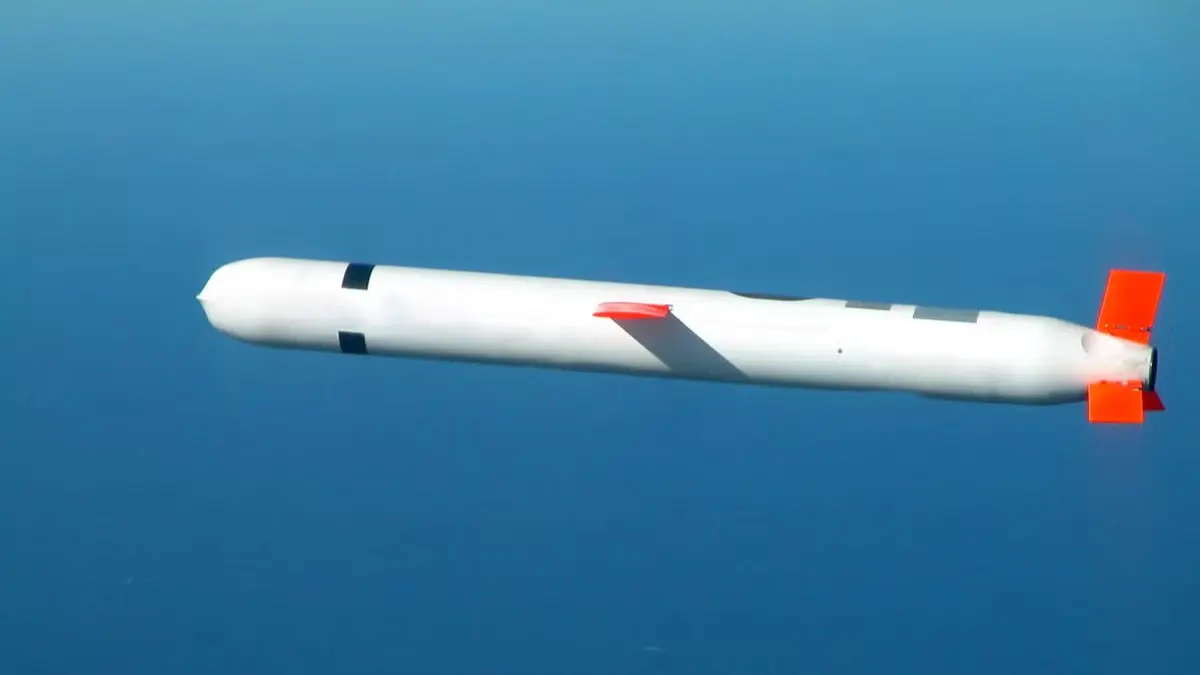
New Delhi: The Tomahawk cruise missile has emerged as a central weapon in the latest long-range strikes carried out by the United States against targets inside Iran, underscoring its role as one of Washington’s most reliable deep-strike tools. Developed for precision attacks on high-value military infrastructure, the missile can travel more than 1,500 kilometers and strike within meters of its intended target. Launched from destroyers or submarines far from hostile territory, it allows US forces to hit strategic sites without exposing pilots or aircraft to enemy air defences.

Designed to Evade Radar
What makes the Tomahawk especially difficult to intercept is not speed alone but how it travels. Unlike ballistic missiles that arc high into the sky, Tomahawks fly low - often just tens of meters above terrain or sea level. This “terrain-hugging” flight path allows them to remain hidden from many radar systems until the final stages of approach. By the time air defence operators detect them, reaction time can be reduced to minutes or even seconds, limiting interception chances.
The missile’s guidance systems further complicate defence. Using a combination of GPS navigation, inertial guidance and terrain-mapping technology, it constantly adjusts its route mid-flight, allowing it to weave through mountains, valleys or urban landscapes while staying locked on target.
Why Interception Is So Difficult
Military analysts say Iran’s air-defence network faces multiple challenges when confronting Tomahawks. Traditional radar is optimised to track higher-altitude threats such as aircraft or ballistic missiles, not low-flying cruise missiles that blend with ground clutter. Even when detected, defenders must quickly identify, track and launch interceptors before the missile reaches its target, a process complicated by electronic countermeasures and unpredictable flight paths.
Advertisement
Another factor is strike coordination. Tomahawks are rarely used alone. They are often launched alongside drones, electronic-warfare systems or other weapons designed to distract or overwhelm radar operators. Such combined attacks can saturate defence networks, forcing them to divide attention among multiple threats and increasing the probability that at least some missiles get through.
Strategic Impact in Modern Conflict
Recent operations demonstrate how cruise missiles like the Tomahawk remain central to modern warfare despite the rise of hypersonic weapons. Their relatively lower cost, proven accuracy and ability to be launched from stand-off distances make them ideal for opening strikes that disable command centres, radar installations and missile batteries. By degrading air defences first, they pave the way for follow-up attacks by aircraft or additional missiles.
Advertisement
Not Invincible - But Highly Effective
Experts caution that Tomahawks are not impossible to shoot down. Advanced, layered air-defence systems with modern radar and rapid-response interceptors can destroy them under favourable conditions. However, the combination of stealthy flight profiles, precision navigation and coordinated strike tactics means that intercepting them consistently is extremely challenging.
In essence, the Tomahawk’s strength lies in its design philosophy: not brute speed, but stealth, accuracy and timing - a mix that continues to make it one of the most formidable conventional strike weapons in the US arsenal.