
Asim Munir Marries Daughter to Nephew in Rawalpindi, Exposing Pakistan’s Military Dominance
Pakistan Army chief Asim Munir’s decision to marry his daughter to his nephew in a tightly controlled Rawalpindi wedding is being seen as a deliberate signal of military dominance, clan-based consolidation, and the continued sidelining of civilian authority in Pakistan.
- World News
- 3 min read

;'%3e%3cpath%20d='m8,15.99c4.41,0,7.99-3.58,7.99-7.99S12.41,0,8,0,0,3.59,0,8s3.58,7.99,7.99,7.99Z'%20style='stroke:%23fff;%20stroke-miterlimit:10;%20stroke-width:.02px;'/%3e%3cpath%20d='m3.08,3.37l3.82,5.11-3.84,4.15h.87l3.37-3.64,2.72,3.64h2.94l-4.04-5.39,3.58-3.87h-.86l-3.1,3.35-2.5-3.35h-2.94Zm1.27.64h1.35l5.97,7.99h-1.35l-5.97-7.99Z'%20style='fill:%23fff;'/%3e%3c/g%3e%3c/svg%3e)


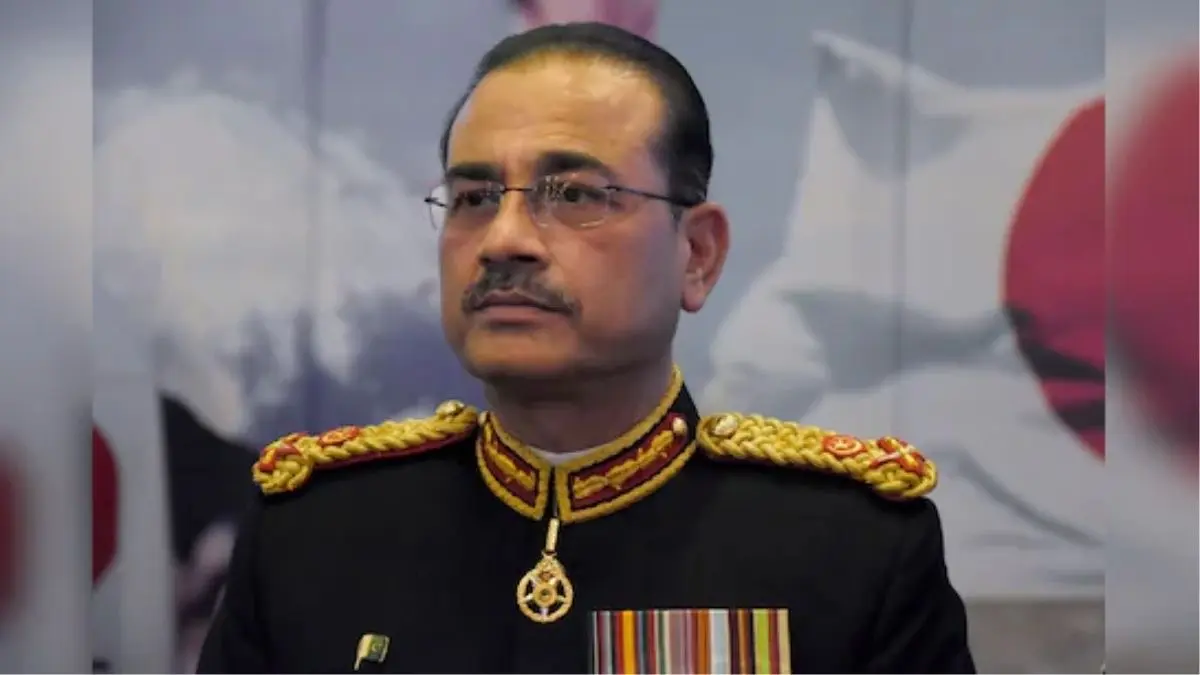
Pakistan Army chief Asim Munir has once again underlined where real authority in the country rests. This time, the signal came from a strictly regulated family wedding that subtly revealed Pakistan's power structure.
Munir recently wed his daughter, Mahnoor, to Captain Abdul Rahman, his brother Qasim Munir's nephew. In security circles, there has been a quiet assumption that Pakistan's top military leadership is actively strengthening bloodline-based trust as a means of consolidating control due to the marriage, which was kept within the immediate family.
The wedding was purposefully kept out of the public eye and took place in Rawalpindi on December 26. Although the event was characterized as private and no official photos were made public, the plans and attendance seemed to indicate otherwise.
Rawalpindi Sends the Message
Advertisement
Before entering the public services, Abdul Rahman was a captain in the Pakistan Army. As an example of how military power in Pakistan frequently persists after active service, he currently serves as an assistant commissioner under the quota set out for military officers.
Instead of being held in a hotel or other public location, the festivities were held inside Munir's home close to General Headquarters. The scene confirmed the long-held belief that Pakistan's real center of power is still the military zone in Rawalpindi rather than civilian establishments.
Advertisement
Despite being called an intimate affair, the guest list was striking. Mohammed bin Zayed Al Nahyan, Shehbaz Sharif, Asif Ali Zardari, Ishaq Dar, the head of Inter-Services Intelligence, and a number of top generals were among those in attendance. The optics were obvious for a nation that maintains that civilians run its government.
Signals at Home and Abroad
According to Indian intelligence assessments, it was a conscious decision to hold all functions in areas under military control. It is being interpreted as an attempt by GHQ to formalize clan-based networks at the top of the army, particularly at a time when Pakistan is dealing with mounting criticism of military overreach, economic hardship, and internal dissension.
The presence of political figures with the ISI chief is interpreted as confirmation that Rawalpindi continues to be the hub for decision-making, avoiding parliament. This is considered by Indian agencies as a sign to domestic rivals that the political elite is still firmly under the army chief's influence.
The signal was further enhanced by inviting the president of the United Arab Emirates as the principal guest. It is seen as Munir's attempt to show that the Gulf still supports Pakistan's military government in spite of the nation's instability. The outreach is seen as a sign to Abu Dhabi that the army's hold on power is unwavering despite Pakistan's political unrest and economic difficulties.