
Updated 20 March 2026 at 01:01 IST
'Can End War in 2 Seconds': Donald Trump Pressures Japan to ‘Step Up’ on Strait of Hormuz, Declares ‘Not Deploying Any Troops in Iran'
Trump says he can end the Iran-Israel-US war in “2 seconds” as he urges allies like Japan to secure the Strait of Hormuz, while ruling out deploying US troops amid rising global energy tensions.
- World News
- 3 min read

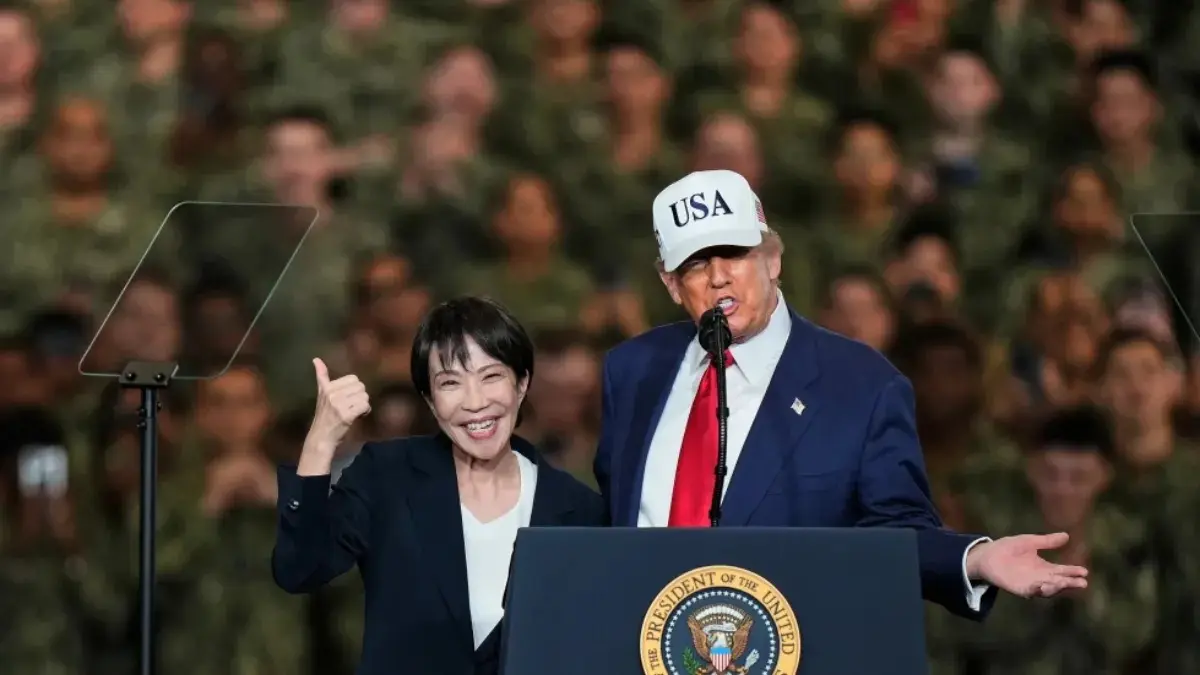
Washington: United States President Donald Trump has asked Japanese Prime Minister Sanae Takaichi to play a greater part in securing the Strait of Hormuz, as disputes continue in the US- and Israeli-led war against Iran.
During a meeting at the White House, Trump said he expects allies like Japan to contribute more towards keeping the crucial oil route open. Nearly one-fifth of the world's oil supply passes through the strait, but Iran has mostly blocked traffic, driving up oil prices worldwide.
Before the meeting, Japan and five European nations had already said they would consider “appropriate efforts” to help reopen the waterway, though what that would involve remains unclear.
‘Can end the war in two seconds’
Speaking to reporters in the Oval Office, Trump claimed the conflict could be ended almost instantly. “You could end this thing in two seconds if you wanted to,” he said. “But we are being very judicious.”
Advertisement
He also stated unequivocally that the United States has no intention of sending soldiers. When asked if he had any intentions to deploy troops, Trump said that he didn't, but he added that if he did, he wouldn't make such a decision public.
At the same time, his statements appeared mixed. While he said the US does not need help, “We don’t need anything from Japan or from anyone else,” he also argued that countries benefiting from the strait should take responsibility for protecting it. “It would be nice to have other countries police” the strait, he said earlier, adding that nations relying on its energy routes should “protect their own territory”.
Advertisement
Awkward Pearl Harbor remark
The meeting took an awkward turn when Trump responded to a question about why allies were not informed in advance of plans to attack Iran. He made reference to the attack on Pearl Harbor by Japan.
“We wanted surprise. Who knows better about surprise than Japan, OK? How come you didn't inform me about Pearl Harbor? Trump said, as Takaichi appeared uneasy. "You believe in surprise, I think, much more so than us,” he added.
The meeting went on despite the comment, with both leaders talking about international security and trade. Since the start of the conflict on February 28, Takaichi is one of the few leaders to visit the White House.
Japan cautious amid economic fears
Takaichi condemned Iran's actions, including the "effective closure" of the strait and attacks in the area. However, she also marked concern about the broader consequences of the war.
“The global economy is about to experience a huge hit because of this development,” she said, pointing to the “severe security environment” created by the conflict. “But even against such a backdrop, I firmly believe that it is only you, Donald, that can achieve peace across the world.”
Japan's pacifist post-World War II constitution, which forbids war and the use of force, further restricts its role.
Energy tensions rise across the region
The situation has deteriorated with attacks on key energy infrastructure. Iran retaliated over an Israeli strike on its South Pars gas field by attacking the Ras Laffan gas complex in Qatar, which supplies around 20% of the world's liquefied natural gas.
According to Trump, he has asked Israeli Prime Minister Benjamin Netanyahu to refrain from attacking Iranian energy facilities in the future.
Trump acknowledged the difficulty presented by the strait, describing it as a crucial choke point where even minor interruptions might stop movement, even as he asserted that Iran is “close to demolished.”
Additionally, he pointed out that because Asian nations rely so largely on supplies that cross the Strait of Hormuz, they are likely to be the most negatively impacted by increased energy prices.
Published By : Shruti Sneha
Published On: 20 March 2026 at 01:01 IST