
Children taken to work in Japan as schools close
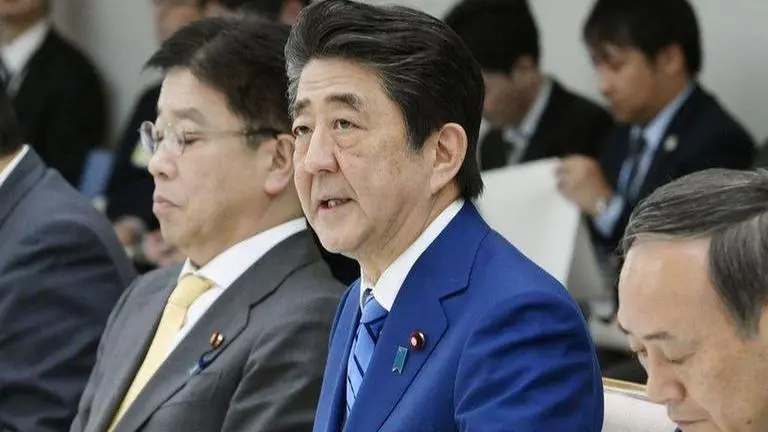
Japanese Prime Minister Shinzo Abe asked schools to close until spring break to prevent the spread of the COVID-19 virus. While the request isn't legally binding, it's expected to be largely followed.
- World News
- 3 min read

;'%3e%3cpath%20d='m8,15.99c4.41,0,7.99-3.58,7.99-7.99S12.41,0,8,0,0,3.59,0,8s3.58,7.99,7.99,7.99Z'%20style='stroke:%23fff;%20stroke-miterlimit:10;%20stroke-width:.02px;'/%3e%3cpath%20d='m3.08,3.37l3.82,5.11-3.84,4.15h.87l3.37-3.64,2.72,3.64h2.94l-4.04-5.39,3.58-3.87h-.86l-3.1,3.35-2.5-3.35h-2.94Zm1.27.64h1.35l5.97,7.99h-1.35l-5.97-7.99Z'%20style='fill:%23fff;'/%3e%3c/g%3e%3c/svg%3e)


As many schools in Japan closed from Monday, working mothers at Pasona Inc. were relieved that they were allowed to bring their children to work with them. Japanese Prime Minister Shinzo Abe asked schools to close until spring break to prevent the spread of the COVID-19 virus. While the request isn't legally binding, it's expected to be largely followed.
But it caught many working parents off guard, not knowing what to do with their children who now can't go to school.
"I was feeling surprised and worried about what to do," said Keiko Kobayashi, Deputy General Manager of the Global Business Division of Pasona, who is mother to seven-year-old son Ryusei.
In a country known for long working hours blamed for "karoshi," or death from overwork, the virus scare may help change Japan's corporate culture and allow people to work more flexible hours and ask for time off.
Advertisement
Japanese company Pasona had already allowed its workers to work from home and to work flexible hours. But after the announcement, it hoped to help alleviate the concerns of working parents by letting them bring their children to work.
Koyabashi was one of two mothers who brought her child to work.
Advertisement
Sachiko Aoki, Senior Manager of Temporary staffing and BPO Business Division at Pasona, also took advantage of new measures at her workplace and brought her eight-year-old son, Kyoma.
"I think it's a great environment to be able to work as usual and to have our kids playing in a safe environment nearby and studying," said Aoki.
Takashi Watanabe, the Vice President of Pasona Group, is using his own personal office as a space for working parents to come to work with their children.
A play corner with games and toys have been set up in his office to accommodate workers like Koyabashi and Aoki and their children.
Meanwhile, Japanese schools were empty. Shimizu Elementary School in Nayoga, which would normally be filled with children on a Monda,y had empty classrooms.
However, due to families with difficulties looking after their children during school hours, the Nagoya board of education have asked for schools to accept children to look after them while their parents work.
Shimizu Elementary School is one of those schools who will accept children starting on Tuesday.
The principal of the school, Tomio Suzuki, said "it might be a little out of place for the children to come (to school), even if the school is closed temporarily, but the safety and security of the children is number one (priority)."
While many parents were left with little notice to prepare for the closure of schools, the government said it will take responsibility for any issues that arise.
Japan's school year ends in March, leaving little time for final exams or graduation ceremonies.