
'Deal Signed Digitally': JD Vance Reveals Key Detail on New US-Iran Agreement
US Vice President JD Vance says the US-Iran deal has already been signed digitally, with sanctions relief tied to Tehran's compliance on nuclear commitments and verification measures.
- World News
- 4 min read

;'%3e%3cpath%20d='m8,15.99c4.41,0,7.99-3.58,7.99-7.99S12.41,0,8,0,0,3.59,0,8s3.58,7.99,7.99,7.99Z'%20style='stroke:%23fff;%20stroke-miterlimit:10;%20stroke-width:.02px;'/%3e%3cpath%20d='m3.08,3.37l3.82,5.11-3.84,4.15h.87l3.37-3.64,2.72,3.64h2.94l-4.04-5.39,3.58-3.87h-.86l-3.1,3.35-2.5-3.35h-2.94Zm1.27.64h1.35l5.97,7.99h-1.35l-5.97-7.99Z'%20style='fill:%23fff;'/%3e%3c/g%3e%3c/svg%3e)


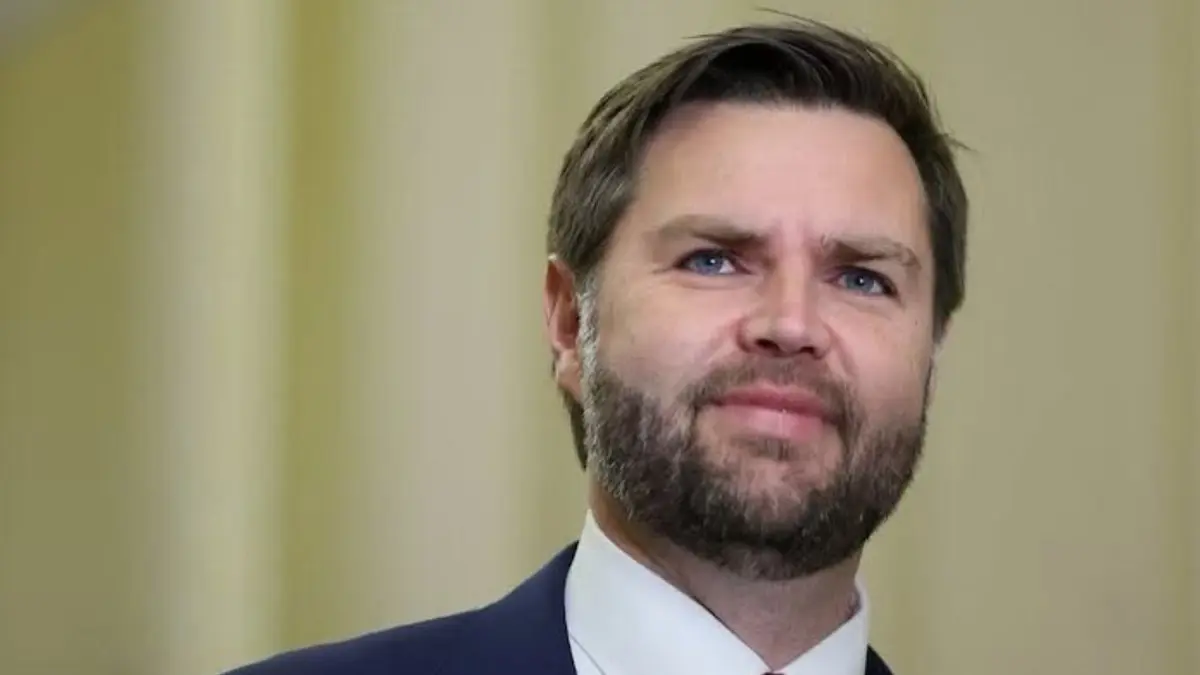
Washington: Following US President Donald Trump's announcement that a deal with Iran is "complete" and will be formally signed on Friday, US Vice President JD Vance claimed on Monday that both parties had already signed the agreement digitally.
Speaking to ABC's Good Morning America, Vance reiterated that Iran received no financial rewards or sanctions relief following the agreement's digital signing.
"We already signed the deal digitally yesterday, and there's been no money released, and that won't change,"Vance said while responding to a question on whether Tehran would gain access to frozen assets or sanctions relief after signing the agreement.
Sanctions Relief Tied to Iran's Actions
Vance stressed that any easing of sanctions would depend entirely on Iran fulfilling its commitments under the agreement. He said the implementation process would be based on measurable actions taken by Tehran.
Advertisement
"Again, this is a performance-based thing. If we see the Iranians making, for example, taking action to eliminate their stockpile of enriched material, then sanctions relief will follow. If we see the Iranians taking action to allow the kind of verification regime that we need to see to know that they're not going to build a nuclear weapon, sanctions relief will follow," he said.
According to Vance, the agreement creates a pathway for Iran to reconnect with the international economy if it adheres to the agreed terms.
Advertisement
"This is really about walking down a pathway here where the Iranians will be welcomed into the world economy if they do the right thing," he added.
Israel's Position and Regional Challenges
During the interview, Vance was also asked whether Israel's choice not to be bound by the pact, as well as its prolonged military presence in Lebanon, could make it difficult to implement the deal. He acknowledged that achieving lasting stability in the region would not be easy.
"Everything is going to complicate the deal. As you know, in this region of the world, even a ceasefire, sometimes, they're a little bit dirty. It goes from shooting a lot to shooting a little to shooting not at all," Vance said.
Despite the challenges, he expressed confidence that the agreement could deliver wider regional benefits.
"But what we fundamentally believe is that this is going to be a good deal for the people of Israel, for the people of the Gulf, the people of America, and again, potentially for the people of Iran as well," he said.
Trump's Announcement and Israel's Response
Vance's comments come a day after Trump declared that an agreement with Iran had been reached and would be formally inked on Friday. Trump stated that the agreement would result in the reopening of the important canal and assist restore the flow of oil through the region.
Trump described the deal as a tremendous diplomatic victory, claiming it would help bring stability to the Middle East. "This Great Deal will bring Peace and Security to the whole Region. Many presidents have tried to make Peace with Iran, and all have failed before me. The Leaders of the Region have, for the first time, found a President who can help them achieve real Peace. With the opening of the Strait upon the signing of the Deal on Friday, for purposes of mine removal, oil will flow on both ends again for the Region, and the World!" Trump stated in a post on Truth Social.
However, Israel's National Security Minister Itamar Ben-Gvir responded by making it clear that Israel does not consider itself bound by the agreement.
In a post on X, he wrote: "Trump's agreement does not bind us. Israel is not subject to the United States, and we are an independent and sovereign nation.”
Meanwhile, Iran has continued to insist that Lebanon must be included in the final arrangement with the United States. Iranian officials have repeatedly described Lebanon as an "integral part" of the border arrangement and have maintained that it should be incorporated into any final agreement.