
'Diplomacy never ends': Iran spokesperson Hints There's Room For Talks
The comments come as US President Donald Trump shared an article suggesting that the option of enforcing a naval blockade was available in the context of Iran, as peace talks ended in a stalemate in Islamabad after differences of opinion arose.
- World News
- 4 min read

;'%3e%3cpath%20d='m8,15.99c4.41,0,7.99-3.58,7.99-7.99S12.41,0,8,0,0,3.59,0,8s3.58,7.99,7.99,7.99Z'%20style='stroke:%23fff;%20stroke-miterlimit:10;%20stroke-width:.02px;'/%3e%3cpath%20d='m3.08,3.37l3.82,5.11-3.84,4.15h.87l3.37-3.64,2.72,3.64h2.94l-4.04-5.39,3.58-3.87h-.86l-3.1,3.35-2.5-3.35h-2.94Zm1.27.64h1.35l5.97,7.99h-1.35l-5.97-7.99Z'%20style='fill:%23fff;'/%3e%3c/g%3e%3c/svg%3e)


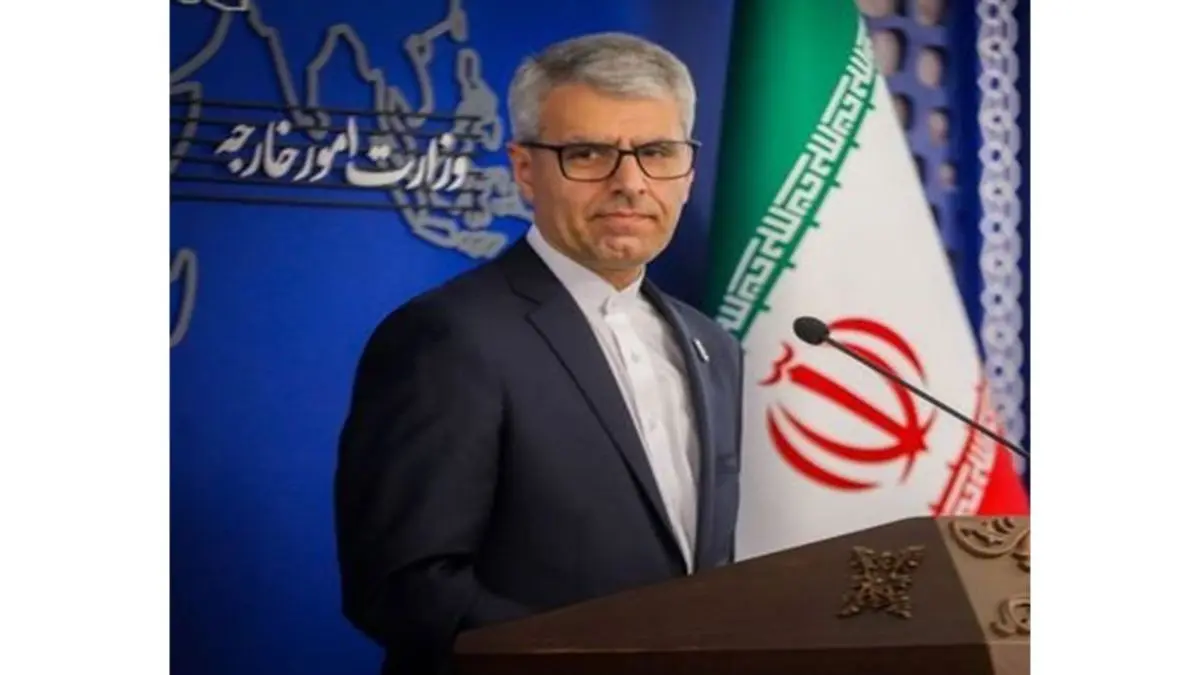
Tehran: Iran's foreign ministry spokesperson Esmaeil Baqaei on Sunday said that the recent meeting with US officials was the longest round of negotiations they have had in the past year. Baqaei, who heads the Centre for Public Diplomacy of Iran, noted in his interview to local media that on several issues, both parties reached understandings on some key issues; however, their positions remained apart, and ultimately they didn't reach an agreement.
"I believe this round of negotiations was indeed the longest we've had this past year. Twenty-four or twenty-five hours--starting yesterday morning when indirect talks began with messages exchanged between the two sides through the Pakistani mediator. It continued non-stop until now," he said.
Baqaei also noted that diplomacy is always a tool to secure and protect national interests."Diplomacy never ends. Diplomacy is always a tool to secure and protect national interests, and diplomats must fulfil their duties in any conditions, whether in wartime or peacetime. Well, there are several points we need to keep in mind. This round of talks came after forty-some days--forty days of imposed war, then a few days after the ceasefire. In an atmosphere filled with mistrust, suspicion and doubt," he said.
Baghaei said that Iran should not have expected from the start that they could reach an agreement in a single session. "In any case, the American side, along with the Zionist regime, committed military aggression against the Islamic Republic of Iran for the second time in nine months. So naturally, we shouldn't have expected from the start that we could reach an agreement in a single session. I don't think anyone had such expectations. Despite what I mentioned, this was the longest meeting we've had this past year. Another point to consider was the complexity of the issues and the complexity of the circumstances," he said.
Advertisement
Baghaei said that new topics were added to the negotiations this time, like the Strait of Hormuz issue or the region. "Some new topics were added to the negotiations this time, like the Strait of Hormuz issue or the region. Well, these have their own conditions, features and specifics. But I think that in any case, we must always pursue our national interests as diplomats and as a diplomatic apparatus. Use our various tools to protect the rights and interests of the Iranian nation," he said.
Baghaei added, "The talks continued throughout the night regarding a range of topics that were raised both in our ten-point proposal and points the other side had. On several issues, we reached understandings on two or three key issues; however, our positions remained apart, and ultimately, we didn't reach an agreement. These talks--this is the latest status I can report."
Advertisement
Baghaei further said, "I really want to take this opportunity to thank the government and people of Pakistan. Shehbaz Sharif, the honourable Prime Minister of Pakistan. Mr Asim Munir, the army chief, Ishaq Dar, the Foreign Minister, and the Deputy Prime Minister made tremendous efforts. Pakistan's gracious hospitality in recent weeks and especially these past two or three days deserves appreciation. We thank them for their excellent hospitality."
Baghaei said that diplomacy always stands alongside other components of government. "We are confident that contacts and consultations between the Islamic Republic of Iran, Pakistan and other friends in the region will continue. Diplomacy stands ready alongside other components of government, alongside our good people, alongside the defenders of the homeland for all kinds of cooperation and sacrifice to protect the interests and national security of the country," he said.
The comments come as US President Donald Trump shared an article suggesting that the option of enforcing a naval blockade was available in the context of Iran, as peace talks ended in a stalemate in Islamabad after differences of opinion arose between the two parties on the Strait of Hormuz and Iran's nuclear capacities.