
East India Company Shuts Down Again After 170 Years: London Luxury Revival Ends In Bankruptcy
The East India Company, once a symbol of colonial rule and global trade, has ceased operations for the second time, ending its recent venture as a luxury retail brand in London. Revived in 2010 by Sanjiv Mehta, the brand focused on high-end products but fell into insolvency due to changing retail trends and debts.
- World News
- 3 min read

;'%3e%3cpath%20d='m8,15.99c4.41,0,7.99-3.58,7.99-7.99S12.41,0,8,0,0,3.59,0,8s3.58,7.99,7.99,7.99Z'%20style='stroke:%23fff;%20stroke-miterlimit:10;%20stroke-width:.02px;'/%3e%3cpath%20d='m3.08,3.37l3.82,5.11-3.84,4.15h.87l3.37-3.64,2.72,3.64h2.94l-4.04-5.39,3.58-3.87h-.86l-3.1,3.35-2.5-3.35h-2.94Zm1.27.64h1.35l5.97,7.99h-1.35l-5.97-7.99Z'%20style='fill:%23fff;'/%3e%3c/g%3e%3c/svg%3e)


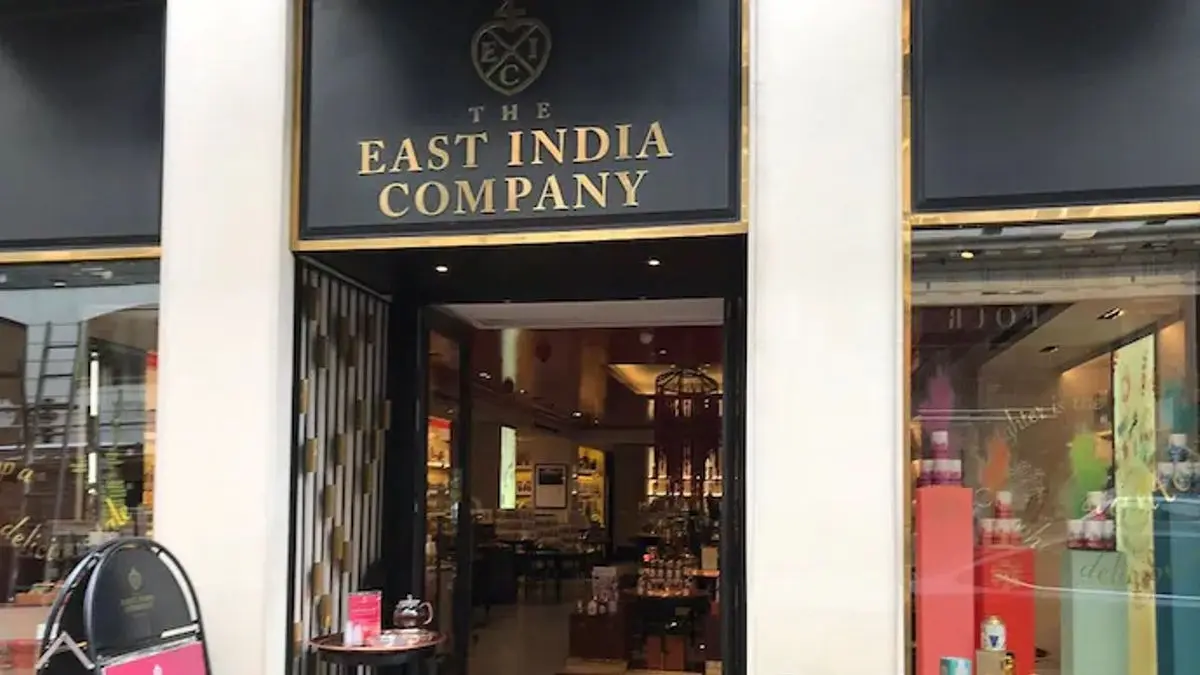
New Delhi: The East India Company, a name once synonymous with global trade dominance and colonial rule - has ceased operations for the second time in its long history, this time as a luxury retail brand in London, bringing an unusual chapter in corporate and colonial history to a close.
Originally founded on December 31, 1600, under a royal charter from Queen Elizabeth I, the English trading company began as a merchant venture for spices and goods from India. Over centuries it evolved into one of the world’s most powerful commercial and political forces, commanding vast territories in the Indian subcontinent, maintaining its own army and shaping global trade and governance.
Modern revival ends in liquidation
After lying inactive for more than 150 years following its abolition in 1874, the East India Company name was revived in 2010 by British-Indian entrepreneur Sanjiv Mehta, who acquired the rights to the historic title from shareholders intending to relaunch it.
Under Mehta’s leadership, the company was positioned as a high-end luxury lifestyle brand with a flagship store in Mayfair, London, selling premium teas, chocolates, confectionery, spices and other boutique goods in a 2,000-square-foot outlet at 97 New Bond Street.
Advertisement
The revival was widely framed by Mehta at the time as a symbolic redemption, a modern Indian businessman owning and reimagining a name once tied to colonial dominance. In interviews, Mehta described the venture as transforming a contentious legacy into a brand built on compassion and heritage rather than empire.
However, shifting retail trends and mounting financial pressures proved too great. The revived company slipped into insolvency, and in October 2025 it appointed liquidators after accumulating debts of over 600,000 pounds to its parent group registered in the British Virgin Islands.
Advertisement
In addition, liabilities included 193,789 pounds in unpaid taxes and 163,105 pounds owed to employees, according to filings and reports. Several connected enterprises with the East India name linked to Mehta have also been dissolved.
History of East India Company
The original East India Company was far more than a commercial enterprise. By the early 19th century, it commanded a private army of around 250,000 men — roughly double the size of the British Army at the time and administered territories covering much of present-day India, Pakistan, Bangladesh and parts of Southeast Asia.
Its rule, however, was deeply controversial. With its commercial and administrative policies leading to widespread exploitation, forced cultivation of cash crops, famines including the catastrophic Great Bengal Famine, and colonial grievances that ultimately contributed to the Indian Rebellion of 1857 - popularly known as the Sepoy Mutiny. Which prompted the British government to take direct control, ending the company’s political power and eventually dissolving it entirely in 1874.
End of an era
The latest shutdown marks a quiet but definitive end to one of the most iconic corporate names in history. The closure underscores not just the difficulties of trading on heritage in a modern retail landscape, but also the enduring complexity of how societies remember their past.