
EU's Borrell reveals Iran deal now on table; calls on parties to implement at earliest
EU foreign policy chief, Josep Borrell revealed he has submitted a draft to concerned parties, emphasising the risk of a nuclear crisis.
- World News
- 2 min read

;'%3e%3cpath%20d='m8,15.99c4.41,0,7.99-3.58,7.99-7.99S12.41,0,8,0,0,3.59,0,8s3.58,7.99,7.99,7.99Z'%20style='stroke:%23fff;%20stroke-miterlimit:10;%20stroke-width:.02px;'/%3e%3cpath%20d='m3.08,3.37l3.82,5.11-3.84,4.15h.87l3.37-3.64,2.72,3.64h2.94l-4.04-5.39,3.58-3.87h-.86l-3.1,3.35-2.5-3.35h-2.94Zm1.27.64h1.35l5.97,7.99h-1.35l-5.97-7.99Z'%20style='fill:%23fff;'/%3e%3c/g%3e%3c/svg%3e)


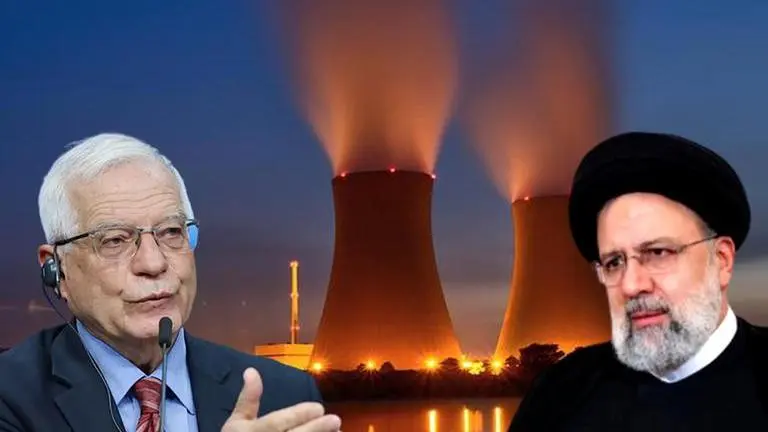
As the recent Iran nuclear talks in Doha concluded without conferring any desired results, a top European Union (EU) official revealed he has submitted a draft to concerned parties, emphasising the risk of a nuclear crisis. Writing in an op-ed in The Financial Times, European Union foreign policy chief Josep Borrell Fontelles opined that the document, which is currently on the table for discussion, was finalised after a series of negotiations between the parties. Borrell said the current text of the deal is the "best possible" outcome and should be executed at the earliest.
According to Borrell, the space for additional significant compromises has been exhausted and added the time has come to implement the negotiated terms and conditions as soon as possible. Notably, the diplomat has been involved in the nuke talks since the start of the deal and had recently travelled to Tehran to restart negotiations that had been stalled since March. "Seize this unique opportunity to succeed, and to free up the great potential of a fully implemented deal I see no other comprehensive or effective alternative within reach," he wrote.
Notably, following the breakdown in indirect talks between the United States and Iran in Qatar last month, analysis of Just Security- an online forum for the analysis of national security, foreign policy, and rights-- believes it is unlikely that the return to the negotiations table is possible on a positive note.
What is 2015 Iran's nuclear deal?
It is worth noting here Iran has been facing Western sanctions for its unlawful activities related to uranium. Several countries like the US, Israel and the UAE, on several occasions, raised concerns about the possibility of Iran developing nuclear weapons-- a claim that Tehran refuted multiple times. Tehran, however, claims its nuclear program is for peaceful purposes like generating electric power and medical isotopes. In 2015, a deal was signed that gave Tehran a major relief from sanctions. However, in return, Iran pledged not to develop a nuclear weapon.
Later, after three years, the then US President Donald Trump unilaterally withdrew from the nuclear deal and reimposed waves of biting sanctions on the Islamic republic. According to the International Atomic Energy Agency (IAEA), Tehran plans to ramp up its uranium enrichment-- which is a key component in manufacturing nuclear bombs -- insisting that its nuclear program is for "peaceful purposes".
Advertisement
Image: AP/Pixabay