
‘Every Wednesday Off’: Sri Lanka Turns to Four-Day Workweek to Save Fuel Amid Iran War
Amid the escalating conflict involving Iran and disruptions near the Strait of Hormuz, Sri Lanka has announced a four-day workweek starting March 18 to prepare for possible fuel shortages and rising energy disruptions.
- World News
- 4 min read

;'%3e%3cpath%20d='m8,15.99c4.41,0,7.99-3.58,7.99-7.99S12.41,0,8,0,0,3.59,0,8s3.58,7.99,7.99,7.99Z'%20style='stroke:%23fff;%20stroke-miterlimit:10;%20stroke-width:.02px;'/%3e%3cpath%20d='m3.08,3.37l3.82,5.11-3.84,4.15h.87l3.37-3.64,2.72,3.64h2.94l-4.04-5.39,3.58-3.87h-.86l-3.1,3.35-2.5-3.35h-2.94Zm1.27.64h1.35l5.97,7.99h-1.35l-5.97-7.99Z'%20style='fill:%23fff;'/%3e%3c/g%3e%3c/svg%3e)


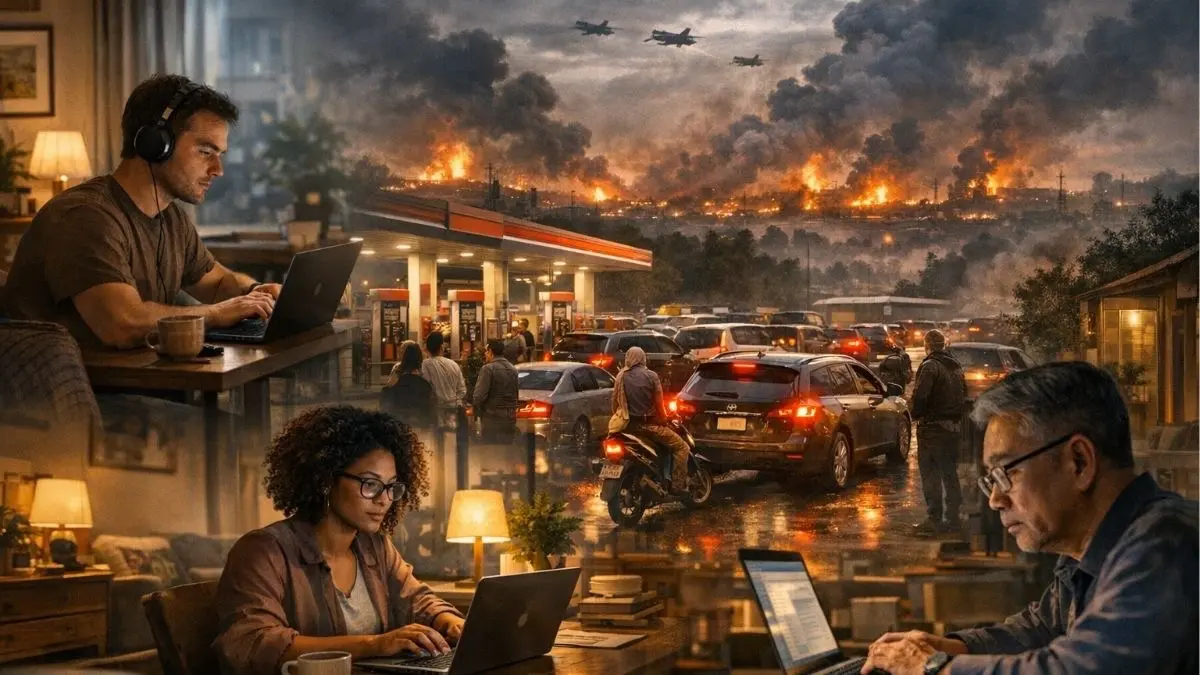
New Delhi: Amid the escalating Middle East conflict, Sri Lanka has decided to shift to a four-day working week commencing March 18, declaring every Wednesday a public holiday as the nation prepares for possible fuel shortages linked to the ongoing conflict in West Asia. The move comes as global energy sources face disruptions, raising concerns about fuel supply.
Until now, Sri Lanka followed a five-day work schedule. Commissioner General of Essential Services Prabath Chandrakeerthi confirmed the change, saying, “It was decided to declare every Wednesday a public holiday with effect from March 18.”
He highlighted that despite the new arrangement, key sectors will carry on as usual. He clarified that services like health, ports, water supplies, and customs would not be impacted. "It would be applicable to schools, universities and the judiciary," he said. Authorities have additionally expressed optimism that private businesses may think about implementing a similar work schedule.
Government Meeting Over Fuel Crisis
The decision was taken after a special meeting called by President Anura Kumara Dissanayake as the nation assessed the growing fuel crisis linked to tensions in the Middle East. The meeting was attended by senior officials and members from all branches of the government.
Advertisement
According to officials, the discussion centered around “strategies for ensuring the continuity of public services amidst the energy disruption by the Middle East conflict.”
In an attempt to discourage stockpiling, Sri Lanka has already increased fuel prices in recent days. In an effort to limit consumption and avoid stockpiling, the government also implemented a fuel rationing system on Sunday. Long lines at gas stations were observed following the announcement of the new restrictions, despite these efforts.
Advertisement
Maritime Disruptions at Strait of Hormuz
According to officials, Sri Lanka is currently in talks with Russia and India to ensure a steady petroleum supply.
The concerns have emerged amid increasing conflicts in the Gulf region, where the United States and Israel carried out a major strike on Iran on February 28. Later, Iran retaliated by attacking the Strait of Hormuz, which affected international oil exports and disrupted maritime traffic.
Disruptions in the Strait of Hormuz, a vital route for international oil traffic, have started to impact crude and petroleum supply systems globally.
Vietnam Encourages Work From Home
As the crisis spreads throughout international markets, Vietnam has also taken action to control petroleum consumption. The nation's trade ministry has requested that companies encourage workers to work from home whenever feasible.
The administration said in a statement that the action is meant to lessen the strain on the country's energy resources and lower gasoline use. In order to reduce the need for travel and transportation during the crisis, the Ministry of Industry and Trade recommended businesses to encourage remote employment.
Due to its heavy reliance on Middle Eastern energy imports, Vietnam has been one of the nations most impacted by supply interruptions. Authorities claim that the situation has already increased fuel costs and put more pressure on domestic supplies.
While the disruption persists, the government has urged people to use resources properly and cautioned businesses and consumers against stockpiling fuel or speculating.
Additionally, Vietnam has started searching for other energy sources. Prime Minister Pham Minh Chinh requested more fuel and crude oil shipments by contacting officials in Kuwait, Qatar, and the United Arab Emirates. The government has temporarily lowered fuel import taxes through the end of April in an effort to calm the market.
Global Oil Prices Surge
Oil prices have skyrocketed due to the ongoing confrontation with Iran, which has severely impacted the world's energy markets. Nearly 20% of the world's oil supply typically goes through the Strait of Hormuz, which has been endangered by the conflict. International oil prices increased by around one-third before somewhat declining as a result of attacks on oil tankers and slower maritime traffic, which have tightened the world's supply. In order to prevent shortages and rising fuel prices, nations are racing to secure supplies of coal, gas, and oil as a result of the disruption.