
Updated 4 December 2021 at 08:05 IST
Omicron: Is the COVID-19 variant more contagious than Delta? WHO explains
The World Health Organization said that new COVID-19 variant Omicron has spread to 38 countries, early signs of which show the strain is contagious.
- World News
- 3 min read

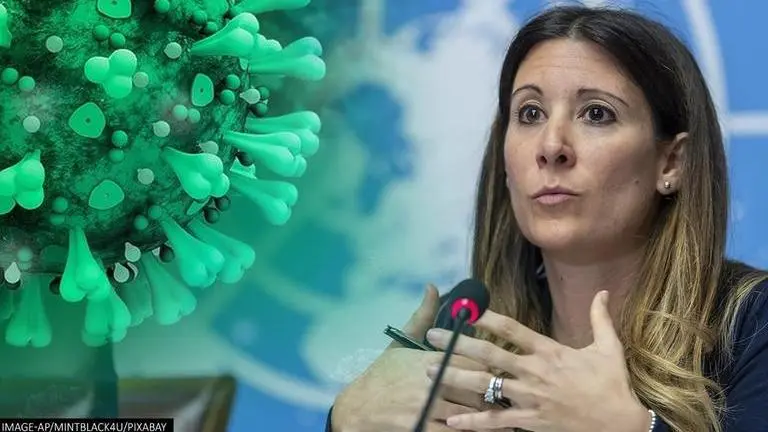
The new COVID-19 variant Omicron has been found in 38 nations, a jump from 23 two days earlier, according to the World Health Organization (WHO). The organization also stated that the initial evidence showed the variant is more infectious than Delta. During a Q&A live-streamed on Friday on the organization's social media accounts, Maria Van Kerkhove, the WHO's Covid-19 technical lead informed, “We do see an increasing growth rate, we see increasing numbers of Omicron being detected. But we have reports of Omicron in 38 countries in all six WHO regions."
The highly mutated B.1.1.529 form of SARS-CoV-2 was first discovered in South Africa.
Van Kerkhove went on to say that there is a possibility that this variant has enhanced transmissibility, and scientists are figuring out whether it is more or less transmissible than Delta variant. She even noted that the Delta variant is still the most common type throughout the world.
'Clearly, the virus does appear to be transmitting efficiently': WHO
The spike protein, which is the process through which the Omicron variant binds to human cells, contains 30 mutations. According to the WHO, some of these alterations are linked to increased transmission and the capacity to evade immune defense. The executive director of the WHO’s health emergencies program, Dr. Mike Ryan said, “Clearly the virus does appear to be transmitting efficiently,” CNBC reported.
Advertisement
Furthermore, in comparison to previous Covid variations, South African scientists had discovered this week that the new COVID-19 variant is related to a "substantial ability" to reinfect persons who already had Covid. This research which has been released by the South African Centre for Epidemiological Modelling and Analysis as well as the National Institute of Communicable Diseases, has yet to be peer-reviewed.
Too early to determine the seriousness of Omicron-related cases
According to Van Kerkhove, it is currently too early to determine the seriousness of Omicron-related sickness. Initial reports of modest symptoms of this variant in some of the earliest cases where it was detected were based on university students who, she explained, are younger and had more mild symptoms than older individuals.
Advertisement
Van Kerkove further added that hospitalizations are on the rise in South Africa, but public health experts have not noticed an increase in the risk of mortality yet and waiting for further data. Van Kerkhove urged countries throughout the world to boost genetic sequencing of Covid-19 cases in order to find novel variations and openly disclose the information in order to better understand the virus's development.
Earlier, the WHO issued a worldwide alert on Monday, encouraging 194 member nations to speed up immunizations for high-risk groups. As per media reports, some of the nations who have been struggling with the new variant are South Africa which still has the maximum cases, Botswana, Australia, Hong Kong, Japan, South Korea, India, Singapore, Malaysia, United Kingdom, United States, the Netherlands, Portugal, Ireland, Italy, Germany, Canada, Denmark, Israel, and Austria, France, Belgium, Spain, Czech Republic, and Sweden.
(Image: AP/ Mintblack4U/ Pixabay)
Published By : Anwesha Majumdar
Published On: 4 December 2021 at 08:05 IST