
‘I Am Not Satisfied’: Trump Rejects Iran’s New Peace Proposal, Calls Leadership ‘Confused & Disjointed'
Trump rejected Iran’s latest proposal to end the war between the countries, saying he still was not satisfied while blaming Iran’s “fractured” leadership.
- World News
- 5 min read

;'%3e%3cpath%20d='m8,15.99c4.41,0,7.99-3.58,7.99-7.99S12.41,0,8,0,0,3.59,0,8s3.58,7.99,7.99,7.99Z'%20style='stroke:%23fff;%20stroke-miterlimit:10;%20stroke-width:.02px;'/%3e%3cpath%20d='m3.08,3.37l3.82,5.11-3.84,4.15h.87l3.37-3.64,2.72,3.64h2.94l-4.04-5.39,3.58-3.87h-.86l-3.1,3.35-2.5-3.35h-2.94Zm1.27.64h1.35l5.97,7.99h-1.35l-5.97-7.99Z'%20style='fill:%23fff;'/%3e%3c/g%3e%3c/svg%3e)


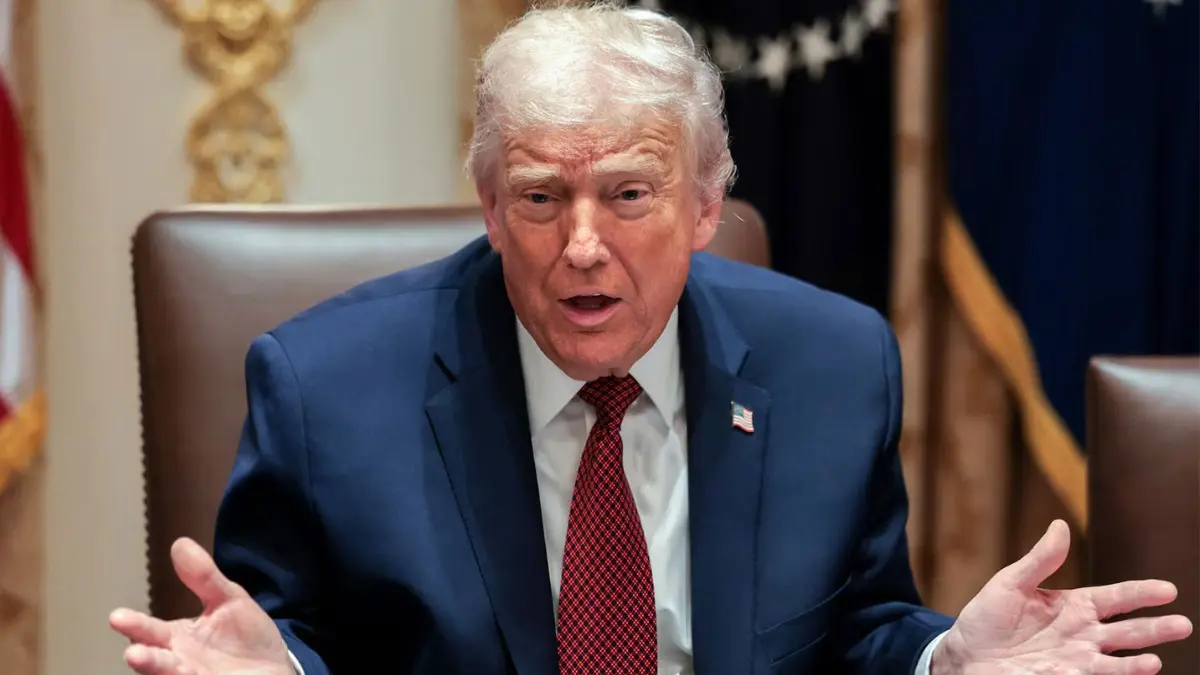
Washington: As tensions remain high in West Asia, new diplomatic efforts between Iran and the United States have hit another stumbling block, with US President Donald Trump explicitly rejecting Tehran's latest proposal to settle the war.
Iran has presented a new proposal in an effort to move negotiations forward, formally handing over the document to Pakistan, which has served as a mediator between Tehran and Washington. This comes only days after Iran proposed another plan through regional intermediaries, promising to suspend its military operations in the Strait of Hormuz, which is largely expected to be rejected by the US.
What is the in the latest Iran Proposal?
The most recent Iranian proposal prioritises reopening maritime channels through the strategically crucial Strait of Hormuz, a critical global energy corridor. However, it blocks any discussion of Iran's nuclear development.
US officials are skeptical of this approach, thinking that restoring shipping lines without addressing uranium enrichment and Iran's stockpile of near-bomb-grade uranium will reduce Washington's bargaining power.
Advertisement
At the same hand, experts acknowledge that keeping the strait closed has its own implications, such as continued high global oil prices and increased fuel expenses in the United States.
Trump Rejects Proposal, Voices Strong Discontent
President Trump dismissed the proposal almost immediately after it was delivered.
Advertisement
“So they want to make a deal, but I'm not satisfied with it, so we'll see what happens. Iran wants to make a deal because they have no military left, essentially, and they want to make a deal, but I'm not satisfied with it. ,” he said.
He further added, “They're asking for things I can't agree to.”
In another statement, Trump reiterated his position, “They want to make a deal, I’m not satisfied with it, so we’ll see what happens.”
‘Disjointed Leadership’ in Iran: Trump
Trump sharply criticised Iran’s leadership, describing it as fragmented and internally divided.
“There’s tremendous discord, they’re having a tremendous problem getting along with each other in Iran. The leadership is very disjointed. It’s got two to three groups, maybe four, and it’s very fragmented.”
“With that being said, they all want to make a deal, but they’re all messed up. We’re dealing with Iran, it’s a very disjointed leadership, unfriendly to each other. They’re not getting along, and they’re very confused by what’s happened, because essentially most of their military has been wiped out.”
“But we just had a conversation with Iran, let’s see what happens. I would say I am not happy. Their leadership is very disjointed, very argumentative with each other. They come back, one says one thing, another says something else. They’re very confused. Obviously, their country has been, frankly, decimated.”
He added, “It’s a very disjointed leadership. They all want to make a deal, but they’re all messed up.”
Talks Continue Despite Diplomatic Setback
Negotiations are still ongoing through phone conversations after Trump cancelled a planned visit by U.S. envoys to Pakistan. He also floated a separate plan this week to reopen the Strait of Hormuz for Gulf allies.
At one point, Trump outlined the stark choices facing the US, “I mean, do we want to go and just blast the hell out of them and finish them forever? Or do we want to try and make a deal? I mean, those are the options.”
He also noted some movement within Iran’s leadership, “They’ve made strides, but I’m not sure if they ever get there.”
White House Claims Hostilities ‘Terminated’
In a letter to Congress, the White House announced that hostilities with Iran had "terminated," despite the fact that US forces remained in the region.
The move enabled the administration to avoid a legal deadline under the War Powers Resolution, which requires legislative approval within 60 days before military engagement. Lawmakers failed to act before the deadline, thereby leaving the situation to continue.
However, Trump indicated the conflict may not be over, “Despite the success of United States operations against the Iranian regime and continued efforts to secure a lasting peace, the threat posed by Iran to the United States and our Armed Forces remains significant.”
Islamabad Talks Collapse
Efforts to revive negotiations encountered another blow when talks in Islamabad collapsed dramatically. Iran's delegation, led by Foreign Minister Abbas Araghchi, departed Pakistan unexpectedly after a full day of high-level negotiations. Before leaving, Iran reportedly handed over an official list of demands to the US and Israel.
Following this, Trump cancelled a scheduled visit by a US group led by Special Envoy Steve Witkoff and Senior Advisor Jared Kushner. This failure is similar to a prior round of negotiations in Islamabad, where senior leaders from both sides met for 21 hours but were unable to achieve an agreement.
Pakistan's role as a mediator appears to be under threat after two rounds of talks failed.
Ceasefire Holds, But Tensions Persist
A fragile three-week ceasefire between the United States and Iran remains in place, though both parties continue to accuse each other of violations.
The standoff in the Strait of Hormuz remains a key hotspot. A US naval blockade has limited Iranian oil exports, harming the Iranian economy, while global markets remain under pressure from disrupted energy flows.
Iran's top diplomat has been actively contacting regional and international leaders, including peers from Turkey, Egypt, Qatar, Saudi Arabia, Iraq, and Azerbaijan, to garner support for the idea.
Discussions have also taken place with European officials about reopening the Strait of Hormuz and other security arrangements. Since the conflict began on February 28, casualties have risen throughout the region. Thousands have been killed in Iran and Lebanon, with more deaths reported in Israel and the Gulf Arab states, as well as casualties among US service forces.