
India Halts Procurement of Six Boeing P-8I Aircraft After 50% Price Hike Triggered by U.S. Tariffs, Amid Strategic Review of High-Value Defence Deals
India halts the procurement of six Boeing P-8I aircraft after a sharp price hike, citing U.S. tariffs and a strategic review of defence spending.
- World News
- 3 min read

;'%3e%3cpath%20d='m8,15.99c4.41,0,7.99-3.58,7.99-7.99S12.41,0,8,0,0,3.59,0,8s3.58,7.99,7.99,7.99Z'%20style='stroke:%23fff;%20stroke-miterlimit:10;%20stroke-width:.02px;'/%3e%3cpath%20d='m3.08,3.37l3.82,5.11-3.84,4.15h.87l3.37-3.64,2.72,3.64h2.94l-4.04-5.39,3.58-3.87h-.86l-3.1,3.35-2.5-3.35h-2.94Zm1.27.64h1.35l5.97,7.99h-1.35l-5.97-7.99Z'%20style='fill:%23fff;'/%3e%3c/g%3e%3c/svg%3e)


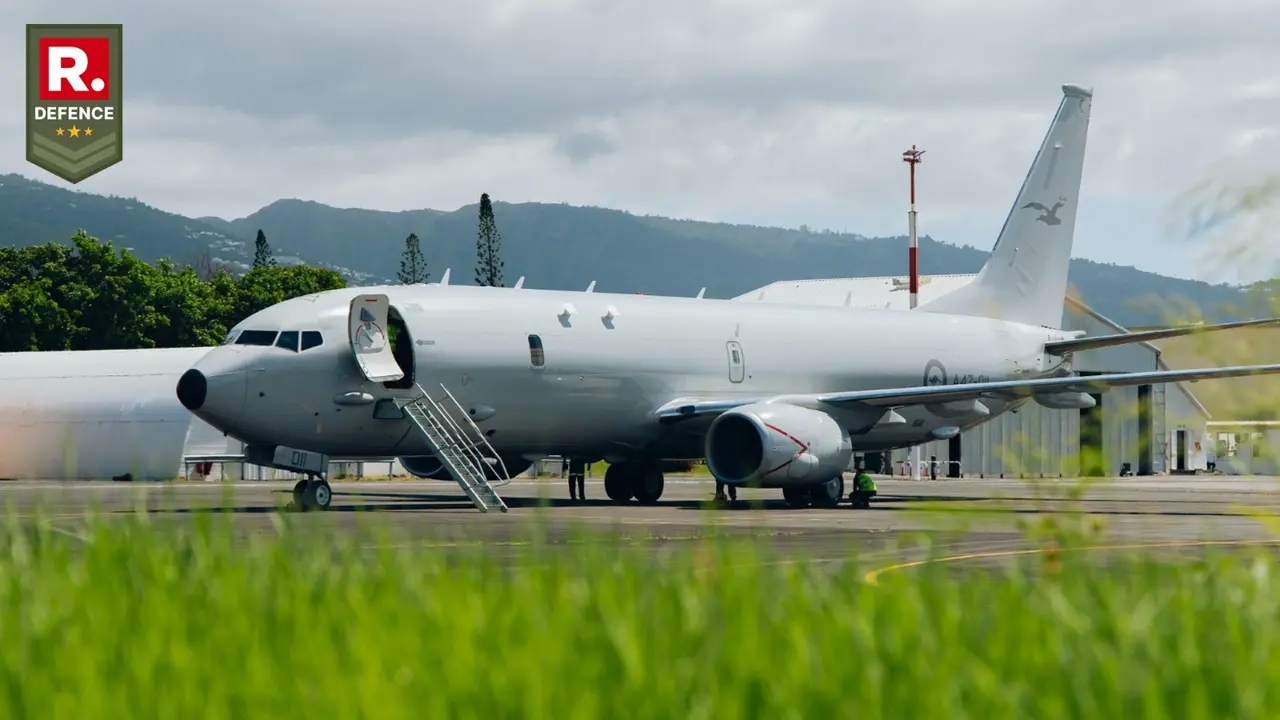
New Delhi: India has officially paused the procurement of six additional Boeing P-8I maritime patrol aircraft as of August 2025. The decision comes after nearly 50% price increase, driven in part by a 25% US tariff on Indian exports. The move comes amid a broader review of high-value defence acquisitions, as the country grapples with rising costs, evolving geopolitical dynamics, and a renewed focus on strategic autonomy.
As per reports, the Ministry of Defence (MoD) had previously signaled willingness to proceed with the acquisition despite escalating costs, the recent announcement of a 25% tariff on Indian exports by the United States, effective August 7, 2025, has triggered a strategic reassessment. The proposed deal has not been definitively canceled but is under review in light of the altered cost dynamics and broader policy considerations.
India’s initial P-8I contract was signed in 2009 for eight aircraft at a cost of $2.2 billion, followed by a second order of four more in 2016 for over $1 billion. The Navy has consistently advocated for a total fleet of 18 aircraft to ensure full-spectrum monitoring of the IOR, especially amid increased Chinese naval activity involving submarines and vessels operating under the guise of survey or anti-piracy missions.
The US State Department had approved the sale of six additional aircraft in May 2021, estimating the cost at $2.42 billion. However, due to supply chain disruptions and other global factors, the projected cost escalated to approximately $3.6 billion by July 2025, a 50% increase from the original estimate.
Advertisement
The sudden imposition of a 25% US tariff on Indian goods, announced under the current US administration’s “America First” policy, has had significant repercussions on defence trade relations. Accompanying this move has been reported diplomatic pressure on India to increase procurement of American platforms, including the P-8I and F-35 stealth fighter jets, to counter China’s growing influence in the Indo-Pacific.
Indian officials have expressed concern and disappointment over the development, with the Ministry of External Affairs underlining that India’s defence procurement decisions are rooted in national security imperatives and strategic assessments. As a result, the MoD has opted to pause the P-8I deal, which is seen as part of a larger reassessment of high-value defense deals involving the United States.
Advertisement
Boeing’s footprint in India, which includes a workforce of 5,000 and a contribution of $1.7 billion to the Indian economy, may also be impacted if the deal remains suspended. However, ongoing collaboration for maintenance of the existing P-8I fleet, including support at Air Works facilities in Hosur, Tamil Nadu, is expected to continue uninterrupted.
Operationally, the Indian Navy relies heavily on the P-8I fleet to monitor over 50 naval vessels and 20,000 merchant ships in the IOR. The current fleet has logged over 40,000 flight hours, and the Navy has maintained that additional aircraft are essential to ensure coverage, redundancy, and effective maritime domain awareness, especially for the Eastern Naval Command.
Reports suggest that earlier in 2025, momentum had built within the MoD for approving the additional procurement, despite reservations over the elevated $3.6 billion cost. The Navy had underscored the aircraft’s advanced surveillance capabilities and its compatibility with indigenous missile systems such as the NASM-MR, which has a 350-kilometre range.
However, the US tariff announcement has shifted the decision-making calculus. According to sources, the procurement is currently “halted but not definitively suspended,” indicating a possibility of revival depending on future developments. Talks reportedly continue around renegotiating pricing under the US Foreign Military Sales (FMS) framework.