
'Integrity Compromised': UNESCO Warns Pakistan to Reverse 'Reconstructions' at Taxila World Heritage Sites or Face Danger List
UNESCO officials, in recent communications with Pakistani representatives, have demanded detailed records of the renovations and called for the reversal of these “unnecessary interventions.” The agency has warned that failure to act could result in the sites being placed on the danger list.
- World News
- 3 min read

;'%3e%3cpath%20d='m8,15.99c4.41,0,7.99-3.58,7.99-7.99S12.41,0,8,0,0,3.59,0,8s3.58,7.99,7.99,7.99Z'%20style='stroke:%23fff;%20stroke-miterlimit:10;%20stroke-width:.02px;'/%3e%3cpath%20d='m3.08,3.37l3.82,5.11-3.84,4.15h.87l3.37-3.64,2.72,3.64h2.94l-4.04-5.39,3.58-3.87h-.86l-3.1,3.35-2.5-3.35h-2.94Zm1.27.64h1.35l5.97,7.99h-1.35l-5.97-7.99Z'%20style='fill:%23fff;'/%3e%3c/g%3e%3c/svg%3e)


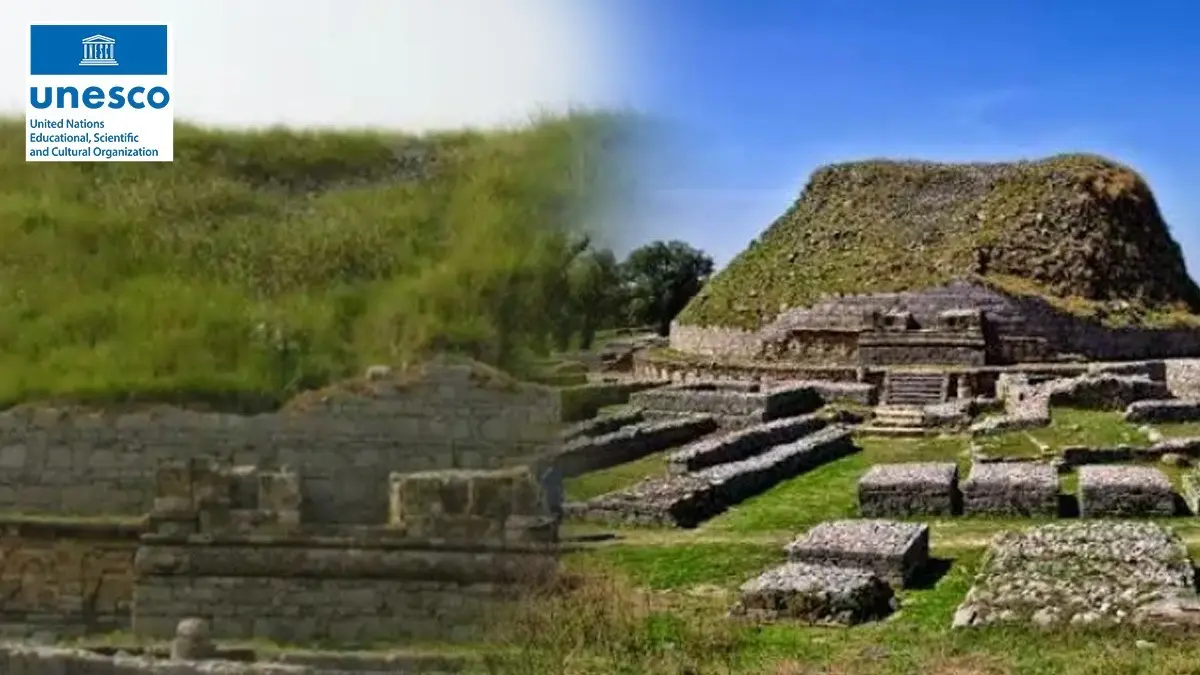
The United Nations cultural agency UNESCO has issued a stern warning to Pakistani authorities, urging them to immediately reverse recent reconstruction and restoration work at two key archaeological sites within the ancient Taxila complex, saying the interventions have compromised the historical integrity and authenticity of the properties.
Taxila, inscribed on the UNESCO World Heritage List in 1980, is celebrated as one of South Asia’s most significant archaeological treasures. The site encompasses multiple layered settlements spanning over five centuries, reflecting the region’s evolution through Buddhist, Gandharan, and earlier influences. It stands as a testament to the crossroads of ancient civilizations along historic trade routes.
According to reports, the concerns center on work carried out by the Punjab Archaeology Department at the Mohra Moradu and Sirkap sites. Reports and photographs shared with UNESCO indicate the use of fresh masonry, cement repairs, and structural alterations, including raising the height of certain walls, that deviate from accepted international conservation standards for ancient ruins.
UNESCO officials, in recent communications with Pakistani representatives, have demanded detailed records of the renovations and called for the reversal of these “unnecessary interventions.” The agency has explicitly warned that failure to act could result in the sites being placed on the UNESCO List of World Heritage in Danger, with the possibility of eventual delisting, a rare but serious step the organization has taken with other properties in the past.
Advertisement
A senior official from Pakistan’s Department of Archaeology and Museums (DOAM) confirmed that the matter was discussed in high-level meetings, with UNESCO emphasizing the need to preserve the original character of the Gandharan-era structures.
Pakistani authorities have defended some of the work as necessary stabilization of “at-risk” sections exposed to weathering, vegetation growth, and structural decay. However, critics and heritage experts argue that modern materials and methods have altered the visual and material authenticity of the ruins, which are central to their Outstanding Universal Value.
Advertisement
Taxila faces longstanding conservation challenges, including vegetation overgrowth, seismic risks, nearby industrial activity, and limited funding. UNESCO and Pakistani heritage bodies have previously collaborated on management plans, but the latest episode highlights ongoing tensions between urgent preservation needs and adherence to strict authenticity guidelines.
Heritage advocates have welcomed UNESCO’s intervention, stressing that Taxila’s global significance demands the highest standards of care.
The Pakistani government has yet to issue a formal public response.
The coming weeks could determine whether swift corrective action averts a formal danger listing.
Taxila continues to attract scholars, tourists, and pilgrims drawn to its stupas, monasteries, and urban remains, underscoring the urgency of balancing protection with responsible access.