
'Iran Is Tough And They Want To Fight': Trump Admits Pressure From Tehran, Says Cuba Could Be ‘Next’
President Trump has recognized Iran as a formidable opponent amid escalating tensions in West Asia, noting their willingness to continue fighting. He stated Iran's outreach to the US regarding a deal came "a little bit late," asserting America now desires conflict more than Tehran.
- World News
- 4 min read

Washington: President Donald Trump has acknowledged the challenges posed by Iran amid the ongoing conflict in West Asia, saying Tehran is proving to be a formidable opponent and appears ready to continue fighting.
Trump admitted that Iran’s stance has been difficult for Washington to handle. “Iran is tough and they want to fight,” he said, marking one of the clearest acknowledgements from the US leader about the intensity of the confrontation with Tehran.
Trump said that Tehran has reached out to the United States asking "how to make a deal" amid US and Israeli strikes on Iran, but said the request had come "a little bit late" as America now wants to "fight more than they do".
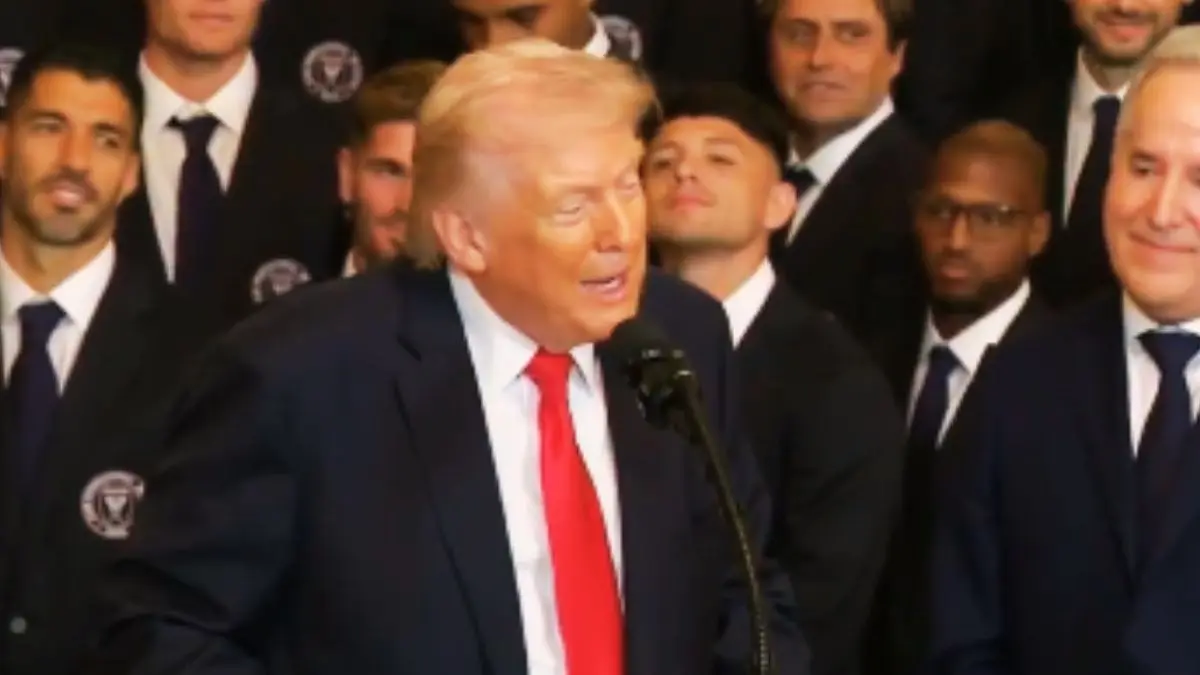
Speaking at an event with the Inter Miami soccer team, Trump said, "They [Iran] are calling; they are saying, 'How do we make a deal?' I said, 'You are being a little bit late.' Now we want to fight more than they do".
Advertisement
The US President on Thursday said that the American military, working closely with "wonderful" Israeli forces, is destroying Iran's missiles and drone capability "every single hour". Trump added that Iranian missile and drone infrastructure had been heavily targeted in ongoing Operation Epic Fury.
"The United States military, together with the wonderful Israeli partners, continues to demolish the enemy far ahead of schedule and at levels that people have never seen before. We are destroying more of Iran's missiles and drone capability every single hour," he said.
Advertisement
Trump claimed that Iran's Air Force and Navy had suffered extensive damage.
"They don't know what is happening... Their Navy is gone, 24 ships in three days... Their anti-aircraft weapons are gone, so they have no Air Force... All of their aeroplanes are gone... their communications are gone, missiles are gone, launchers are gone, about 60 per cent and 64 per cent, respectively" he said.
Trump also warned the Iranian Revolutionary Guard, military, to lay down their arms or they will be killed.
"I'm once again calling on all members of the Iranian Revolutionary Guard, the military, and the police to lay down their arms. They are only going to be killed. And now is the time to stand up for the Iranian people and help take back your country," he said.
The US President offered immunity to those willing to surrender and cooperate. "Accept immunity; we will give you immunity, or you will face absolutely guaranteed death," he warned.
The remarks come at a time when tensions between the United States and Iran remain extremely high following a series of military strikes, retaliatory attacks, and escalating regional hostilities involving Israel and Iranian-backed groups. The conflict has already resulted in casualties, damage to infrastructure, and fears of a wider regional war.
Trump’s statement is notable because it signals that Washington sees Iran as a determined adversary rather than one that will quickly back down. During the same speech, Trump also hinted that the US may eventually shift its attention to Cuba once the Iran situation is dealt with.
“We want to finish this one first, but that will be just a question of time,” Trump said while referring to Cuba, suggesting that Washington could take stronger action toward the Caribbean island in the future.
The comment has sparked speculation among analysts that the Trump administration may be preparing to increase pressure on Havana through economic or strategic measures after the Iran crisis stabilises.
Trump’s remarks come amid a rapidly evolving geopolitical landscape, with the US intensifying its campaign against Iran while simultaneously signalling potential future confrontations elsewhere. The combination of acknowledging Iran’s resistance and hinting at Cuba as a possible next focus highlights the broader scope of Washington’s current foreign policy posture.