
Tehran Shoots Down Trump’s Claims Once Again; Denies Requesting Pause On Energy Site Strikes, Dismisses Peace Talk Narrative
Tehran denied the claim that US President Donald Trump on Thursday said that Iran had sought a seven-day pause on American strikes targeting its energy infrastructure, but he decided to extend the window to 10 days, pushing the deadline to April 6.
- World News
- 5 min read

;'%3e%3cpath%20d='m8,15.99c4.41,0,7.99-3.58,7.99-7.99S12.41,0,8,0,0,3.59,0,8s3.58,7.99,7.99,7.99Z'%20style='stroke:%23fff;%20stroke-miterlimit:10;%20stroke-width:.02px;'/%3e%3cpath%20d='m3.08,3.37l3.82,5.11-3.84,4.15h.87l3.37-3.64,2.72,3.64h2.94l-4.04-5.39,3.58-3.87h-.86l-3.1,3.35-2.5-3.35h-2.94Zm1.27.64h1.35l5.97,7.99h-1.35l-5.97-7.99Z'%20style='fill:%23fff;'/%3e%3c/g%3e%3c/svg%3e)


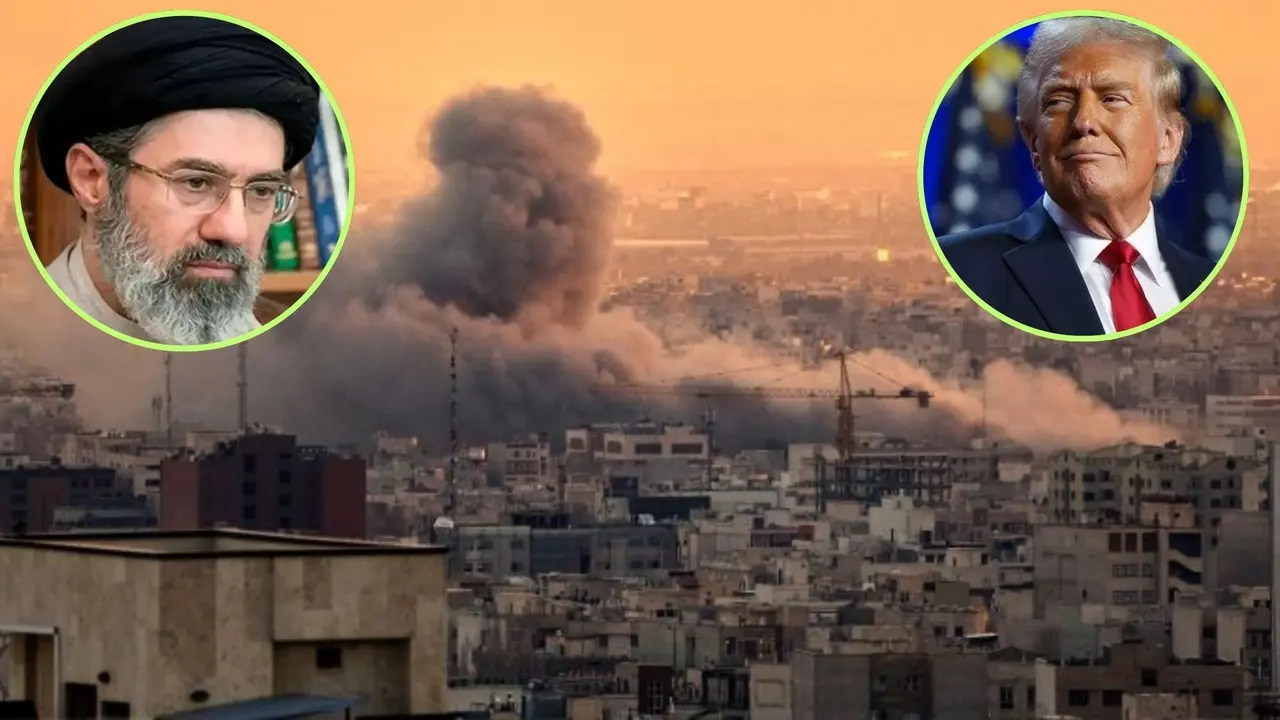
New Delhi: In another blow to the US narrative, Iran on Friday refuted President's Donald Trump's claim that he was pausing attacks on Iran's energy plants for 10 days at the Iranian government's request.
As per reports, Tehran denied the claim stating it has not requested any pause on strikes targeting its energy infrastructure.
What Trump claimed?
Trump on Thursday said that he was pausing attacks on Iran's energy plants for 10 days at what he cast as the Iranian government's request, and said talks with Tehran were going "very well."
"They said to me very nicely, through my people, 'Could we have more time?' Because we're talking about tomorrow night, which is pretty quick, and if they don't do what they have to do, I will knock out their power plants," Trump said.
Advertisement

"As per Iranian Government request... I am pausing the period of Energy Plant destruction by 10 Days to Monday, April 6, 2026, at 8 P.M., Eastern Time," Trump said in a post on Truth Social.
Elaborating on his decision, Trump added, “Talks are ongoing and, despite erroneous statements to the contrary by the Fake News Media, and others, they are going very well.”
Advertisement
"I gave them a 10-day period. They asked for seven," Trump later told Fox News' "The Five" show.
Trump stated that his decision to give 10 days was because of Iran allowing the passage of eight oil tankers through the Strait of Hormuz as a "present" to the United States amid ongoing negotiations.
"We talked about the eight ships, the present that I talked about the other day, but they asked for seven, and I gave them ten. And they were very thankful about that," the US President added.
Warns of pressure
During a White House cabinet meeting on Thursday, President Trump warned of intensified pressure if Iran failed to reach a deal, but later announced via social media a 10-day reprieve on strikes against Iranian energy facilities, effective until April 6, 2026.
Trump, who has offered shifting goals and timeline for the Iran war, ranging from overthrowing Iran's government to destroying its military and missile capabilities had earlier threatened to target Iran's power plants if Tehran did not reopen the Strait of Hormuz.
Citing "very productive talks" with Iranian leaders, he eventually announced a five-day suspension of those strikes, a pause that was scheduled to expire this Friday, March 27, 2026.
Trump's latest extension of deadlines, first moved from Monday to Friday with a five-day reprieve and now pushed back by another 10 days, underscores the shifting timelines amid evolving developments.
How Tehran retaliated?
Tehran, meanwhile, had countered with threats to strike critical regional infrastructure, such as desalination plants, should President Trump proceed with his warnings.
In response, the Trump administration cautioned of unprecedented fallout if a peace deal is not reached, vowing that "Tehran will be hit harder than ever before" if it refuses to negotiate.
Strait of Hormuz blockade
In an earlier post on Truth Social, Trump stated that if Iran does not "fully open" the Strait within 48 hours, the United States would target and "obliterate" Iranian power plants.
"If Iran doesn't FULLY OPEN, WITHOUT THREAT, the Strait of Hormuz, within 48 HOURS from this exact point in time, the United States of America will hit and obliterate their various POWER PLANTS, STARTING WITH THE BIGGEST ONE FIRST!" the post read.
Who is the winner?
Although Trump claims that "In a certain sense, we have already won," he added that Trump has said Iran must make a deal or face a continued onslaught.
Over the past 3 to 4 days, the conflict has escalated significantly as both sides have targeted major cities and critical infrastructure.
Following the expiration of a previous pause, the IDF completed a wide-scale wave of strikes in the heart of Tehran, reportedly hitting residential areas, naval cruise missile production sites, and IRGC command centers. Airstrikes have also battered other major Iranian hubs, including Isfahan, Shiraz, and Bandar Abbas, with reports of explosions near Mashhad Airport.
In retaliation, Iran has launched massive missile and drone barrages, specifically “Wave 82”, targeting Tel Aviv, southern Israel, and Ben Gurion Airport, where at least three planes were damaged.
Beyond the direct combatants, the "remote war" has spilled into neighboring regions, with drone and missile impacts recorded at Kuwait Airport and near U.S. bases across Jordan and Bahrain, further destabilizing the West Asian corridor.
War began on Feb 28
The war began on February 28 when the U.S. and Israel attacked Iran. Tehran subsequently responded by launching its own attacks on Israel and Gulf states with U.S. bases.
Joint U.S.-Israeli strikes in Iran and Israeli attacks in Lebanon have killed thousands. The war has also raised oil prices and shaken global markets.