
Iran's Foreign Minister Leaves Islamabad Without Meeting US Envoys: Reports
Iranian Foreign Minister Abbas Araghchi left Islamabad on Saturday without holding any direct talks with American envoys, Pakistani officials and Iranian sources confirmed, dealing a potential setback to ongoing mediation efforts aimed at salvaging a fragile ceasefire between Tehran and Washington.
- World News
- 2 min read

;'%3e%3cpath%20d='m8,15.99c4.41,0,7.99-3.58,7.99-7.99S12.41,0,8,0,0,3.59,0,8s3.58,7.99,7.99,7.99Z'%20style='stroke:%23fff;%20stroke-miterlimit:10;%20stroke-width:.02px;'/%3e%3cpath%20d='m3.08,3.37l3.82,5.11-3.84,4.15h.87l3.37-3.64,2.72,3.64h2.94l-4.04-5.39,3.58-3.87h-.86l-3.1,3.35-2.5-3.35h-2.94Zm1.27.64h1.35l5.97,7.99h-1.35l-5.97-7.99Z'%20style='fill:%23fff;'/%3e%3c/g%3e%3c/svg%3e)


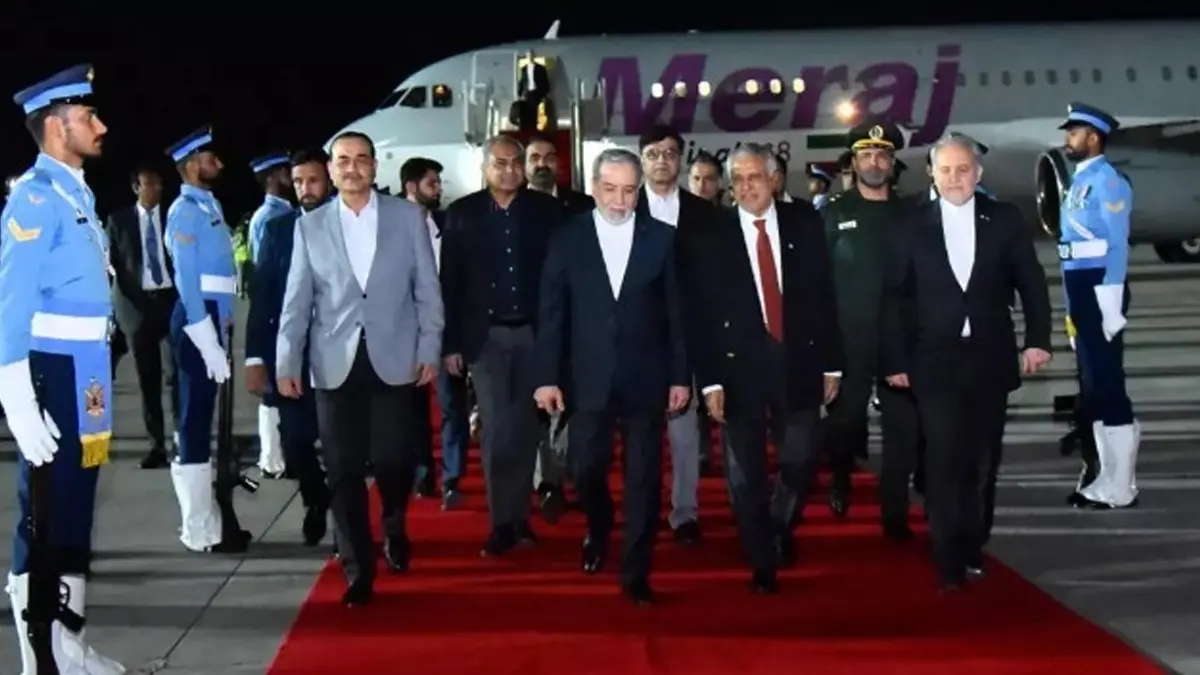
Islamabad, Pakistan: Iranian Foreign Minister Abbas Araghchi left Pakistan's capital on Saturday without holding any direct talks with American envoys, Pakistani officials and Iranian sources confirmed, dealing a potential setback to ongoing mediation efforts aimed at salvaging a fragile ceasefire between Tehran and Washington.
Araghchi arrived in Islamabad late Friday for what was billed as bilateral consultations with Pakistani leadership. During his short visit, he held multiple meetings with key figures, including Prime Minister Shehbaz Sharif, Army Chief Field Marshal Asim Munir, Foreign Minister Ishaq Dar, and Interior Minister Mohsin Naqvi. The discussions focused on Iran's position regarding the conflict with the United States and Israel, as well as Pakistan's role as a neutral mediator in the region.
However, shortly after his arrival, Iran's Foreign Ministry made it clear that no direct engagement with US representatives was planned or would occur. Spokesman Esmail Baghaei emphasized that any communication would be channeled indirectly through Pakistani officials, who have been actively facilitating backchannel diplomacy.
The development comes as the White House announced that President Donald Trump's envoys, Steve Witkoff and Jared Kushner, were expected to travel to Islamabad on Saturday for what American officials hoped would advance a second round of ceasefire negotiations. Vice President JD Vance was said to be on standby if needed. Iranian officials, however, rejected the idea of face-to-face meetings, insisting the visit was solely for consultations with Pakistan.
Advertisement
This marks the latest twist in the diplomatic maneuvering following earlier indirect talks held in Geneva in late February, which failed to produce a breakthrough on Iran's nuclear program and broader regional tensions. Pakistan has positioned itself as a key go-between, leveraging its relationships with both Tehran and Washington amid heightened hostilities, including reported blockades in the Strait of Hormuz and lingering fallout from military actions.
Pakistani officials expressed hope that Araghchi's meetings helped convey Tehran's demands clearly, keeping the door open for future indirect or mediated discussions.
Advertisement
The episode underscores the deep distrust between Iran and the US, even as both sides appear to be testing diplomatic channels through third parties like Pakistan. Regional analysts suggest that while direct talks remain elusive, sustained mediation could still prevent further escalation in an already volatile Middle East.