
Iran to Charge Maritime Service Fees on Ships Passing Through Strait of Hormuz Under US-Iran Deal
Iran says ships transiting the Strait of Hormuz will pay maritime service fees under a new US-Iran deal that reopens the crucial global oil corridor.
- World News
- 5 min read

;'%3e%3cpath%20d='m8,15.99c4.41,0,7.99-3.58,7.99-7.99S12.41,0,8,0,0,3.59,0,8s3.58,7.99,7.99,7.99Z'%20style='stroke:%23fff;%20stroke-miterlimit:10;%20stroke-width:.02px;'/%3e%3cpath%20d='m3.08,3.37l3.82,5.11-3.84,4.15h.87l3.37-3.64,2.72,3.64h2.94l-4.04-5.39,3.58-3.87h-.86l-3.1,3.35-2.5-3.35h-2.94Zm1.27.64h1.35l5.97,7.99h-1.35l-5.97-7.99Z'%20style='fill:%23fff;'/%3e%3c/g%3e%3c/svg%3e)


Tehran: Iran has announced that it will begin charging maritime service fees on ships sailing through the Strait of Hormuz as part of a new framework agreement agreed with the US to end nearly four months of hostility.
The declaration came hours after details of the proposed US-Iran agreement surfaced. Tehran underlined that, while it does not intend to levy transit taxes on vessels utilizing the important canal, fees will be imposed for services given in the region.
"We have always maintained that we do not seek to collect transit tolls, but fees for navigation services, environmental protection, ship insurance and other necessary services will be charged," Iranian Foreign Ministry spokesperson Esmaeil Baqaei said during a press briefing on Monday.
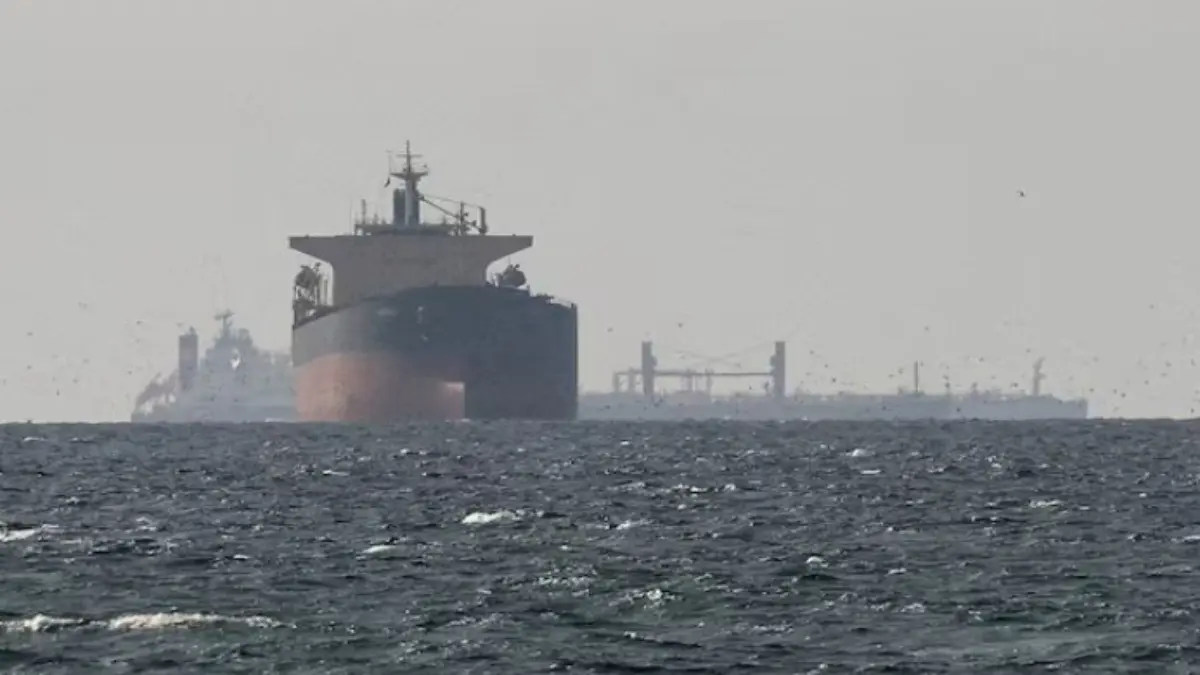
The Strait of Hormuz, one of the world's most crucial oil corridors, has remained effectively blocked to commercial shipping since US-Israeli strikes on February 28. The agreement between Washington and Tehran contains measures for reopening the critical maritime passage and resuming commercial shipping.
Advertisement
Iran, Oman To Decide Future Maritime Services
According to Iran's Fars News Agency, the final text of the agreement expressly recognizes Iran and Oman's roles in designing the future management of marine services in the Strait of Hormuz.
The final text included into the understanding soon before its announcement stated that Iran and Oman will jointly define the "future administration of maritime services in the Strait of Hormuz".
Advertisement
The framework agreement is scheduled to be formally signed in Switzerland on Friday, June 19. It intends to pause military operations on many fronts while clearing the ground for negotiations on Iran's nuclear program, sanctions relief, and other outstanding concerns between the two countries.
Tehran Says US Agreed To Release Frozen Funds, Pay War Damages
Iran also claimed that the United States has committed to addressing two major demands as part of the understanding. Speaking at the briefing, Baqaei said Washington had agreed to facilitate the release of Iranian funds frozen abroad and compensate Tehran for damage caused during the conflict.
"The American side has committed to taking measures in both areas," he said. The spokesperson further stressed that Iran expects the United States to ensure Israel adheres to commitments related to ending military operations in Lebanon.
"The United States must honour its commitments. It must ensure that the Zionist regime also respects its own regarding Lebanon," Baqaei added. He said Lebanon's security and sovereignty formed an important part of the broader understanding reached between Tehran and Washington, warning that no agreement could remain durable if Lebanon's stability continued to be threatened.
Iran Says Mistrust Of US Remains
Despite the breakthrough, Iran made it clear that its strong distrust of Washington remains. Baqaei stated that Tehran had not forgotten the effects of the struggle and remained wary of American intentions.
"No one can forget the crimes committed against the Iranian people under any circumstances. The United States still has a long way to go before it can earn the trust of the Iranian people," he noted, adding that the framework was "merely a step toward reducing tensions".
He also emphasised that Iran does not trust either the United States or Israel.
Trump Says Ships Are Moving Through Hormuz Again
US President Donald Trump highlighted signs of renewed shipping activity in the Strait following the announcement of the deal. In a post on social media, Trump wrote, "Ships Are Starting to Move, Many Loaded Up With Oil, Out of the Strait of Hormuz. They Are Going Along the Southern 'Highway,' Which Is Totally Safe, Secure, and Pristine. There Are Other Areas of Travel, Also!!! President DJT.”
World Leaders Welcome Tentative Agreement
Several world leaders welcomed the announcement, expressing hope that the agreement would reduce tensions and restore stability in the region. UK Prime Minister Keir Starmer praised the breakthrough and congratulated those involved in the negotiations.
“I want first to welcome the breakthrough reached last night between the US and Iran. And I congratulate (US) President (Donald) Trump, the mediators from Pakistan and Qatar and all those involved. This is a hugely significant moment. We have long called for de-escalation, and it is vital that all parties seize this opportunity to secure stability in the region and restore freedom of navigation in the Strait of Hormuz, which in turn will ease the economic pressures felt by people here in the United Kingdom and around the world. We will now work closely with our partners to support this agreement and to ensure it turns into a durable, lasting peace.”
Japan's Prime Minister Sanae Takaichi also welcomed the development and stressed the importance of implementing the agreement.
“From here on, what is important is that this memorandum is reliably implemented, and that free and safe navigation through the Strait of Hormuz is actually ensured. Another important point is that a final agreement on issues such as Iran’s nuclear program should be realized as soon as possible.”
French Foreign Minister Jean-Noel Barrot described the agreement as an opportunity to end hostilities and restart diplomatic efforts in the region.
“I welcome that an agreement has been reached between the United States and Iran, that should bring an end to hostilities on all fronts, including in Lebanon, allow for the reopening of the Strait of Hormuz and pave the way for comprehensive negotiations aimed at restoring stability in the region. This implies that Iran must be able to coexist peacefully with its regional neighbors, that its nuclear and missile programs must be brought under control and that its support for terrorist groups must be ended, which also means that the Iranian people, who have suffered so much from repression and war, must be able to freely build their future.”
Israel Voices Concerns Over Deal
While many countries applauded the accord, Israeli leaders were dissatisfied. National Security Minister Itamar Ben-Gvir stated that Israel was not obligated by the US-Iran agreement. A key opposition candidate ahead of the forthcoming elections also described the pact as a "dangerous turn" for Israel's security, highlighting domestic concerns about the deal's long-term consequences.