
Israel And Lebanon Agree To 10-Day Ceasefire: How The Fragile Truce Could Lead To Peace From Beirut To Tehran | Explained
US President Donald Trump announced a 10-day Israel-Lebanon ceasefire to advance peace efforts, though Hezbollah demands a comprehensive truce and Netanyahu says Israeli troops will remain in southern Lebanon.
- World News
- 7 min read

;'%3e%3cpath%20d='m8,15.99c4.41,0,7.99-3.58,7.99-7.99S12.41,0,8,0,0,3.59,0,8s3.58,7.99,7.99,7.99Z'%20style='stroke:%23fff;%20stroke-miterlimit:10;%20stroke-width:.02px;'/%3e%3cpath%20d='m3.08,3.37l3.82,5.11-3.84,4.15h.87l3.37-3.64,2.72,3.64h2.94l-4.04-5.39,3.58-3.87h-.86l-3.1,3.35-2.5-3.35h-2.94Zm1.27.64h1.35l5.97,7.99h-1.35l-5.97-7.99Z'%20style='fill:%23fff;'/%3e%3c/g%3e%3c/svg%3e)


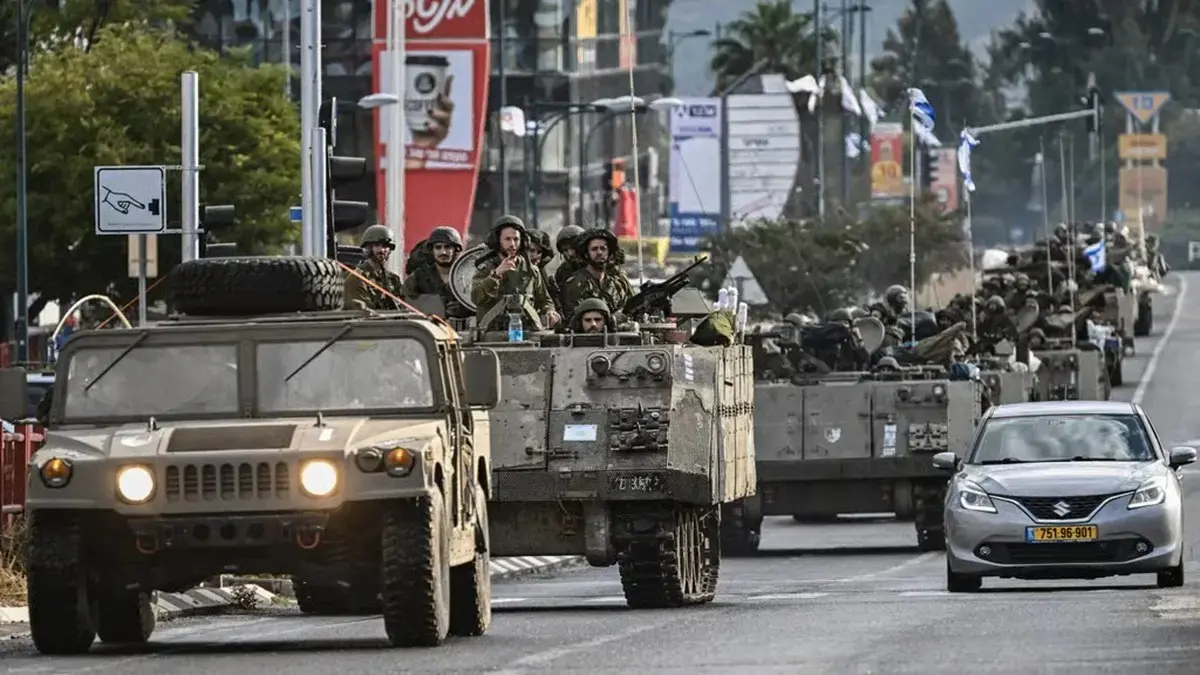
Jerusalem: US President Donald Trump announced on Thursday that Israel and Lebanon had agreed to a 10-day ceasefire, a development that is likely to strengthen efforts to prolong the fragile truce between Iran, the United States and Israel after weeks of conflict. Trump announced on his Truth Social platform, stating the pause in fighting would begin at 5 pm Eastern time, or 9 pm GMT. Trump confirmed that the development came following “excellent” conversations with Lebanese President Joseph Aoun and Israeli Prime Minister Benjamin Netanyahu.
Notably, the ceasefire arrived 2 days after the first direct diplomatic talks in decades between the Israeli and Lebanese ambassadors to the US were held in Washington. While Israel is not at war with the Lebanese state itself, it has been engaged in intense fighting with the Iranian-backed Hezbollah group inside Lebanon. The ground invasion by Israeli forces in southern Lebanon has seen fierce battles along the border, particularly around the cities of Tyre, Nabatieh and the strategic town of Bint Jbeil.
Lebanon and Israel have technically been at war since Israel was established in 1948, and Lebanon remains deeply divided over diplomatic engagement with Israel. The current announcement has raised cautious hope for de-escalation, though statements from all sides suggest the path forward remains fraught with conditions and mistrust.
Reactions From Jerusalem And Hezbollah
Israeli PM Netanyahu said in a video message that he agreed to the ceasefire to advance peace efforts with Lebanon. “We have an opportunity to make a historic peace agreement with Lebanon,” he said. However, Netanyahu made clear that Israeli troops would stay in an expanded security zone in southern Lebanon, which he described as “much stronger, more extensive and more continuous than before.” He added, “That is where we are, and we are not leaving.” The officials say the zone will extend at least 8-10 km into Lebanon.
Advertisement
After the deal, Hezbollah responded with its own conditions, stating that “any ceasefire must be comprehensive across all Lebanese territory and must not allow the Israeli enemy any freedom of movement". The group added that “Israeli occupation on our land grants Lebanon and its people the right to resist it, and this matter will be determined based on how developments unfold", a stance that could complicate the implementation of the truce. Hezbollah had previously opposed direct talks between Lebanon and Israel.
Trump also extended an invitation to the leaders of Israel and Lebanon to visit the White House for what he called “the first meaningful talks” between the countries since 1983. “Both sides want to see PEACE, and I believe that will happen, quickly,” Trump wrote. Lebanon and Israel signed an agreement in 1983 under which Lebanon would formally recognise Israel and Israel would withdraw from Lebanon. That deal collapsed during Lebanon’s civil war and was formally cancelled a year later.
Advertisement
What Is Lebanon’s Position And Disarmament Demands
Lebanon has insisted on a ceasefire to halt the fighting between Israel and Hezbollah before engaging in further negotiations, while also vowing to commit to disarming the group. The conflict has displaced more than 1 million people in Lebanon since March, with humanitarian agencies warning of a worsening crisis in the south.
Meanwhile, despite the ceasefire announcement, Israel and Hezbollah exchanged fire across the border on Thursday, with Hezbollah targeting towns in northern Israel with rockets and drones. Israeli strikes against southern Lebanon intensified, especially around Tyre and Nabatieh.
Ceasefire Efforts For Israel-US And Iran
On the other hand, the 10-day conflict pause is being viewed as a possible bridge to extend the ceasefire that has paused almost 7 weeks of war between Israel, the US and Iran. The conflict has killed thousands and disrupted global markets by cutting off shipping, leading to a global energy crisis and hammering military and civilian infrastructure. The fighting has killed at least 3000 people in Iran, more than 2100 in Lebanon, 23 in Israel, and over a dozen in Gulf Arab states. The conflict in West Asia has resulted in 13 US service members being killed.
Amidst the spiralling developments, Pakistan’s army chief, Asim Munir, met on Thursday with Iran’s parliament speaker, Mohammad Bagher Qalibaf, who has emerged as his country’s chief negotiator. Iranian state television did not provide details on the meeting and there was also no immediate comment from Pakistan, which has become a key mediator after hosting direct talks between the US and Iran that they claimed helped narrow differences. The mediators are seeking a new round of talks before the current 2-week ceasefire expires next week.
The White House said any further talks regarding Iran would likely take place in Islamabad, though no decision had been made on whether to resume negotiations. The fragile ceasefire is holding despite a US naval blockade of Iranian ports and Iranian counter-threats to target regional ports across the Red Sea. US Central Command said on Wednesday that no ships had made it past the blockade since it was imposed 2 days earlier, while 13 merchant vessels complied with the direction from US forces to turn around and re-enter Iranian waters.
Sticking Points In Negotiations
It is reported that the US and Iran had an “in-principle agreement” to extend the ceasefire to allow for more diplomacy. Reports also suggested that the mediators are pushing for a compromise on 3 main sticking points, including Iran’s nuclear programme, the Strait of Hormuz, and compensation for wartime damages, according to a regional official involved in the mediation efforts.
Iranian Foreign Ministry spokesman Esmail Baghaei said Iran is open to discussing the type and level of its uranium enrichment, but his country “based on its needs, must be able to continue enrichment", Iranian state media reported. The Pentagon urged Iran to make a deal, with US Defence Secretary Pete Hegseth stating that “ultimately, they need to come to the table". He said the US will ensure that Iran never has a nuclear weapon. “We’d prefer to do it the nice way through a deal led by our great vice president and negotiating team. Or we can do it the hard way,” Hegseth said.
On the other hand, Iran insisted it does not seek a nuclear weapon and its nuclear programme is for peaceful purposes.
Meanwhile, the commander of Iran’s joint military command, Ali Abdollahi, threatened to halt trade in the region if the US does not lift its naval blockade. A newly appointed military adviser to Iranian Supreme Leader Mojtaba Khamenei said he does not support extending the ceasefire. Meanwhile, US Treasury Secretary Scott Bessent said the Trump administration would ramp up economic pain on Iran with new economic sanctions on countries doing business with it, calling the move the “financial equivalent” of a bombing campaign.
What Are The Economic Consequences
As per analysts, the war has jolted markets and rattled the global economy. Since the war began, Iran has curtailed maritime traffic through the Strait of Hormuz, through which a fifth of global oil transited in peacetime. Tehran’s effective closure of the strait sent oil prices skyrocketing, raising the cost of fuel, food and other basic goods far beyond the Middle East. The US has responded with a blockade on Iranian shipping, even though oil prices have fallen amid hopes for an end to fighting, and US stocks on Wednesday surpassed records set in January.
Amidst the developments, Chinese Foreign Minister Wang Yi said the window of peace was opening during a phone call with his Iranian counterpart Abbas Araghchi, the Chinese Foreign Ministry said. Wang called for the Strait of Hormuz to reopen to stabilise global trade. UN Secretary-General Antonio Guterres said it is “highly probable” that US-Iran talks will restart, citing a meeting he had with Pakistan’s deputy PM Ishaq Dar.
Earlier, Trump told the New York Post that a second round of talks could happen “over the next two days,” possibly in Islamabad.
For now, it remains unclear whether the diplomatic flurry can deliver a lasting deal as the two-week ceasefire passes the halfway mark. With Israeli troops still deep in southern Lebanon, Hezbollah demanding a comprehensive halt to Israeli movement, and Iran and the US at odds over enrichment and the naval blockade, mediators face a narrow window to turn the temporary pauses into something more durable.