
Israeli archaeologists discover rare 2,700-year-old toilet in Jerusalem
Israeli archaeologists discovered a unique old toilet going back almost 2,700 years, when private facilities were a luxury in the holy city of Jerusalem.
- World News
- 2 min read

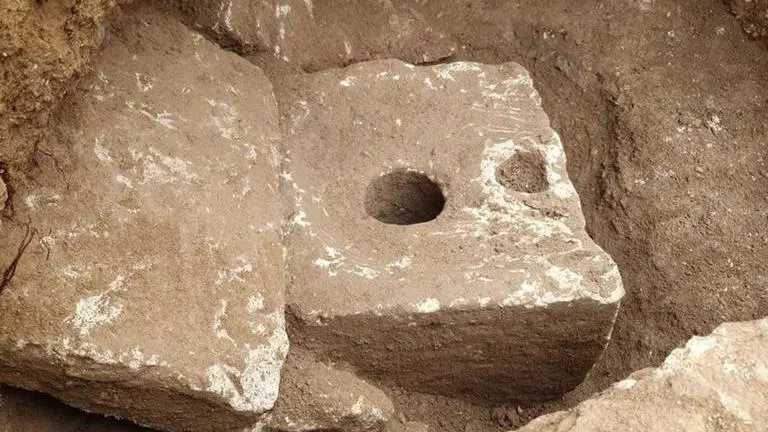
Israeli archaeologists discovered a unique old toilet going back almost 2,700 years, when such facilities of privacy were a luxury in the holy city of Jerusalem. The smooth, carved limestone toilet was discovered in a rectangular cottage that was part of a huge mansion overlooking what is now the Old City, stated the Israeli Antiquities Authority on Tuesday, as reported by the Associated Press (AP). It was built with a deep septic tank sunk underground for comfortable sitting.
A private bathroom cubicle was extremely rare, and only a few have been discovered to date, according to Yaakov Billig, the excavation's director. He claimed that only the wealthy could afford toilets, and that a famous rabbi had once declared that being wealthy meant "having a toilet next to his table." Animal bones and crockery discovered in the septic tank could reveal information about people's lifestyles and diets at the time, as well as ancient diseases, stated the antiquities authorities.
The archaeologists discovered stone columns from the time period, as well as evidence of a surrounding garden with orchards and aquatic plants, indicating that the people who lived there were well-off. Earlier this year, archaeologists from the Austrian Academy of Sciences discovered key evidence of the alphabet in Israel's Tel Lachish, dating back to 1450 BC. The findings, published in the Austrian Academy of Sciences journal, revealed that the alphabet was not introduced to the Levant by conquering Egyptians, as previously supposed.
'Bronze Age alphabets originated in Sinai Peninsula around 1800 BC'
The findings from the Israeli excavation site, which were also published in the journal Antiquity, show that Bronze Age alphabets originated in the Sinai Peninsular around 1800 BC and expanded to the Levant around 1300 BC. From there, it spread across the Mediterranean, eventually evolving into the Greek and Latin alphabets, claimed archaeologists. The evidence was discovered by an Austrian archaeological team at the Tel Lachish site in modern-day Israel's Shephelah region. Tel Lachish in Israel, according to the study, was an important settlement recorded in ancient Egyptian documents and served as a significant hub of activity, receiving imports from Egypt, Cyprus, and the Aegean.