
Japan, UK, Australia, Germany Snub Trump; US Pressure for Hormuz Coalition Against Iran Meets Cold Shoulder From Global Allies
US President Donald Trump’s call for allies to send warships to the Strait of Hormuz has been met with global rejection. The UK, Japan, Germany, France, and South Korea have all declined, leaving Washington isolated as Iran’s blockade disrupts a fifth of global oil supply.
- World News
- 5 min read

;'%3e%3cpath%20d='m8,15.99c4.41,0,7.99-3.58,7.99-7.99S12.41,0,8,0,0,3.59,0,8s3.58,7.99,7.99,7.99Z'%20style='stroke:%23fff;%20stroke-miterlimit:10;%20stroke-width:.02px;'/%3e%3cpath%20d='m3.08,3.37l3.82,5.11-3.84,4.15h.87l3.37-3.64,2.72,3.64h2.94l-4.04-5.39,3.58-3.87h-.86l-3.1,3.35-2.5-3.35h-2.94Zm1.27.64h1.35l5.97,7.99h-1.35l-5.97-7.99Z'%20style='fill:%23fff;'/%3e%3c/g%3e%3c/svg%3e)


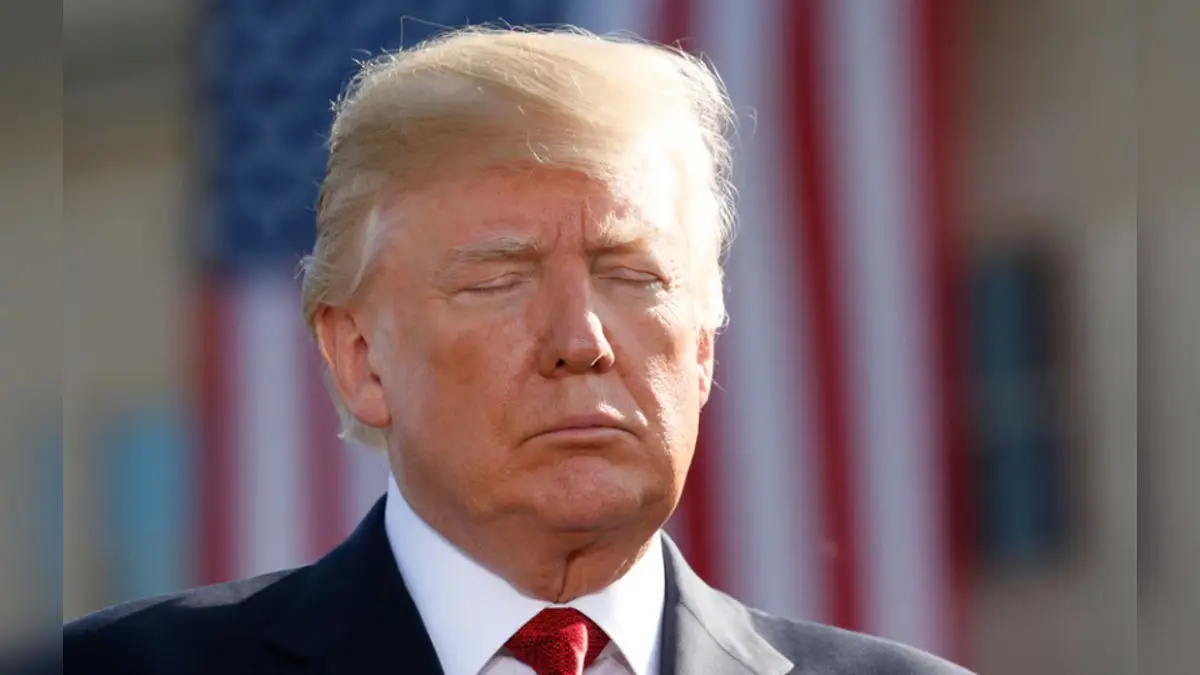
US President Donald Trump’s weekend appeal to allies to send warships to the Strait of Hormuz has been met with a string of refusals, leaving Washington looking increasingly isolated in its push to secure the vital waterway. Speaking amid the US-Israeli war on Iran, now in its third week, Trump said his administration had contacted seven countries to help reopen the strait. On social media, he named China, France, Japan, South Korea, Britain and others as potential partners. Instead of lining up behind him, one ally after another has quietly stepped aside.
UK Joins the List of Holdouts
According to a media report, Prime Minister Keir Starmer’s government has ruled out sending British naval vessels. Energy Secretary Ed Miliband said London is “intensively looking” at ways to help reopen the route, including deploying unmanned drones to sweep for naval mines, but stopped short of committing to warships. Starmer also discussed the Middle East conflict with Canadian Prime Minister Mark Carney, agreeing to continue talks at a meeting this week.
Japan’s Careful Stance
Japan has also declined to dispatch naval vessels. Prime Minister Sanae Takaichi told parliament, “We have not made any decisions whatsoever about dispatching escort ships. We are continuing to examine what Japan can do independently and what can be done within the legal framework.” Takaichi is expected to travel to Washington this week for talks with Trump, where the Hormuz crisis will be on the agenda.
Australia Says No
Australia has ruled out sending warships as well. “We won’t be sending a ship to the Strait of Hormuz. We know how incredibly important that is, but that’s not something that we’ve been asked or that we’re contributing to,” said Catherine King, a member of Prime Minister Anthony Albanese’s cabinet, in an interview.
Advertisement
South Korea’s Constitutional Constraints
South Korea’s presidential office said, “We will communicate closely with the U.S. regarding this matter and make a decision after careful review.” Under South Korea’s constitution, overseas troop deployments require parliamentary approval, and opposition figures have already signaled that any dispatch of warships would need legislative consent.
Europe’s Reluctance
European allies are equally hesitant. EU foreign ministers are discussing bolstering the Aspides mission, a small naval operation launched in 2024 to protect ships from Houthi attacks in the Red Sea. But diplomats say expanding its role to the Strait of Hormuz is not on the table. German Foreign Minister Johann Wadephul added that Aspides was “not even effective in carrying out its current task,” expressing skepticism that extending it to Hormuz would provide greater security. France has also rejected Trump’s request, stressing it would maintain a defensive posture rather than join a US-led war effort.
Advertisement
China Keeps Its Distance
China has so far avoided giving a direct answer to Trump’s request for military support in the Strait of Hormuz. At a daily briefing in Beijing, Foreign Ministry spokesperson Lin Jian declined to comment on whether China would send warships, instead repeating calls for an immediate end to the fighting and warning of the impact on global energy and goods trade. Lin emphasized that “head‑of‑state diplomacy plays an irreplaceable strategic guiding role in China–US relations,” noting that communication between the two governments continues ahead of Trump’s planned visit to Beijing in about two weeks.
Trump, however, has suggested that the trip may be delayed if Beijing doesn't clear its standpoint. “We may delay,” he said, linking his diplomatic calendar to China’s stance on Hormuz.
A Coalition Without Members
Trump had urged allies to act so that the Strait “will no longer be a threat by a nation that has been totally decapitated.” Yet Iran has effectively shut the passage, choking off a fifth of global oil supply in what analysts call the largest disruption ever. Instead of rallying behind Trump’s call, America’s closest partners appear reluctant to be drawn into another US-led military venture.
Trump’s NATO Warning
Adding pressure, Trump has issued a stern warning about NATO’s future, suggesting the alliance could face a “very bad” outlook if member nations do not assist in securing the Strait of Hormuz. He has argued that nations benefiting from the waterway must share the burden of its protection.
Subtle but Clear Pushback
For Trump, the optics are difficult to ignore: after Germany, Japan, France, South Korea, Australia, and now the UK, his appeal has turned into a string of “thanks, but no thanks.” Allies are signaling that while they share concerns about global energy security, they are not eager to sign up for another war under American command. The repeated refusals leave Washington’s plan looking less like a coalition and more like a solo mission - a diplomatic facepalm moment for Trump as oil prices continue to soar.