
Know about Burgessomedusa phasmiformis, the oldest jellyfish fossil discovered in Canada
The oldest known jellyfish's fossil, possibly a predator, dating back more than half-a-billion years, has been discovered in the Canadian Rockies.
- World News
- 2 min read

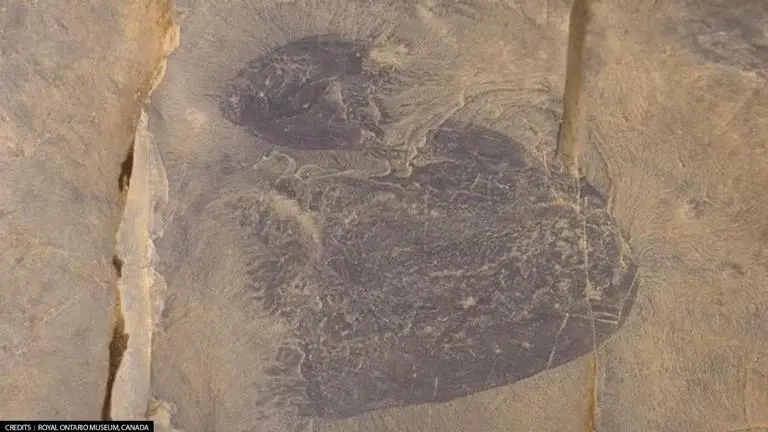
The discovery of a remarkable jellyfish fossil in the Canadian Rockies has provided valuable insights into prehistoric life. This ancient specimen, dating back over 505 million years, was found in the Burgess Shale and is identified as Burgessomedusa phasmiformis, a predatory jellyfish that swam freely in the ancient oceans. The fossil is exceptionally well-preserved, offering a glimpse into the creature's impressive ability to capture sizable prey using its tentacles.
According to scientists, the fossils discovered in Canada's Burgess Shale represent the earliest creatures that we would recognise as jellyfish. These ancient beings, dating back to the Cambrian geological period, were likely dominant predators in the ancient seas, striking terror among other organisms.
Joe Moysiuk, a PhD student at the University of Toronto and the Royal Ontario Museum (ROM), revealed to CBC that the jellyfish found in the Burgess Shale possessed a bell that reached about 20 centimeters in height, comparable in size to a loaf of bread. This made it one of the largest creatures of its time. The species was described in a recent study published in the Proceedings of the Royal Society B.
Ancient Jellyfish a formidable swimmer as well: Study
Interestingly, the jellyfish's bell had a rectangular shape, which resembled that of modern-day box jellies found in the waters of northern Australia and the Indo-Pacific. This similarity suggests that the ancient jellyfish was also a swift and formidable swimmer, much like its venomous counterparts today.
Advertisement
The jellyfish's bell was adorned with over 90 tentacles, resembling the harmless moon jellyfish's tentacles.
Among the numerous fossilised jellyfish found in the Burgess Shale, nearly 200 in total, a couple of them have been on public display as part of the Dawn of Life exhibit at the ROM in Toronto since its opening in 2021. However, recently, a nameplate was added underneath these exhibits, officially identifying them as Burgessomedusa phasmiformis.
Advertisement
The name "Burgessomedusa phasmiformis" has a meaning associated with its ghostly appearance. According to Moysiuk, the species was named so because it looked like a ghost from the iconic video game Pac-Man. This unique and fitting name pays homage to the jellyfish's distinctive appearance and the inspiration it draws from popular culture, reported CBC.