
Major Political Upheaval In Nepal: Former Prime Minister KP Sharma Oli Arrested. What Landed 74-Year-Old Leader in Soup?
The panel has recommended that Oli, Lekhak and then Inspector General of Police Chandra Kuber Khapung be charged under Sections 181 and 182 of Nepal’s National Penal Code for criminal negligence, which carries a possible prison sentence of up to 10 years.
- World News
- 5 min read

;'%3e%3cpath%20d='m8,15.99c4.41,0,7.99-3.58,7.99-7.99S12.41,0,8,0,0,3.59,0,8s3.58,7.99,7.99,7.99Z'%20style='stroke:%23fff;%20stroke-miterlimit:10;%20stroke-width:.02px;'/%3e%3cpath%20d='m3.08,3.37l3.82,5.11-3.84,4.15h.87l3.37-3.64,2.72,3.64h2.94l-4.04-5.39,3.58-3.87h-.86l-3.1,3.35-2.5-3.35h-2.94Zm1.27.64h1.35l5.97,7.99h-1.35l-5.97-7.99Z'%20style='fill:%23fff;'/%3e%3c/g%3e%3c/svg%3e)


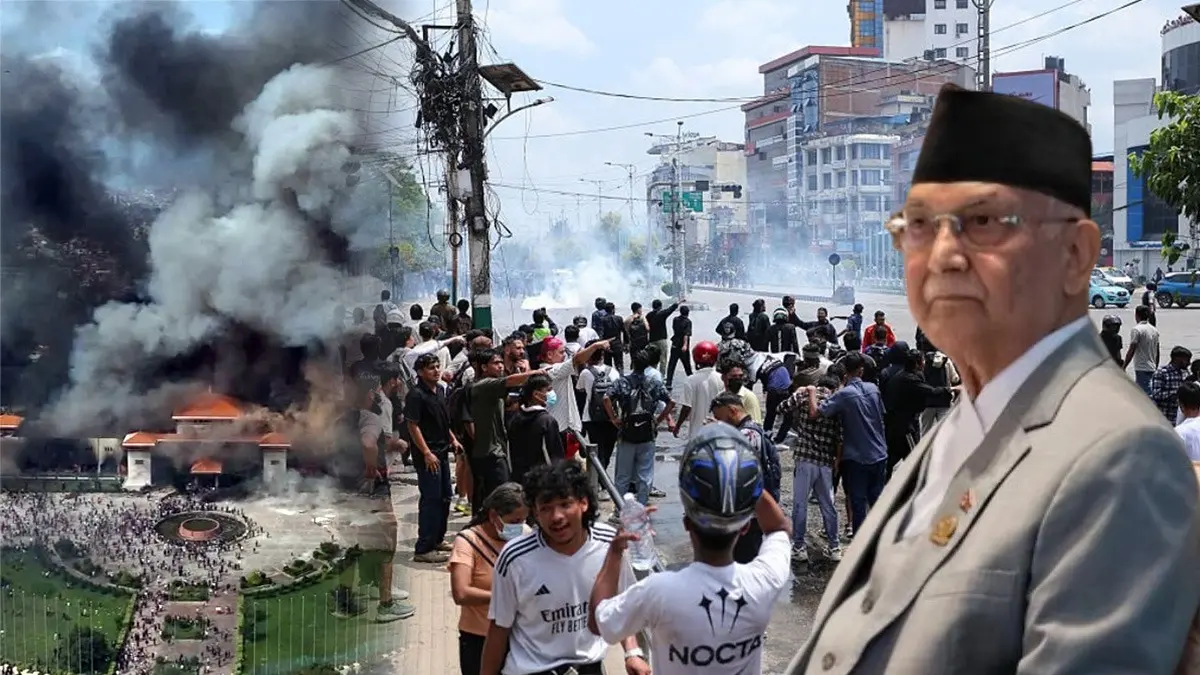
New Delhi: In a major political shake-up occurring just one day after Balendra Shah, widely known as Balen, took charge as the prime minister of Nepal on March 27, the country's former premier KP Sharma Oli was taken into custody on Saturday.
According to reports, Oli (74) was taken into custody from his residence in Gundu, Bhaktapur, by the Nepal police. He was detained for his alleged involvement in last year's deadly Gen-Z protests in September, during which dozens of people lost their lives. The violent unrest eventually toppled the government and led to new elections.
The arrest was not limited to Oli as his former Home Minister, Ramesh Lekhak, was also taken into custody early Saturday morning. According to his personal secretary, Lekhak was arrested at his residence in Suryabinayak, Bhaktapur, at approximately 5 am.

Following the crackdown, Kathmandu Valley police spokesman Om Adhikari said, “They were arrested this morning, and the process will move forward according to the law,” as per news reports.
Advertisement
Meanwhile, following his arrest, the newly-appointed Minister of Home Affairs, Sudan Gurung, said a "promise is a promise" and that "no one is above the law".
Taking to X, he posted, "We have taken former Prime Minister KP Sharma Oli and outgoing Home Minister Ramesh Lekhak under control. This is not revenge against anyone; it is just the beginning of justice. I believe that now the country will take a new direction."
Advertisement
What led to his arrest?
Notably, the arrest of the powerful communist leader occurred after a formal complaint filed by the home ministry, which triggered an investigation and led to the issuance of arrest warrants.
According to reports, the investigation commission led by Gauribahadur Karki declared Oli and Lekhak, among others, guilty of suppressing the Gen-Z movement on Bhadra 23 and 24.
Police officials said the action is being carried out to implement recommendations made by a commission led by former Special Court judge Gauri Bahadur Karki.
The panel has recommended that Oli, Lekhak and then Inspector General of Police Chandra Kuber Khapung be charged under Sections 181 and 182 of Nepal’s National Penal Code for criminal negligence, which carries a possible prison sentence of up to 10 years.
The commission also suggested legal action against several other officials, including then home secretary Gokarna Mani Dawadi, Armed Police Force chief Raju Aryal, former National Investigation Department head Hutaraj Thapa and then Kathmandu chief district officer Chhabi Rijal.
It further recommended that other officials found responsible be dealt with under the relevant laws governing their institutions.
In addition, the report proposed formal reprimands for senior police officials, including current Inspector General Dan Bahadur Karki and Armed Police Force official Narayan Dutta Poudel.
The report attributes the crackdown to crimigence and recklessness, citing failure to act on prior intelligence about possible escalation that led to multiple deaths.
Why Gen-Z protest was in headline?
Oli has been arrested over his alleged involvement in last year's deadly Gen Z protests.
The two-day Gen Z movement on September 8 and 9 in 2025 contributed to his fall as it unseated the Oli government, where at least 77 people were killed and government and private property worth billions were destroyed as the government tried to suppress the protestors.
At least 19 young people were killed in a crackdown on the first day of protests.
The demonstrations were led by young people and triggered by a nationwide social media ban affecting platforms such as YouTube, Facebook, and WhatsApp. Protesters criticised corruption, wealth disparities highlighted by the #NepoBaby trend, and high youth unemployment, which stood at 20.6%.
The unrest spread nationwide the following day as parliament and government offices were set ablaze, resulting in the government's collapse.
A Nepal government-backed report into the deadly uprising has recommended the prosecution of then-PM KP Sharma Oli and other officials.
The report said that it was "not established that there was an order to shoot", but said that "no effort was made to stop or control the firing and, due to their negligent conduct, even minors lost their lives".
Notably, Oli's arrest occurred just one day after the swearing-in of Balen Shah, whose cabinet immediately moved to implement the commission's findings.
The Gen-Z protests had helped drive the March 2026 snap elections where Shah’s Rastriya Swatantra Party won a majority, campaigning on anti-corruption promises and appealing to young voters. The party registered 915,000 new voters, with a median age of 25, reflecting the energy of the Gen Z movement.
Legal action against those named
A Cabinet meeting led by Prime Minister Balendra Shah on Friday decided to implement the commission's report, paving the way for legal action against those named.
The first Cabinet meeting also decided to form a study committee to look into matters related to security personnel, based on the recommendations of the Karki Commission.
The Cabinet decided to form a separate investigation committee to examine the role of security agencies, and it will be implemented immediately in cases involving political leaders and others.
The newly formed government has publicised the decisions taken at its first Cabinet meeting held on Friday. Apart from that, the first meeting of rapper-turned-politician Balendra Shah also took four major decisions, including the implementation of the report of the commission formed to investigate the suppression of the Gen-Z movement.
The Cabinet decided to express respect and pay tribute to all known and unknown martyrs of the Gen-Z movement on September 8 and 9, 2025, as well as to the martyrs of earlier movements. It also appointed Sasmit Pokharel, Minister for Education, Science and Technology, as the official spokesperson of the Government of Nepal.