
Saudi Arabia calls on people to sight Dhu Al-Hijjah crescent and inform nearest court
Saudi Arabia, in a statement, had urged that anyone who could see the new moon via naked eye or binoculars must inform the nearest court & register a testimony
- World News
- 3 min read

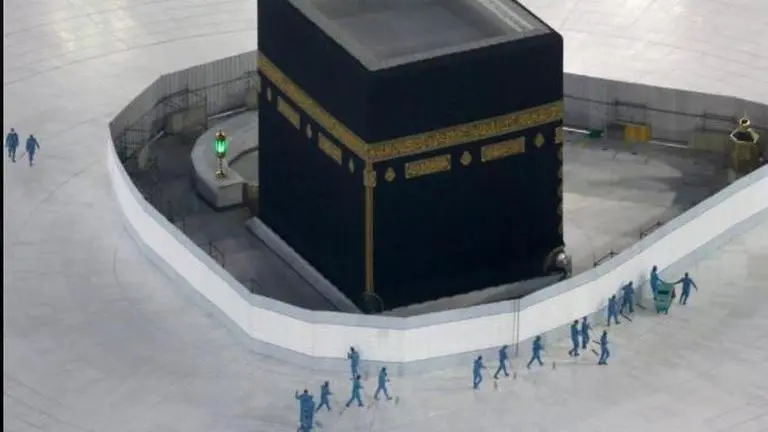
Supreme Court in Saudi Arabia has called on all Muslims in the kingdom to sight the crescent of Dhu Al-Hijjah in the evening of July 20, the 29th day of the month of Dhu Al Qadah, 1441 AH. The administration urged in a statement that anyone who could see the new moon via the naked eye or binoculars must inform the nearest court and register a testimony. Last month of the Islamic calendar, Dhu Al-Hijjah essentially marks the beginning of the Hajj pilgrimage.
"The Supreme Court hopes anyone seeing the moon by the naked eye or the telescope to notify the nearest court and register a testimony or contact the nearest center to help him reach the nearest court," the statement read. "The court hopes that whoever has the sighting ability to take interest in the matter and join the committees formed for this purpose in the Saudi regions,” it added. The month of Dhu Al Hijjah is expected to begin on July 21 or July 22 as per the astronomical calculations, during which, the Hajj will be observed in full capacity at Mount Arafat near Mecca on July 30. However, due to ongoing coronavirus pandemic, this year, Saudi Arabia has announced to hold limited pilgrimage, according to state reports.
While 70 percent of this year’s pilgrims will be expatriate residents, the Kingdom announced in a statement that up to 10,000 pilgrims with at least 30 percent Saudis will be permitted for Hajj this year. The Ministry of Hajj and Umrah will shortlist the names of those approved to perform the pilgrims with adherence to the health safety measures issued by the Ministry of Health of Saudi Arabia. Last year, over 2.5 million pilgrims from across the world visited the cities of Mecca and Medina for pilgrimage, as per the reports. However, in view of the global health emergency, the Saudi Ministry of Hajj decided to start the pilgrimage on July 28 with curtailed gathering.
Advertisement
Health protocols
Hajj Minister Mohammad Benten said in a virtual news conference that the number of pilgrims won't be in tens or hundreds of thousands. Further, Health Minister Tawfiq al-Rabiah said no individual over the age of 65 or with chronic illnesses will be permitted to perform the Hajj. On arrival to the holy city of Mecca, pilgrims will be tested for COVID-19 and are required to quarantine afterward. Authorities banned the touching or kissing the Kaaba and made face masks mandatory. According to a statement by the Center for Disease Prevention and Control (CDC), the social distancing of 1 and a half meters is required during the Kaaba circling ritual as well as prayers. Access to holy sites at Mina, Muzdalifah, and Mount Arafat was only given to those with hajj permits from July 19 till August 2. This would be the first time that Saudi Arabia has barred foreigners to a limited capacity since the founding of the Kingdom in 1932.
Advertisement
(Image Credit: AP)