
Nepal Lowers Voting Age to 16; Elections Slated for March 2026
In her first televised address to the nation since assuming office on September 12, Karki said the government was committed to holding 'free, fair and fear-free' elections.
- World News
- 3 min read

;'%3e%3cpath%20d='m8,15.99c4.41,0,7.99-3.58,7.99-7.99S12.41,0,8,0,0,3.59,0,8s3.58,7.99,7.99,7.99Z'%20style='stroke:%23fff;%20stroke-miterlimit:10;%20stroke-width:.02px;'/%3e%3cpath%20d='m3.08,3.37l3.82,5.11-3.84,4.15h.87l3.37-3.64,2.72,3.64h2.94l-4.04-5.39,3.58-3.87h-.86l-3.1,3.35-2.5-3.35h-2.94Zm1.27.64h1.35l5.97,7.99h-1.35l-5.97-7.99Z'%20style='fill:%23fff;'/%3e%3c/g%3e%3c/svg%3e)


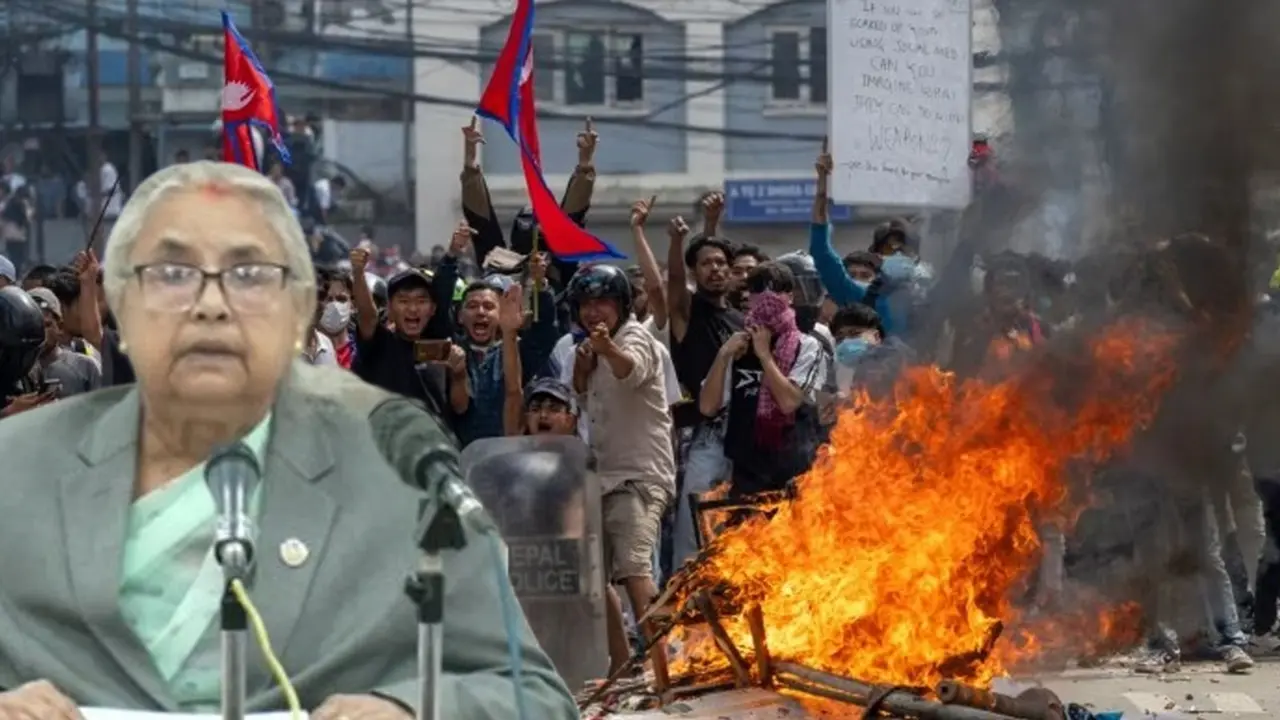
KATHMANDU: Nepal’s interim Prime Minister Sushila Karki on Thursday announced a landmark decision to lower the minimum voting age from 18 to 16, paving the way for wider youth participation in the country’s political process. The move comes in response to the recent Gen-Z protests that demanded greater representation and accountability from the government.
The amendment to the Voter Roll Act, 2017, was promulgated by President Ram Chandra Paudel through an ordinance issued under Article 114(1) of the Constitution, based on the recommendation of the Council of Ministers. The change aligns the voter registration framework with the general elections scheduled for March 2026.
ALSO READ: Nepal's PM appoints 3 New Ministers as Interim Government Prepares to Hold Fresh Elections in March
In her first televised address to the nation since assuming office on September 12, Karki said the government was committed to holding “free, fair and fear-free” elections. She noted that consultations with the Election Commission had already begun on manpower, security, budget and other arrangements to ensure the smooth conduct of polls.

“I call on all Nepali sisters and brothers to participate enthusiastically in the upcoming elections and select qualified representatives who can embody the aspirations of the youth for change,” Karki said, urging political parties, civil society, the media and all stakeholders to work together to create a peaceful and conducive environment for voting.
Karki also pledged stern action against those responsible for the deaths of 74 people, including students, during the recent Gen-Z protests that led to the ouster of former Prime Minister KP Sharma Oli.
On the diplomatic front, the interim PM expressed gratitude to Nepal’s neighbours, particularly India, for their support during the political transition. She revealed that she had a telephonic conversation with Indian Prime Minister Narendra Modi, who extended his greetings on Nepal’s National Day and conveyed best wishes for the country’s democratic journey.
Karki’s appointment earlier this month followed weeks of turmoil after mass youth-led demonstrations over corruption and restrictions on social media forced Oli’s resignation. By lowering the voting age, her government has made a historic concession to Nepal’s younger generation, who will play a decisive role in shaping the country’s next political chapter.