
Netanyahu Apologises To Qatar PM For Israeli Strike On Doha In Phone Call From White House
Israeli PM Benjamin Netanyahu dials Qatari PM Mohammed bin Abdulrahman bin Jassim Al Thani from the White House to apologise for the recent strike on Doha that killed five people.
- World News
- 4 min read

;'%3e%3cpath%20d='m8,15.99c4.41,0,7.99-3.58,7.99-7.99S12.41,0,8,0,0,3.59,0,8s3.58,7.99,7.99,7.99Z'%20style='stroke:%23fff;%20stroke-miterlimit:10;%20stroke-width:.02px;'/%3e%3cpath%20d='m3.08,3.37l3.82,5.11-3.84,4.15h.87l3.37-3.64,2.72,3.64h2.94l-4.04-5.39,3.58-3.87h-.86l-3.1,3.35-2.5-3.35h-2.94Zm1.27.64h1.35l5.97,7.99h-1.35l-5.97-7.99Z'%20style='fill:%23fff;'/%3e%3c/g%3e%3c/svg%3e)


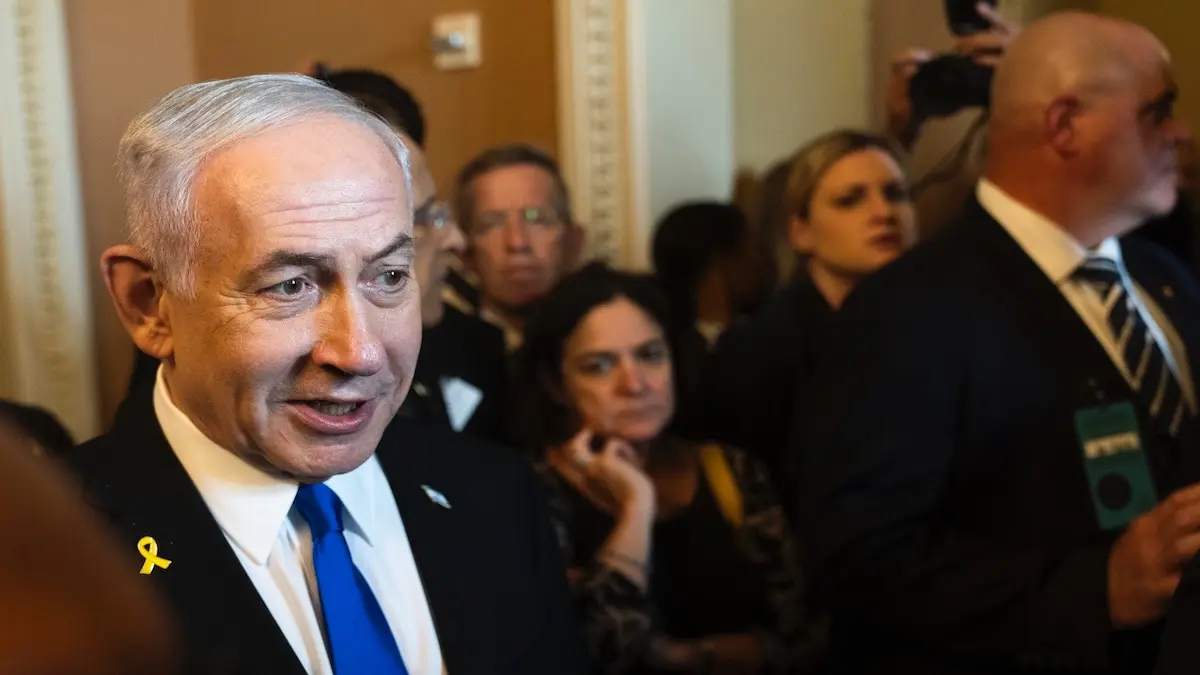
Washington: Israeli Prime Minister Benjamin Netanyahu on Monday dialled Qatar's Prime Minister from the White House to apologise for the recent strike on Doha. Netanyahu apologised to Qatari Prime Minister Mohammed bin Abdulrahman bin Jassim Al Thani for the Israeli strike on Doha, which resulted in the deaths of five people. The apology came during a White House meeting between Netanyahu and US President Donald Trump, where critical talks regarding ending the war in Gaza and developing a US plan on postwar governance in the war-battered Palestinian territory were underway.
The strike, which occurred on September 9, targeted the headquarters of Hamas' political leadership in Qatar, a key mediator between Israel and Hamas. As per reports, although no senior Hamas officials were killed, the attack resulted in the death of a Qatari serviceman and led to massive anger among Arab leaders.
The incident also drew rare criticism from the US, with Trump describing the strike as "out of step with Israeli and US interests." In response to the criticism, Netanyahu expressed deep regret for the unintended killing of the Qatari serviceman and acknowledged that Israel had violated Qatari sovereignty. He assured that Israel would not conduct such an attack again in the future.
Following the Israeli strikes, Qatar had condemned the attack as cowardly and a violation of international law.
Advertisement
Hamas blamed both Israel and the US for the Doha strike, accusing Washington of being jointly responsible. In a statement, the group said the assassination attempt would not change its negotiating stance, declaring, "Israel has failed." Netanyahu later warned Qatar to expel Hamas officials or bring them to justice. Doha responded by calling his comments reckless.
Netanyahu's Phone Call And Apology
The phone call between Benjamin Netanyahu and Qatar's PM Mohammed bin Abdulrahman bin Jassim Al Thani came after the Israeli PM's meeting with Trump at the White House. According to reports, Netanyahu apologised for the surprise Israeli operation, which had strained relations between the two countries. The apology is seen as a diplomatic effort to mend ties and prevent further escalation in the region.
Advertisement
The US has been critical of Netanyahu's actions, with Trump rebuking him in a heated phone conversation, calling the attack not wise. Trump had voiced frustration that the operation risked destabilising sensitive regional diplomacy. Netanyahu had defended his decision, saying he had only a short window to act.
What White House Said
The White House readout of the call stated that Netanyahu expressed his deep regret that Israel’s missile strike against Hamas targets in Qatar unintentionally killed a Qatari serviceman. Al Thani welcomed Netanyahu's assurances, asserting Qatar's readiness to continue contributing meaningfully to regional security and stability. The apology is seen as a crucial step in repairing relations between Israel and Qatar, which were strained following the strike.
Notably, the apology comes at a time when the US is brokering talks between Israel and Hamas, with a proposal on the table that focuses on bringing an end to the nearly two-year-old war in Gaza. The proposal, which has been discussed with Arab and Islamic leaders, calls for an immediate ceasefire, the release of all hostages within 48 hours, and a gradual withdrawal of Israeli forces from the Palestinian enclave. The plan also includes the establishment of an international security force to take over law enforcement in postwar Gaza and a Palestinian committee of technocrats to oversee civilian affairs.
However, Netanyahu has rejected any role for the Palestinian Authority in postwar Gaza, while Hamas has linked its willingness to lay down arms to the establishment of an independent Palestinian state. Despite these challenges, Trump expressed confidence that a deal would soon be reached to end the fighting between Israel and Hamas.