
Updated 13 February 2026 at 12:41 IST
‘Neutral’ Steward of Bangladesh’s Electoral Process: What Lies Ahead For Yunus?
Nobel laureate Muhammad Yunus was appointed as Chief Adviser of Bangladesh’s interim government following the ouster of former PM Sheikh Hasina amid a youth-led movement in July 2024. He described polling day as ‘the birth of a new Bangladesh’. He is expected to retire from political office once the next administration is sworn in as he has publicly said that he has ‘no desire to be part of the next elected government’ and that neither he nor his advisers intend to retain power after the vote.
- World News
- 4 min read

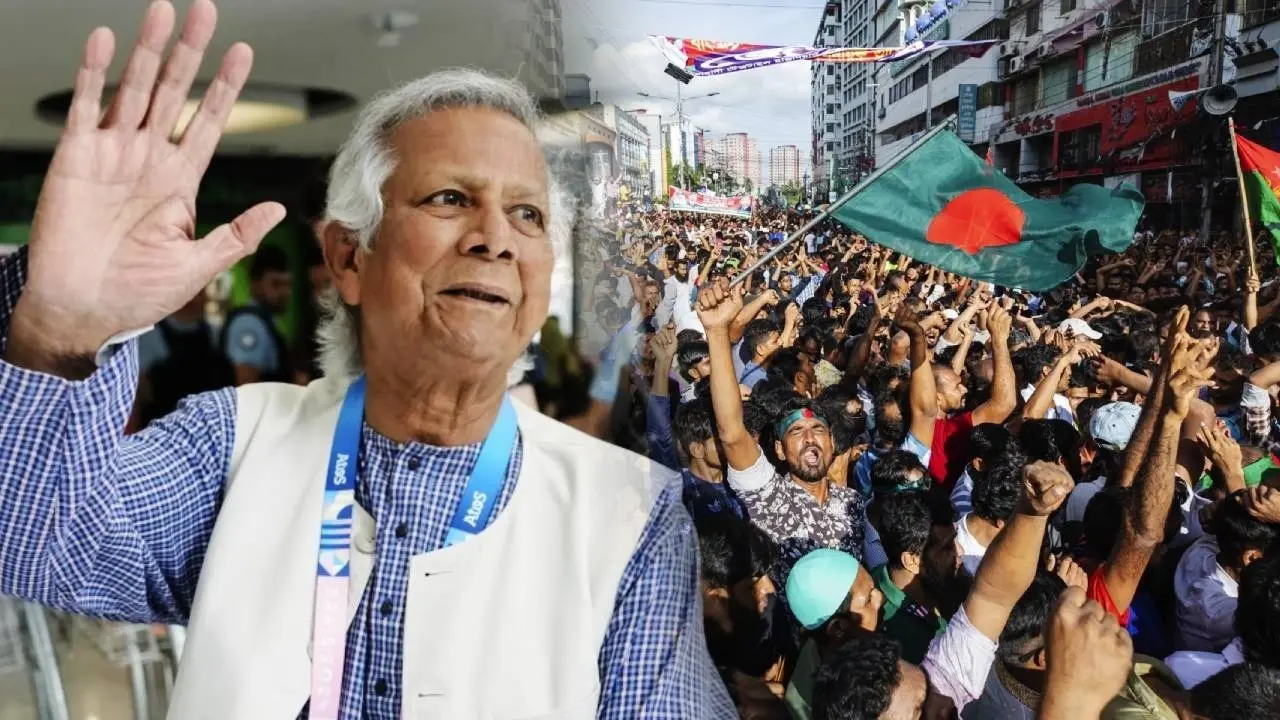
Dhaka: As counting of votes continues in Bangladesh’s first general election since the turbulent 2024 uprising, the Bangladesh Nationalist Party (BNP) has claimed a decisive victory that is expected to result in a parliamentary majority and the return to government after two decades in the political wilderness.
At the centre of this historic transition has been Muhammad Yunus, the Nobel laureate appointed as Chief Adviser of Bangladesh’s interim government following the ouster of former Prime Minister Sheikh Hasina amid a youth-led movement in July 2024. What began as a caretaker leadership tasked with ensuring stability and fairness now poses critical questions about Yunus’ legacy and future trajectory in Bangladesh’s shifting political landscape even though he has publicly said that he has “no desire to be part of the next elected government” and that neither he nor his advisers intend to retain power after the vote.
From Nobel Laureate To Political Custodian
Muhammad Yunus was awarded the Nobel Peace Prize in 2006 along with Grameen Bank for their work to "create economic and social development from below". Grameen Bank's objective is to grant poor people small loans on easy terms and Yunus was the bank's founder.
Yunus’ elevation to interim leadership came amid student-led protests against “political elites” and allegations of authoritarian practices, which led to Hasina’s resignation and subsequent exile to India. In the vacuum that followed, Yunus, known internationally for pioneering microfinance and social business, was positioned as a neutral steward, charged with managing reforms and steering the country towards credible elections.
Advertisement
His administration emphasised a clear break from past politics. Yunus described polling day as “the birth of a new Bangladesh”, framing the 2026 election not merely as a vote but as a recommitment to democratic dignity after years of unrest and contestation.
Overseeing A Fragile Democratic Transition
Under Yunus’ leadership, the interim government focused on institutional reform and rebuilding trust in electoral mechanisms. Barring a few instances, the elections remained peaceful, defying fears of disruption. Voter turnout was reportedly above 60 per cent.
Advertisement
The main opposition party under former PM Hasina, the Awami League, dismissed the process as a “farce” and called for fresh polls, spotlighting lingering tensions around electoral integrity and constitutional norms.
Just A Custodian, Not A Contender?
Despite being thrust into the political limelight, Yunus has consistently maintained that his role is temporary and non-partisan. In statements over the past year, he has reiterated that he would step down once an elected government assumes office, eschewing personal political ambition. He is acting as a custodian rather than a contender.
However, Yunus’ interim government struggled to fully stabilise state institutions, curb rising Islamist influence or spur robust economic recovery. At the same time, Yunus warned repeatedly of internal and external efforts to undermine the electoral process, reflecting regional sensitivities.
The Post-Election Phase
With the BNP poised to form the next government, projected to secure a strong majority and led by Tarique Rahman, Bangladesh is entering a new chapter. The transition will test both the resilience of democratic institutions and Yunus’ contributions to them.
For Yunus, the immediate future seems clear: he is expected to retire from political office once the next administration is sworn in. Yet his legacy will be shaped by how effectively the 2026 election is perceived, both domestically and internationally, as a turning point in Bangladesh’s democratic experiment.
Whether Yunus emerges as a historic mediator who helped redefine political competition or as a transitional figure remembered more for timing than for structural change will depend on how the incoming government consolidates democratic reforms and addresses deep-seated socioeconomic challenges.
As Bangladesh navigates post-election governance and institutional reform, the narrative surrounding Muhammad Yunus will evolve. For now, the Nobel laureate remains a symbol of cautious transition, neither a political kingmaker nor a permanent fixture of power, but a steward whose influence could linger in the contours of Bangladesh’s democratic architecture.
Published By : Deepti Verma
Published On: 13 February 2026 at 12:41 IST