
Updated 3 July 2020 at 21:52 IST
Philippine President signs anti-terror bill, critics denounce it as 'tool for suppression'
Rodrigo Duterte approved the controversial anti-terrorism legislation that critics argue will be used against opponents to suffocate their right to free speech.
- World News
- 2 min read

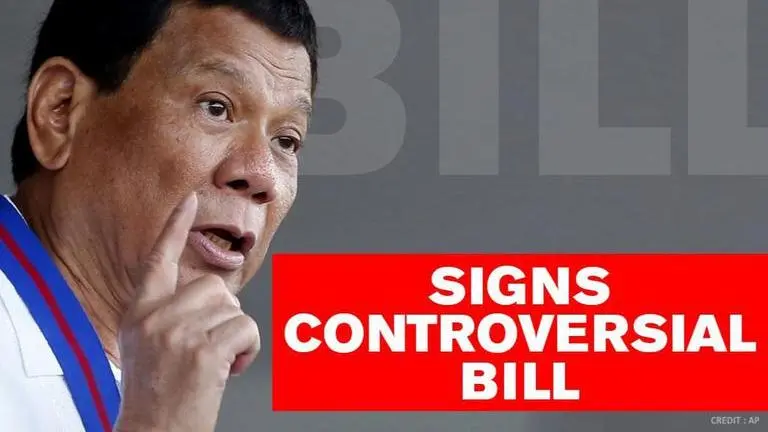
Philippine President Rodrigo Duterte on July 3 approved the controversial anti-terrorism legislation that critics argue will be used against opponents to suffocate their right to free speech and peaceful criticism. According to reports, Duterte fast-tracked the legislation in both houses of the Philippine Congress during the ongoing coronavirus health emergency in the country. The legislation grants unprecedented powers to the country's armed forces that legal experts say could be used to suppress dissent and infringe upon the privacy of citizens.
The law creates an anti-terrorism council appointed by the president, which can detain and arrest people for 14 days without any warrant. The detention period is also extendable to 24 days. The council can also designate individuals and groups as 'terrorists'. The Presidential communications operations office responding to the criticism said that President Duterte took enough time to read the legislation before signing it into law. The legislation has garnered condemnation from global bodies such as the United Nations, that had called on Duterte to refrain from signing the law.
Advertisement
"So I would urge the President to refrain from signing the law and to initiate a broad-based consultation process to draft legislation that can effectively prevent and counter violent extremism – but which contains some safeguards to prevent its misuse against people engaged in peaceful criticism and advocacy. My Office is ready to assist in such a review," Michelle Bachelet, UN High Commissioner for Human Rights said on June 30 during the 44th regular session of the UN Human Rights Council.
Other side's argument
Supporters of the legislation argue that the law would help armed defence personnel control terrorist activity and will enable them to target individuals who indulge in such activities. Experts suggest that the law would help the country control radical Islamic terrorism that has seen an exponential rise in the past decade and was behind the 2017 capture of a southern city which was followed by a series of suicide bombings in the Philippines.
Advertisement
Published By : Vishal Tiwari
Published On: 3 July 2020 at 21:52 IST