
‘Ready For Talks, Ready For War’: Decoding The US-Iran Deadlock As Trump Extends Iran Ceasefire
Trump extended the US-Iran ceasefire as a Wednesday deadline loomed, pausing VP Vance’s Islamabad trip amid Iran’s hesitation, though the US naval blockade continues while Tehran demands its end before talks.
- World News
- 6 min read

;'%3e%3cpath%20d='m8,15.99c4.41,0,7.99-3.58,7.99-7.99S12.41,0,8,0,0,3.59,0,8s3.58,7.99,7.99,7.99Z'%20style='stroke:%23fff;%20stroke-miterlimit:10;%20stroke-width:.02px;'/%3e%3cpath%20d='m3.08,3.37l3.82,5.11-3.84,4.15h.87l3.37-3.64,2.72,3.64h2.94l-4.04-5.39,3.58-3.87h-.86l-3.1,3.35-2.5-3.35h-2.94Zm1.27.64h1.35l5.97,7.99h-1.35l-5.97-7.99Z'%20style='fill:%23fff;'/%3e%3c/g%3e%3c/svg%3e)


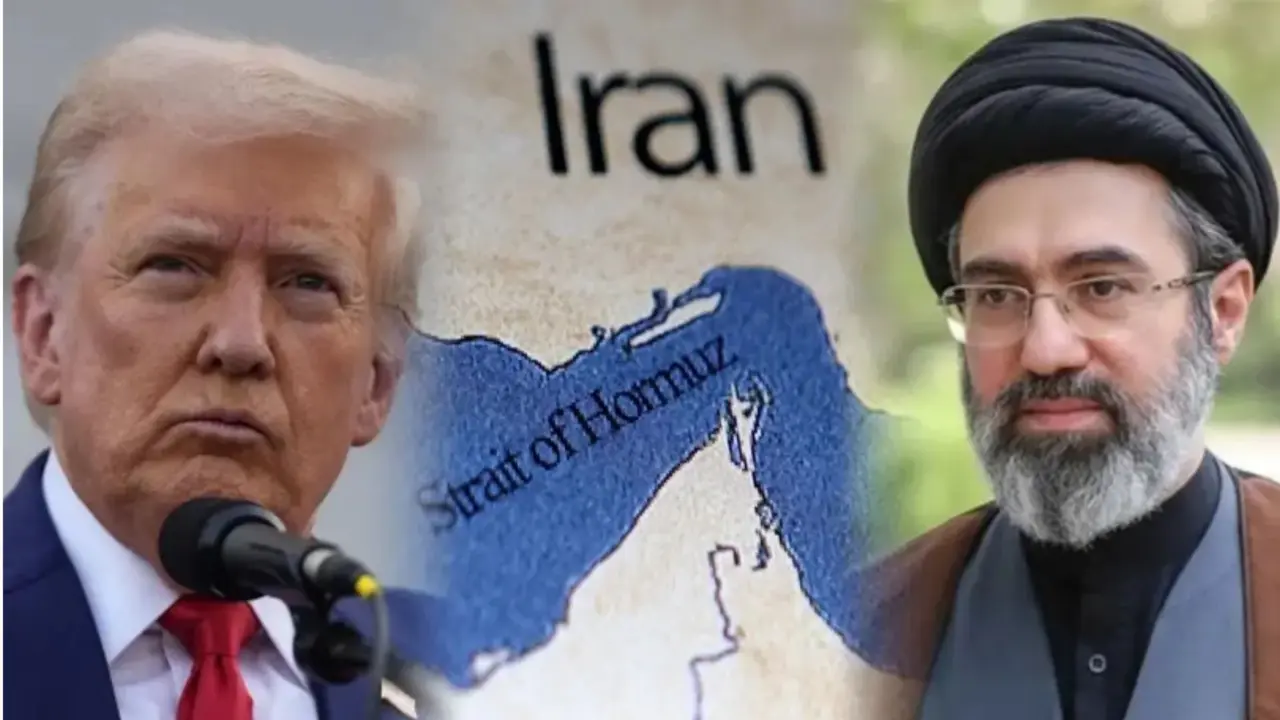
Tehran: The fragile ceasefire between the United States and Iran was given a reprieve on Tuesday after President Donald Trump announced he would extend the truce. The extension offers a glimmer of hope, even as uncertainty deepens over whether fresh negotiations will take place. With a two-week pause in hostilities due to expire on Wednesday, the White House said Vice President JD Vance’s anticipated trip to Islamabad for a second round of talks had been put on hold, citing Tehran’s hesitation to commit to the table.
Though Trump insisted that the American naval blockade of Iranian ports would remain firmly in place despite the extension, warning that US forces would stay “ready and able” while Washington awaits a “unified proposal” from Iran. The announcement came amid conflicting signals from Tehran, where officials said they would only join discussions in Pakistan if they believed the dialogue could deliver results.
Amidst efforts to bring both sides to negotiating tables again, both Washington and Tehran have signalled they are prepared to return to fighting if no agreement is reached, leaving diplomats and markets alike on edge. Since the conflict erupted, the human toll has been horrifying, with at least 3375 people killed in Iran, more than 2290 in Lebanon, 23 in Israel and over a dozen across Gulf Arab states. The fighting has also claimed the lives of 15 Israeli soldiers in Lebanon and 13 US service members deployed across the region.
Ceasefire Extended, But Talks In Limbo
The ceasefire, which began on 8 April, had been hanging by a thread as the deadline approached. Trump confirmed the extension in a social media post, stating he would “extend the Ceasefire until such time as their proposal is submitted, and discussions are concluded, one way or the other.” He added that the move followed a direct request from Pakistan, which has failed to broker a peace between the two countries twice.
Advertisement
Following the extension of the truce, Pakistan’s Prime Minister Shehbaz Sharif thanked Trump, calling the “gracious acceptance” of Islamabad’s appeal. In a post on X, Shehbaz expressed gratitude, saying, “on my personal behalf and on behalf of Field Marshal Syed Asim Munir.” Sharif said he hoped both sides would continue to observe the truce and work towards a comprehensive peace deal during a second round of talks scheduled in Islamabad.
However, the path to that peace meeting remains unclear, as both sides are not appearing to be compromising on their terms and conditions. Iran’s Foreign Ministry said earlier on Tuesday that no decision had been taken on attending, and that participation would hinge on whether Tehran judged the talks likely to be productive. On the other hand, the White House confirmed that Vance and the US negotiating delegation would not travel to Pakistan on Tuesday in light of the extension and the absence of an Iranian commitment.
Advertisement
Vance Trip Paused As US Awaits Iranian Proposal
A US official, speaking on condition of anonymity, said Vance’s visit had been called off and put on hold, while stressing that Trump “could change his mind at any minute". Special envoy Steve Witkoff and the president’s son-in-law Jared Kushner were expected in Washington on Tuesday afternoon for consultations on next steps.
The official declined to speculate on what would follow if the ceasefire lapsed without a meeting in Islamabad, but noted that Trump retained options short of resuming airstrikes. The Trump administration’s position is to wait for Tehran to present its terms. The US President acknowledged the complications of dealing with a “seriously fractured” Iranian leadership, telling a foreign media outlet that “we’ve taken out their leaders, frankly, which does complicate things in one way, but these leaders are much more rational.”
Iran’s UN ambassador Amir Saeid Iravani said his government had “received some sign” that Washington was ready to stop the blockade, adding that talks in Islamabad could proceed as soon as the measure was lifted. He described the naval blockade as a violation of the ceasefire and reiterated that ending it was a precondition for negotiations. “If they want to return to the negotiating table and find a political solution, they will find us ready…..If they want to go to the war, in this case also Iran is ready for that,” Iravani said, while addressing media personnel in New York.
Markets Wobble As Blockade Continues
The diplomatic uncertainty quickly fed into financial markets, as the S&P 500 gave up an early rise to close 0.6% lower after news broke that Vance’s trip was off. The Dow Jones Industrial Average shed 293 points, having earlier been up 400, while the Nasdaq also slipped 0.6%. The oil prices wavered through the session, with Brent crude swinging from under $95 a barrel to around $100 before settling at $98.48, up 3.1% on the day.
The analysts said the moves, while sharp, were more contained than the turbulence seen in the initial phases of the conflict. However, the prospect of renewed fighting kept traders cautious. Trump’s statement that the blockade would continue added to concerns about energy flows, with Iran’s Revolutionary Guard aerospace chief Gen. Majid Mousavi warning that regional oil production would be at risk if neighbouring states allowed US attacks. “If southern neighbours allow the enemy to use their facilities to attack Iran, they should say goodbye to oil production in the Middle East region,” he stated.
Tehran also escalated its rhetoric at the United Nations, calling on the Security Council to issue a “firm and unequivocal” condemnation of the US seizure of an Iranian-flagged cargo ship on Sunday. The Iranian mission described the action as “a grave breach of international law” and “an act of aggression marked by the hallmarks of piracy", saying it endangered maritime safety near the Strait of Hormuz. Washington had earlier said the vessel was attempting to evade the blockade.
Iran's Accusations Of Violations
Beyond the US-Iran axis, the conflict continues to reverberate across the region. Hezbollah, the Iran-backed Lebanese group, accused Israel of breaching the ceasefire more than 200 times, claiming its first rocket and drone strikes since the truce were a response to attacks on civilians and villages in southern Lebanon. Israel maintained a “forward defence line” several miles inside Lebanon, with dozens of villages still off-limits to residents.
Meanwhile, Cyprus restated its offer to host direct Israel-Lebanon talks, with President Nikos Christodoulides asserting that the island was ready to facilitate negotiations given its “excellent relations” across the region. He said he would raise the matter with Lebanon’s president at an upcoming EU summit.
Amidst escalating tensions, Trump’s extension buys diplomats more time, but the core disputes remain unresolved, which are the blockade, Iran’s conditions for talks, and deep mistrust on both sides. The experts suggested that as casualties continued to mount and the region braced for either breakthrough or breakdown, the next move lies with Tehran’s long-awaited proposal.