
Updated 16 August 2021 at 17:41 IST
Airlines reluctant to use Afghanistan airspace, reroute flights after Taliban seizes Kabul
While United Airlines, British Airways and Virgin Atlantic said they were not using the country's airspace, several others have also rerouted their planes.
- World News
- 3 min read

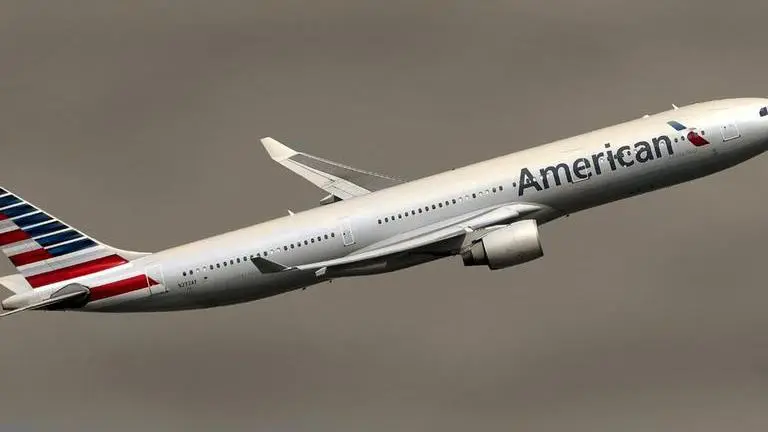
As the Taliban seized the most crucial provinces of Afghanistan within a week, major airlines are now reluctant to use the airspace of the war-torn country. While United Airlines, British Airways and Virgin Atlantic said they were not using the country's airspace, several others have also rerouted their planes to other countries. As of writing this news, flight-tracking website FlightRadar24, which monitors the live status of the commercial planes, shows none of the flights is using Afghanistan airspace. The website live tracking system shows only three flights-- one Doha bound and two Singapore bound flights-- are flying near the boundaries of Afghanistan.
A screenshot from flight-tracking website FlightRadar24

Operation below 26,000 feet strictly prohibited for airlines
A United States airlines spokesman said that the restrictions do not apply to US military operations. Also, she added that the change affects several U.S.-to-India flights. It is worth mentioning that the US Federal Aviation Administration (FAA) imposed new flight restrictions over Afghanistan for US airlines and other operators in July. Since then, several US flight operators are not using Afghanistan airspace. The aviation administration said that operating below 26,000 feet were prohibited in the Kabul Flight Information Region due to the risk posed by Deobandi Islamist terrorist organisation.
According to the website- Safe Airspace, which tracks warnings related to conflict zone airspace, it has strictly advised countries such as UK, France and Canada to avoid using Afghanistan airspace. "Diversion or landing in Afghanistan is strictly prohibited. Nowhere is safe. The UK, France and Canada advise that overflights should not be below FL250/260, but Germany advises FL330 - which we think is more sensible, given the mountainous terrain. The US ban their operators below FL260, except for ops to OAKB/Kabul airport," read the warning. It noted that the primary risk is from indirect fire targeting airports and from surface-to-air fire targeting aircraft operating at low altitudes. Meanwhile, Korean Air Lines said though it has not used airspace for commercial flights whereas some of its cargo flights are still using Afghan's space. Earlier in several incidents, airports in Afghanistan have been targeted frequently by direct assault and indirect fire.
Kabul airport: A ray of hope for civilians
In the latest development, Afghanistan’s embattled president left the country, joining his fellow citizens and foreigners in a stampede fleeing the advancing Taliban and signalling the end of a 20-year Western experiment aimed at remaking Afghanistan. The same was confirmed by Abdullah Abdullah, head of Afghanistan’s National Reconciliation Council through a video message. Now, for the civilians, the only way left to flee from the country is Kabul’s international airport. A steady stream of people makes its way first to ticket sale counters set up on the parking lot outside the terminal. They push their luggage, load carts with carpets, television sets and mementoes, stuff clothes inside purses to make their weight limit as they slowly inch forward. The lucky ones, those who managed to get a ticket for a flight out to anywhere, then wait more than three hours to make it inside the terminal, bidding tearful goodbyes to loved ones they are leaving behind.
Advertisement
Image Credit: Pixabay
Published By : Ajeet Kumar
Published On: 16 August 2021 at 17:41 IST