
Updated 22 April 2023 at 22:14 IST
Explainer | Why does India seek to represent the Global South?
India's External Affairs Minister S Jaishankar, who is visiting Guyana, has said that India will represent countries that are not on the G20 table.
- World News
- 7 min read

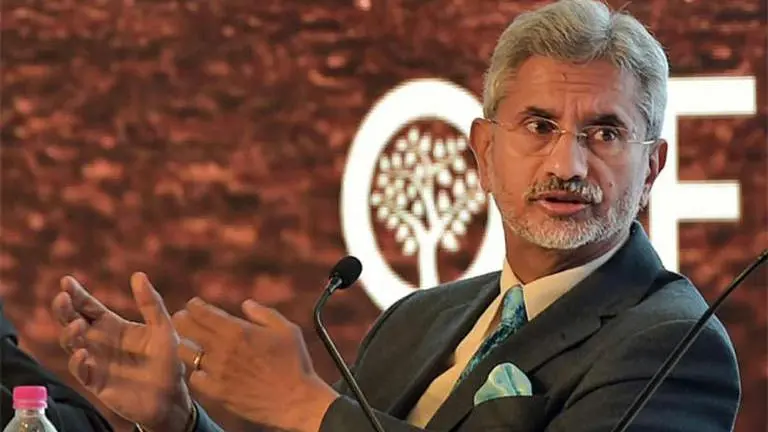
It appears that India, at least on the international stage, is determined to be the voice of the voiceless. India's External Affairs Minister S Jaishankar is in the South American nation of Guyana. In the capital city of Guyana, Georgetown, Jaishankar planted a tree and expressed his hope that may the tree grow, reflecting the vitality of India-Guyana relationship. So, what exactly is the basis of this relationship?
Let's hear it from the horse's mouth, so to say. After landing in Guyana, Jaishankar said that India will represent countries that are not on the G20 table. He was speaking in the context of India's G20 Presidency. The EAM was speaking during the 4th Caricom - India ministerial meeting in Guyana.
"This year we have the privelege of chairing the G20 and my PM is very clear that we are not there just for ourselves but also for the countries who are not on the G20 table. Therefore, we did a round of consultations on what we call the Voice of Global South process", he said.
This is the basis of India's relationship with Guyana and many other countries in the Global South. Most multilateral institutions are dominated by OECD nations. India seeks to represent the nations whose voices are often ignored in these multilateral institutions.
Celebrated Earth day in Georgetown by planting a Simarupa tree in this beautiful country.
— Dr. S. Jaishankar (@DrSJaishankar) April 22, 2023
May this sapling grow and prosper reflecting the strength and vitality of India-Guyana relationship.
📹: https://t.co/JaZe6bq6DW pic.twitter.com/GdCkBnnPBJ
So, what exactly is the Global South that Jaishankar was referring to and why does India want to represent this Global South? The term "Global South" is a geopolitical concept that refers to a group of countries primarily located in the Southern Hemisphere and encompassing regions such as Latin America, Africa, Asia, and the Middle East. The Global South is often characterized by its historical and ongoing economic, social, and political challenges, including issues such as colonial legacies and marginalization in the global order.
Advertisement
Representing the Global South
India, as one of the major countries in the Global South, has expressed an interest in representing this region in international forums for various reasons. One key motivation for India to seek representation of the Global South is to promote its national interests and influence in global governance structures. India, with its large population, growing economy, and significant geopolitical weight, sees itself as a prominent player in shaping global policies and decisions. Representing the Global South allows India to leverage its status as a major developing country and assert its influence on the international stage, particularly in multilateral institutions like the G20, United Nations (UN), etc.
Furthermore, India's pursuit of representing the Global South is rooted in its historical legacy of colonialism and the associated struggle for independence. Many countries in the Global South, including India, have a shared history of colonization by European powers, which has left deep social, economic, and political imprints. As such, representing the Global South is seen as a means for India to stand up against historical injustices, assert its sovereignty, and address the legacies of colonialism by advocating for the interests and aspirations of developing countries in global forums.
Advertisement
India also views representing the Global South as an opportunity to address the economic disparities and inequalities that persist between the Global South and the Global North, which primarily comprises developed countries in the Northern Hemisphere. India, along with other countries in the Global South, often advocates for issues such as development assistance, technology transfer, trade and investment, and equitable access to global resources, with the aim of addressing the developmental gaps and promoting inclusive growth in developing countries.
Moreover, India's pursuit of representing the Global South aligns with its foreign policy doctrine of "Vasudhaiva Kutumbakam," which means "the world is one family" in Sanskrit. This philosophy underscores India's commitment to promoting global solidarity, cooperation, and mutual understanding among nations, particularly those in the Global South. India's representation of the Global South is seen as a manifestation of its commitment to the principles of South-South cooperation, which emphasizes solidarity, mutual respect, and shared interests among developing countries in addressing global challenges.
Here is what you need to know about India and Guyana's ties
The bilateral relationship between India and Guyana is characterized by historical, cultural, and economic ties that span decades. The two countries share a common colonial past, as both were former British colonies, and have since developed strong diplomatic relations based on mutual respect, friendship, and cooperation.
Historically, the Indian community in Guyana has played a significant role in shaping the relationship between the two countries. Indian indentured laborers were brought to Guyana in the 19th century to work in sugar plantations, and their descendants, known as Indo-Guyanese, form a significant portion of Guyana's population today. Hinduism makes up nearly 24 percent of Guyana's population. The Indo-Guyanese community has preserved its Indian cultural heritage, including language, religion, music, dance, and cuisine, which has served as a bridge of cultural affinity between India and Guyana.
The cultural connections between India and Guyana are further strengthened by cultural festivals, and other cultural events organized by the Indian High Commission in Georgetown, the capital of Guyana. These cultural exchanges have helped foster people-to-people contacts, mutual understanding, and appreciation of each other's culture and traditions, thereby deepening the cultural ties between the two countries.
In recent years, the economic relationship between India and Guyana has gained momentum. Both countries have explored avenues for trade, investment, and economic cooperation to leverage their respective strengths and promote economic development. India has provided developmental assistance to Guyana in various forms, including lines of credit for infrastructure projects, technical assistance, and capacity building programs. This has helped to strengthen economic ties between the two countries and promote sustainable development in Guyana.
One key area of economic cooperation between India and Guyana is agriculture. Given their shared agricultural heritage, both countries have explored collaboration in areas such as agri-business, agro-processing, and technology transfer. India has provided agricultural machinery and equipment to Guyana, and there have been exchanges of agricultural experts and scientists to share best practices and knowledge. This collaboration has the potential to boost agricultural productivity, enhance food security, and generate rural employment in Guyana.
Energy cooperation is another significant area of engagement between India and Guyana. Guyana has discovered substantial oil reserves in its offshore waters, and India has expressed interest in partnering with Guyana in the oil and gas sector. India's state-owned oil companies have participated in the bidding process for oil exploration and production in Guyana, and there is potential for further collaboration in this field, including technology transfer, skill development, and joint ventures.
In addition to agriculture and energy, there are also opportunities for collaboration in other sectors such as information technology, pharmaceuticals, tourism, and education. India has been offering scholarships and training programs for Guyanese students to study in India, which has contributed to the educational and human resource development of Guyana.
Beyond bilateral ties, India and Guyana also cooperate in multilateral forums, such as the United Nations (UN) and the Commonwealth of Nations, where both countries share common interests in promoting global peace, security, and sustainable development. They have also supported each other's candidatures and positions in international organizations, further enhancing their diplomatic cooperation.
Published By : Sagar Kar
Published On: 22 April 2023 at 22:14 IST