
Updated 25 December 2021 at 16:31 IST
Gorbachev resigned 30 years ago, marks end of USSR
People strolling across Red Square in Moscow on the evening of 25 December 1991 witnessed the Soviet flag over the Kremlin being pulled down and replaced with a tricolour of the Russian Federation.
- World News
- 4 min read

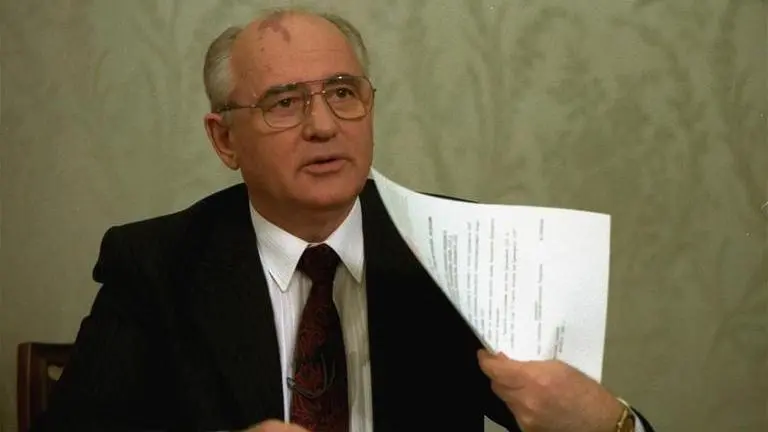
Saturday - Christmas Day - marks the 30th anniversary of one of the turning points in the history of the past century: the collapse of the Soviet Union.
People strolling across Red Square in Moscow on the evening of 25 December 1991 witnessed the Soviet flag over the Kremlin being pulled down and replaced with a tricolour of the Russian Federation.
Just moments before that, Soviet President Mikhail Gorbachev announced his resignation in a live televised address, drawing a line under more than 74 years of Soviet history.
In his memoirs, Gorbachev, now 90, bitterly lamented his failure to prevent the USSR's demise.
Advertisement
"I still regret that I failed to bring the ship under my command to calm waters, failed to complete reforming the country," Gorbachev wrote.
Political experts argue to this day whether he could have held onto his job and saved the USSR.
Advertisement
Some charge that Gorbachev, who came to power in 1985, could have prevented the country's collapse if he had moved more resolutely to modernize the state-controlled economy while keeping tighter controls on the political system.
"The Soviet Union, whatever its long-term chances were, was not destined to go down when it did," Dmitri Trenin, the director of the Moscow Carnegie Center, told The Associated Press.
By the fall of 1991, deepening economic woes and secessionist bids by Soviet republics made the Soviet collapse all but inevitable.
The failed August 1991 hardline coup was a key catalyst, dramatically eroding Gorbachev's authority and encouraging more Soviet republics to seek independence.
While Gorbachev was taking desperate efforts to negotiate a new "union treaty" between Soviet republics to preserve the USSR, he faced stiff resistance from his arch-rival, Russian Federation head Boris Yeltsin, and other independence-minded leaders of Soviet republics.
On 8 December, leaders of Russia, Ukraine and Belarus met at a hunting lodge, declaring the USSR dead and announcing the creation of the Commonwealth of Independent States.
Two weeks later, eight other Soviet republics joined the newly formed alliance, putting Gorbachev before a stark choice: resign or try to avert the country's breakup by force.
The Soviet leader analysed the tough dilemma in his memoirs, pointing out that an attempt to order the arrest of the republican leaders could have resulted in a bloodbath as military and law enforcement structures' loyalties were split.
"If I had decided to rely on some part of armed structures, it would have inevitably triggered an acute political conflict fraught with blood and far-reaching negative consequences," Gorbachev wrote. "I couldn't do that: I would have stopped being myself."
Gorbachev's aide Pavel Palazhchenko said that after the collapse of the USSR, it took several years U.S.-led diplomatic efforts to persuade Ukraine, Belarus and Kazakhstan to hand over to Russia the Soviet nuclear weapons they had on their territories.
"It was only with the help of the U.S. that they were able to find a solution to this," Palazhchenko told the Associated Press.
Russian President Vladimir Putin, who has been at the helm for more than two decades, more than Gorbachev and Yeltsin combined, has famously described the Soviet collapse as "the greatest geopolitical catastrophe of the 20th century."
While bemoaning the outcome, Putin has rejected allegations that he has been trying to rebuild the Soviet empire, saying once that "those who don't regret the collapse of the USSR have no heart, but those who want to rebuild it as it was have no brains."
However, in 2014, the Kremlin moved to recarve the post-Soviet borders, responding to the ouster of Ukraine's former Moscow-friendly leader by annexing the Ukrainian Crimean Peninsula and throwing Russia's weight behind separatist rebels in the country's east.
More than seven years of fighting in Ukraine's eastern industrial heartland has killed over 14,000 people, and tensions have flared up in recent weeks over a Russian troop buildup near Ukraine that has raised Western fears of an invasion.
Putin has denied having plans to launch an attack, but he has urged the West to provide guarantees precluding Ukraine's membership in NATO and the deployment of the alliance's weapons on its territory, demands rejected by Washington and its allies.
The Russian president has repeatedly described Russians and Ukrainians as "one people", despite protests from Kyiv, and argued that, after the collapse of the USSR, Ukraine unfairly inherited broad swathes of historic Russian lands granted to it by the Soviet leaders.
In an article published in July, Putin suggested that Ukraine should have left the Soviet Union with the borders that it had when it joined. "When you leave, you only take what you brought in," Putin wrote.
IMAGE: AP
Published By : Associated Press Television News
Published On: 25 December 2021 at 16:31 IST