
Updated 23 October 2021 at 14:28 IST
IAEA chief Rafael Grossi flags nuclear proliferation risk, legal concerns over AUKUS
United Nations (UN) nuclear watchdog chief Rafael Grossi has raised concerns over the defence strategic pact between Australia, UK and US called AUKUS.
- World News
- 3 min read

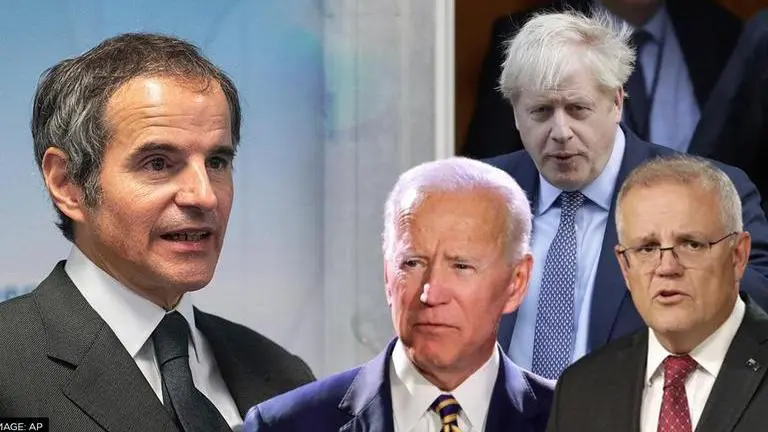
United Nations (UN) nuclear watchdog chief has raised concerns over the defence strategic pact between Australia, UK and US called AUKUS. As per The Guardian report, the Director-General of the International Atomic Energy Agency (IAEA), Rafael Grossi said during a visit to Washington that other nations could use Australia’s example to build nuclear-powered submarines which would elevate the serious proliferation and legal concerns. He also informed that a special team has been assembled to look into the nuclear safeguards and other legal implications of the AUKUS deal.
Under the AUKUS partnership, which was announced last month, the US and the UK will help Australia in building a fleet of nuclear-powered submarines. It is pertinent to note that once the plan is carried out, it would be the first time when a non-nuclear weapons state would acquire nuclear-powered submarines. The media outlet has stated that Canberra’s acquisition of such weapons reflects a ‘grey area’ in the Nuclear Non-Proliferation Treaty (NPT) signed in 1968. The NPT allows fissile material to be removed from IAEA safeguards for such purposes.
However, the UN nuclear watchdog is yet to come up with a way to monitor that the fuel, removed from IAEA’s oversight, is not ultimately used to make nuclear weapons. As per the report, Grossi told the reporters that, “We have to have specific agreements to make sure that whatever they receive technology-wise or material-wise, is under safeguards,” adding “There has to be a specific arrangement with the IAEA...Now we have to dot the Is and cross the Ts, which has never been done before, and it’s a very, very demanding process.”
Other nations have also revealed nuclear weapons plans
According to him, it “cannot be excluded” that other nations would also use the AUKUS precedent in a bid to pursue their own nuclear submarine plans. Reportedly, Canada and South Korea have mulled building nuclear-powered submarines that can stay underwater for a longer period of time. In addendum to that, Brazil also has an ongoing nuclear submarine project. IAEA has stated that Iran informed the agency back in 2018 about the country’s intention to start a naval nuclear propulsion program through a letter.
Advertisement
While referring to AUKUS, the media outlet quoted Grossi as saying, “I think he’s fully aware of the implications, and we are going to have an engagement, formal engagement, soon in a tripartite way or otherwise...I already set up a task force within the inspectorate, composed of very experienced safeguards inspectors and legal experts to look into this.”
(IMAGE: AP)
Published By : Aanchal Nigam
Published On: 23 October 2021 at 14:28 IST