
Updated 15 October 2022 at 15:55 IST
Residents of US and Canada experienced dazzling fireball flashed through night sky | Watch
A dazzling fireball that flashed through the night sky on October 12 astonished locals on the southwest coast of Canada and the northwest coast of the US
- World News
- 3 min read

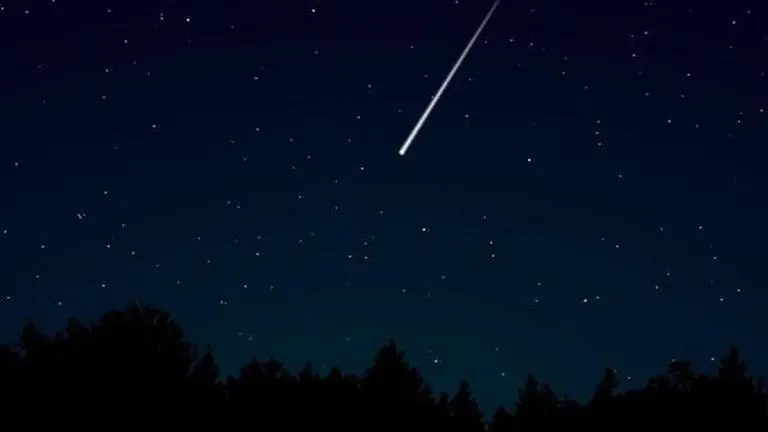
A dazzling fireball that flashed through the night sky on October 12 astonished locals on the southwest coast of Canada and the northwest coast of the United States.
As of Friday, the American Meteor Society website had received almost 200 eyewitness reports, Newsweek reported. Furthermore, numerous accounts have stated that the spectacular incident occurred on October 12 just after 10:15 pm (local time).
A Molalla, Oregon resident said, “I was watching TV inside and saw the streak out of the corner of my eye," and added, “It lasted long enough for me to turn and watch it before it exploded," Newsweek reported. While, a citizen in Seattle, Washington, commented, "Never seen anything like it." Additionally, the witness claimed to have heard the object emit a sound "like a sparkler" on the Fourth of July as it swiftly travelled the sky for only a few seconds.
Meteor video captured in US and Canada
In addition to this, several people who have security cameras or doorbell cameras in their houses recorded the incident on tape. They all depicted how the sky was pitch-black and silent just before the dazzling ball of light came out of nowhere. The object then makes a huge flash and then vanishes from view, leaving a small trail behind it. In two to three seconds, the entire event took place.
Advertisement
According to the Newsweek report, when a space rock hits the Earth's atmosphere at high speeds, such as tens of thousands of miles per hour, where it encounters air resistance, fireballs are formed. This causes the object to become so hot that it burns up frequently as it blazes across the sky.
How fireballs are formed?
According to Trevor Ireland, a professorial research fellow in the School of Earth and Environmental Sciences at Australia’s University of Queensland, fireballs as well as shooting stars are essentially the same objects, except that fireballs are deeper into the atmosphere. “Shooting stars are effectively the initial friction in the upper atmosphere as small objects the size of grains of sand are slowed down by the tenuous atmosphere,” he added. Further, Ireland noted that simple light trails that sweep the sky like this effectively come to an end when the grain burns out.
Advertisement
Furthermore, the expert said, “Larger objects—big grains of sand to pebbles—can survive the upper atmosphere, but still burn up.” He added that larger objects have the potential to reach the Earth further. “You see them closer and can sort of see them burning up. These are the fireballs," he explained.
Ireland also described that these bigger things occasionally force a shockwave in front of them, causing a sonic boom and the object's destruction. It is pertinent to mention that fireballs and shooting stars may appear to be uncommon events, but they are actually rather regular.
(Image: Pixabay/ Representative)
Published By : Anwesha Majumdar
Published On: 15 October 2022 at 15:55 IST