
Updated 27 December 2022 at 08:13 IST
Russia, ally Iran bypass Western sanction by establishing new 3,000km trade route
The first shipment was the Russian cargo consisting of wood laminate sheets in at least two 40-foot containers that weighed 41 tons.
- World News
- 2 min read

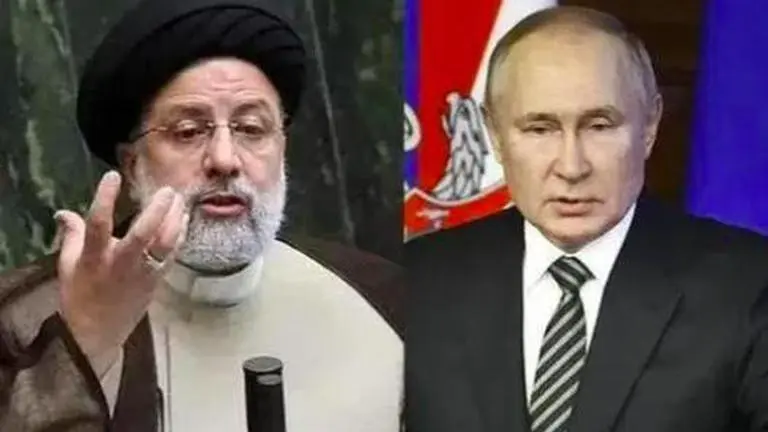
Russia and its ally Iran have been able to bypass the Western trade sanctions as the two countries began shipment of goods via the new transcontinental trade route the North-South Transport Corridor (INSTC) that connects Moscow with Asian and Persian markets. The cargo deliveries via the newly operational trade corridor across the Caspian Sea start from the Sea of Azov and Don River in Russia through the Caspian Sea port city of Astrakhan, connecting the Iranian hubs, and ultimately the Indian Ocean, according to the ship-tracking data compiled by the Bloomberg.
Iran and Russia have been rapidly expanding their supply chains via new emerging routes, with the first transfer of Russian goods tracing back to June, state-run Islamic Republic News Agency reported, citing Iran’s state-run shipping company. The first shipment was the Russian cargo consisting of wood laminate sheets in at least two 40-foot containers that weighed 41 tons. It departed St. Petersburg for the Caspian Sea port city of Astrakhan, Dariush Jamali, the director of a joint-owned Iranian-Russian terminal in Astrakhan had then stated. Tehran's geographical location has proven to be beneficial to bypass the sanction and transit of goods from Moscow to Asia via the trade corridor that solely runs through the Iranian territory. The route is dubbed the “logistical bridge” that connects Russia with Asia, and the Middle East.
To enter to markets of Iran, India, the Middle East and Africa
A trilateral deal was signed by Azerbaijan, Russia, and Iran to felicitate the development of the International North–South Transport Corridor (INSTC). Russian Deputy Prime Minister Alexander Novak, Iranian Roads and Urban Development Minister Rostam Ghasemi, and Azerbaijani Deputy Prime Minister Shahin Mustafayev signed the declaration during their first meeting in September. The three countries had agreed to conduct a thorough assessment and analysis of infrastructure and transport capabilities to ensure use the full potential use of the corridor.
In September, Russian President Vladimir Putin emphasized building the ship, rail, and road infrastructure along the INSTC trade route as it “will provide Russian companies with new opportunities to enter the markets of Iran, India, the Middle East and Africa, and will facilitate supplies from these countries in return.” “This is about establishing sanctions-proof supply chains all the way through,” an expert on sanctions and Russian foreign policy at the International Institute for Strategic Studies, Maria Shagina, had told Bloomberg.
Advertisement
Published By : Zaini Majeed
Published On: 27 December 2022 at 08:10 IST