
Pakistan Begs India to Bring Back Indus Waters Treaty Halted Since Gruesome Pahalgam Terror Attack
Pakistan has urged India to lift its suspension of the Indus Waters Treaty, citing a recent Court of Arbitration ruling favouring its stance on river usage. The verdict, Islamabad says, reinforces its rights as a downstream riparian and compels India to conform strictly to treaty provisions for hydropower projects.
- World News
- 2 min read

;'%3e%3cpath%20d='m8,15.99c4.41,0,7.99-3.58,7.99-7.99S12.41,0,8,0,0,3.59,0,8s3.58,7.99,7.99,7.99Z'%20style='stroke:%23fff;%20stroke-miterlimit:10;%20stroke-width:.02px;'/%3e%3cpath%20d='m3.08,3.37l3.82,5.11-3.84,4.15h.87l3.37-3.64,2.72,3.64h2.94l-4.04-5.39,3.58-3.87h-.86l-3.1,3.35-2.5-3.35h-2.94Zm1.27.64h1.35l5.97,7.99h-1.35l-5.97-7.99Z'%20style='fill:%23fff;'/%3e%3c/g%3e%3c/svg%3e)


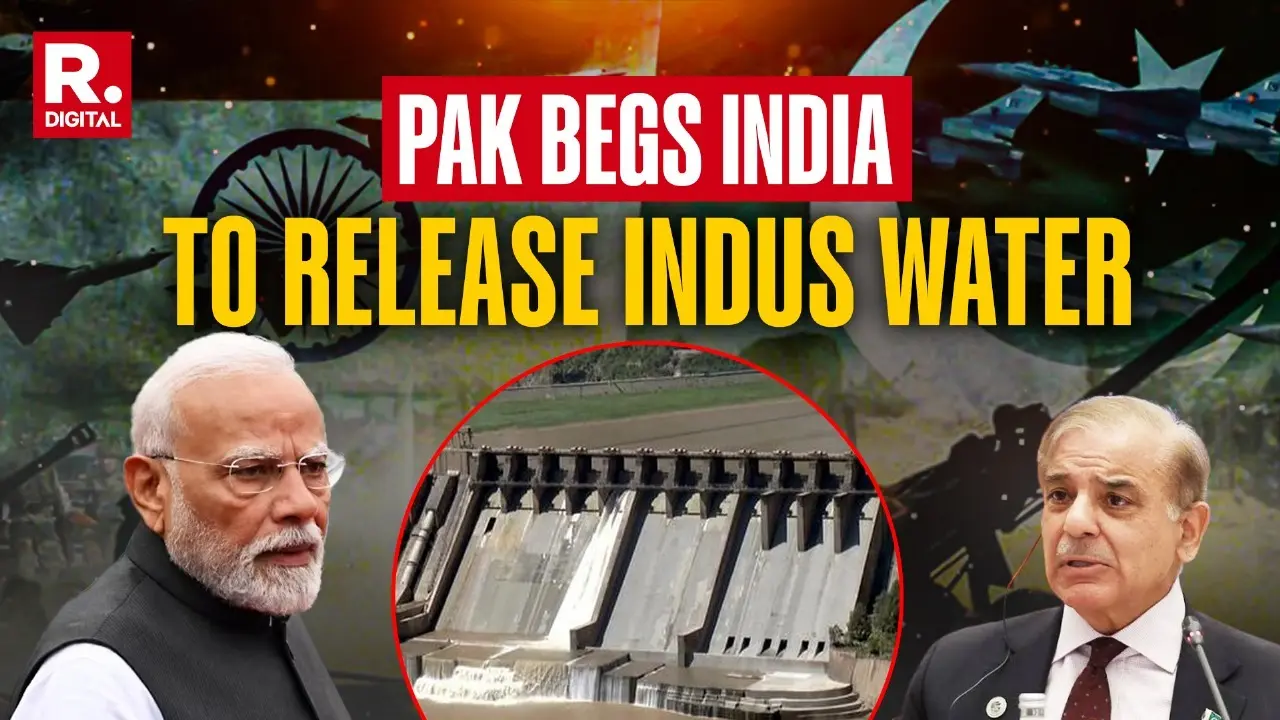
In a fresh diplomatic push, Pakistan on Monday urged India to immediately restore the Indus Waters Treaty (IWT), which New Delhi has kept in abeyance since May.
The appeal follows a landmark ruling by the Court of Arbitration on August 8, interpreting key provisions of the 1960 agreement in Islamabad’s favour.
The treaty, brokered by the World Bank, governs the distribution of waters from the Indus River system between the two nations. India suspended its participation in the pact’s mechanisms after the April 22 Pahalgam terror attack, which it blamed on Pakistan-based elements, as part of a series of punitive measures.
Court Ruling Strengthens Pakistan’s Position
In a statement, Pakistan’s Foreign Office welcomed the Award announced by the Court of Arbitration and publicised on its website on August 11.
“In a significant finding, the Court has declared that India shall ‘let flow’ the waters of the Western Rivers for Pakistan’s unrestricted use,” the statement read. The ruling also stipulated that exceptions for hydropower generation “must conform strictly to the requirements laid down in the Treaty, rather than to what India might consider an ‘ideal’ or ‘best practices’ approach.”
The court’s findings backed Pakistan’s interpretation on several contentious design issues, including low-level outlets, gated spillways, turbine intakes, and free-board, while limiting India’s ability to maximise pondage volume for run-of-river projects.
Legal Finality and Downstream Vulnerability
Crucially, the Court emphasised that its awards are “final and binding” on both India and Pakistan, and carry a “controlling legal effect” on future arbitration and neutral expert proceedings. Recognising Pakistan’s status as the downstream riparian, it said the treaty’s purpose was to “de-limit the two states’ respective rights and obligations” while promoting cooperation and effective dispute resolution.
Read More - Trump Extends Pause On Chinese Imports For Another 90 Days
Urgent Call to Reverse Suspension
The Foreign Office said the Award was especially significant in the wake of India’s decision to suspend the treaty and boycott arbitration proceedings. “Pakistan remains committed to full implementation of the Indus Waters Treaty,” it added. “It also expects India to immediately resume the normal functioning of the Treaty, and faithfully implement the Award announced by the Court of Arbitration.”
While India has historically rejected such arbitration over project designs, the latest verdict has given Islamabad renewed leverage, and a fresh opportunity to press New Delhi to return to the table.