
Updated 4 March 2022 at 12:12 IST
Nuclear power plant explosion: How explosion radiation is calculated? What is roentgen?
Zaporizhzhia nuclear power plant, one of the 10 largest NPPs in the world caught fire on Friday following continuous shelling by Russian troops.
- World News
- 3 min read

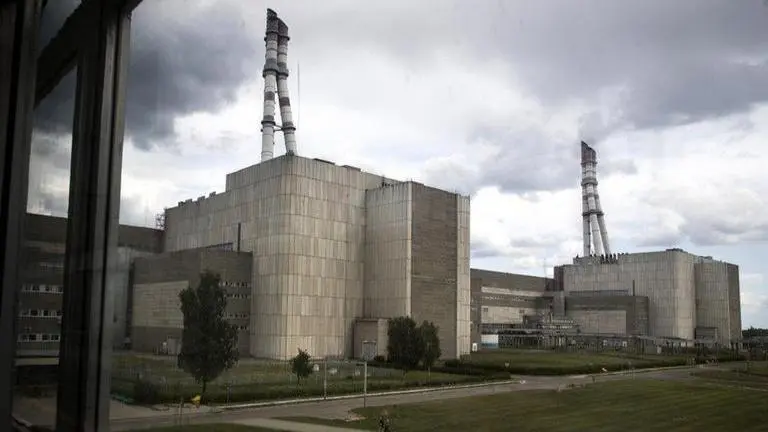
After heavy shelling occurred at Zaporizhzhia Nuclear Power Plant in southern Ukraine, the Ukrainian Foreign Minister has warned that if the nuclear plant explodes, the destruction caused would be ten times larger than Chernobyl. In the latest development, the Ministry of Internal Affairs of Ukraine informed that the fire in the training building of Zaporizhzhia NPP in Energodar was extinguished. There is no evidence of radiation leak.
How is radiation exposure measured?
According to the United States Nuclear Regulatory Commission (NRC), "exposure" refers to the amount of radiation, such as X-rays, gamma rays, neutrons, alpha and beta particles, present in the air. The instrument used to measure the exposure is Geiger counters and similar devices. The unit of measurement is roentgen.
It is imperative to note that a Geiger counter works by separating the electron from the gas atom and then creating an ion pair. The instrument consists of two main parts—a sealed tube, or chamber, filled with gas, and an information display. To find out the amount of radiation exposure, Geiger counter notes how much the gas it contains gets ionized by incoming particles of radiation and converts that information into an electronic signal.
All about roentgen
The roentgen or röntgen (in German) is a unit of measurement for the exposure of X-rays and gamma rays and is defined as the electric charge freed by radiation in a specified volume of air divided by the mass of that air. According to scientists, 1 R = 0.000258 coulombs per kilogram (Ckg-1) of air.
Advertisement
The human body does not absorb all the radiation it is exposed to. Only a small amount of radiation gets absorbed by tissues. This amount is measured in a scientific unit called “radiation absorbed dose (RAD)”. Notably, the RAD of Chernobyl was calculated to be 5.6 roentgens per second or 20,000 roentgen per hour in the worst affected areas of the plant.
Meanwhile, US authorities are continuing to monitor the situation. In the wee hours of Friday, two White House officials said their information shows "no indications of elevated levels of radiation" at the Zaporizhzhia nuclear power complex. In the aftermath, Ukrainian authorities have called for an immediate ceasefire by Russian troops. In the latest development, it was reported that US President Joe Biden has joined his Ukrainian counterpart Volodymyr Zelenskyy "in urging Russia to cease its military activities in the area and allow firefighters and emergency responders to access the site."
Advertisement
.@POTUS spoke with President Zelenskyy this evening to receive an update on the fire at the Zaporizhzhia Nuclear Power Plant.
— The White House (@WhiteHouse) March 4, 2022
Russian army is firing from all sides upon Zaporizhzhia NPP, the largest nuclear power plant in Europe. Fire has already broke out. If it blows up, it will be 10 times larger than Chornobyl! Russians must IMMEDIATELY cease the fire, allow firefighters, establish a security zone!
— Dmytro Kuleba (@DmytroKuleba) March 4, 2022
Image: AP
Published By : Riya Baibhawi
Published On: 4 March 2022 at 12:12 IST