
Following China's proposal for peace, Zelenskyy expresses desire to meet Xi Jinping
Ukrainian President Volodymyr Zelenskyy said on Friday he was planning to meet Chinese counterpart Xi Jinping after Beijing released a peace plan.
- World News
- 4 min read

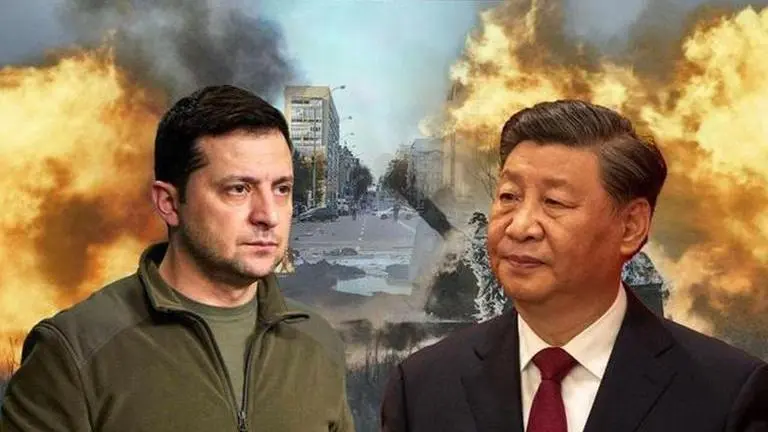
Ukrainian President Volodomyr Zelenskyy on Friday said he would like to hold a bilateral meeting with China's President Xi Jinping. The statement was made by Zelenskyy during a press conference on February 24 as Kyiv marked one year since Russia's invasion of Ukraine. "First of all, I plan to meet with Xi Jinping. And I believe that this will benefit our states and security in the world. We have a large trade with China," the Ukrainian premier said.
Zelenskyy stated that China respected territorial integrity and therefore should take steps to remove Russian forces from Ukrainian territory. He also emphasised the importance of protecting civilians and avoiding the occupation of nuclear plants during the conflict. "The issue is not only the war, the issue is that we are a state that is interested in preserving economic relations," he added.
He further stated that adherence to international law and the UN Charter was essential to achieving a peaceful resolution to the conflict and that China's support for those principles would signal its backing of Ukraine's proposed peace plan.
Zelenskyy also said he was doing his best to prevent Chinese arms supplies to Russia to avoid any risk of 'World War III'. "I really want to believe that China will not supply weapons to Russia. It is very important for me," Zelenskyy said.
Advertisement
Zelenskyy on China's proposed peace plan
Zelenskyy gave qualified support Friday for China's new pronouncements about the war in his country, saying Beijing's interest is “not bad" and might be useful in isolating Russia. “Our task is to gather everyone to isolate the one,” Zelenskyy told the news conference. “China has shown its thoughts. I believe that the fact that China started talking about Ukraine is not bad. But the question is what follows the words. The question is in the steps and where they will lead to.”
China called for a cease-fire and peace talks between Ukraine and Russia in a vaguely worded proposal released Friday that analysts said was unlikely to deliver results.
Advertisement
Zelenskyy said there were points in the Chinese proposals that he agreed with and “those that we don't.” “But it's something,” he added. He also said he was doing “everything possible” to prevent China from arming Russia.
“I really want to believe that China will not supply weapons to the Russian Federation.... It is Point No. 1,” Zelenskyy said. He added that he wanted “to believe that China will be on the side of the just world, which means — on our side.” Russia's Foreign Ministry also welcomed China's peace plan Friday and said it remains open to political and diplomatic efforts.
China's proposed peace plan
The plan released by China's Foreign Ministry mainly reiterated long-held positions, and analysts said Beijing would be an unlikely broker.
It calls for the “sovereignty, independence, and territorial integrity of all countries” to be respected, but does not say what will happen to the territory Russia has occupied since the invasion. It also calls for an end to “unilateral” sanctions on Russia, indirectly criticises the expansion of the NATO alliance, and condemns threats of nuclear force.
The 12-point paper also urges measures to prevent attacks on civilians and civilian facilities, keep nuclear facilities safe, establish humanitarian corridors for civilians, and ensure the export of grain. It called for an end to the “Cold War mentality” — China's standard term for what it regards as U.S. hegemony, and the maintenance of alliances such as NATO.
“Dialogue and negotiation are the only viable solution to the Ukraine crisis.” the proposal said. It offered no details on what form talks should take but said “China will continue to play a constructive role in this regard.”
The proposal comes as U.S.-China relations have hit a historic low over Taiwan, disputes over trade and technology, human rights, and China's aggressive actions in the South China Sea.
(with AP inputs)