
Strait Of Hormuz Crisis: Iran Warns 'Severe Punishment' As US Warships Begin Mine Clearing Operation Amid Peace Talks
Iran's IRGC threatened to punish US warships after the USS Frank E Peterson and USS Michael Murphy entered the Strait of Hormuz to clear sea mines, endangering fragile peace talks in Islamabad.
- World News
- 5 min read

;'%3e%3cpath%20d='m8,15.99c4.41,0,7.99-3.58,7.99-7.99S12.41,0,8,0,0,3.59,0,8s3.58,7.99,7.99,7.99Z'%20style='stroke:%23fff;%20stroke-miterlimit:10;%20stroke-width:.02px;'/%3e%3cpath%20d='m3.08,3.37l3.82,5.11-3.84,4.15h.87l3.37-3.64,2.72,3.64h2.94l-4.04-5.39,3.58-3.87h-.86l-3.1,3.35-2.5-3.35h-2.94Zm1.27.64h1.35l5.97,7.99h-1.35l-5.97-7.99Z'%20style='fill:%23fff;'/%3e%3c/g%3e%3c/svg%3e)


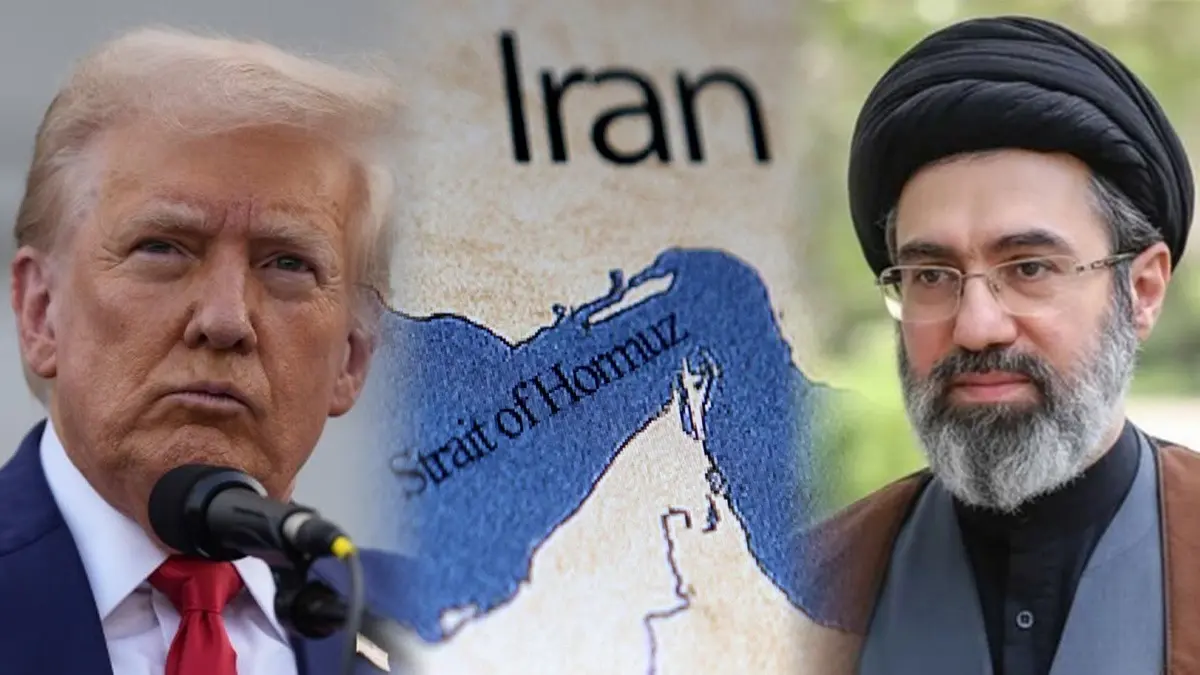
Tehran: Tension has further flared in the strategic Strait of Hormuz on Sunday as Iran's Revolutionary Guards threatened to severely punish any military vessels attempting to transit the waterway. The IRGC's warning was in response to the US Central Command's announcement that two US Navy warships had navigated the strait to clear mines allegedly laid by Tehran. The Iranian Navy Guards have issued a stern warning stating that any military vessel attempting to pass through the Strait would face severe consequences, stressing that the passage would only be granted to civilian vessels under specific conditions, according to state broadcaster IRIB.
Iran's warning is expected to escalate the tension again amid the ongoing talks between the US and Iran in Islamabad, aimed at reopening the vital shipping lane. The US Central Command (CENTCOM) had earlier announced that the USS Frank E Peterson and USS Michael Murphy had transited the Strait of Hormuz as part of efforts to clear mines laid by Iran's Islamic Revolutionary Guard Corps. The operation, claimed to establish a safe passage for commercial vessels, with additional US forces, including underwater drones, expected to join the effort.
US President Donald Trump hailed the move as a "favour" to countries reliant on the strait for oil trade, claiming Iran's military capabilities had been severely damaged. Admiral Brad Cooper, commander of CENTCOM, stated that the operation would share a safe pathway with the maritime industry soon.
Iran's Threats And US Response
In a clear message, Iran's Revolutionary Guards had warned of severe consequences for military vessels transiting the strait, with a 30-minute countdown issued to US warships. However, reports also suggested that the US had not received the warning. On the other hand, the Iranian government condemned the transit as a violation of a fragile ceasefire, threatening retaliation.
Advertisement
The Strait of Hormuz is a critical waterway, with around 20% of global oil shipments passing through. The recent conflict had effectively shut down the corridor, driving up energy market volatility.
US Begins Mine Clearance Mission In Strait Of Hormuz*
According to reports, the CENTCOM has launched a mine clearance mission in the Strait of Hormuz, a vital shipping route. Two US Navy destroyers, USS Frank E Peterson and USS Michael Murphy, have transited the strait as part of the operation.
Advertisement
The US military's mission is to reportedly ensure the strait is fully clear of sea mines laid by Iran's IRGC. Additional US forces, including underwater drones, will join the clearance effort in the coming days. Admiral Brad Cooper, commander of CENTCOM, stated that the operation will establish a new passage and share a safe pathway with the maritime industry soon to encourage the free flow of commerce.
Trump's Statement On Strait of Hormuz
US President Trump announced that the US has begun clearing mines in the Strait of Hormuz, claiming it's a favour to countries worldwide. He stated that Iran's mine-laying ships have been destroyed, with "all 28 of their mine dropper boats lying at the bottom of the sea".
Trump asserted that Iran's military capabilities have been heavily weakened, with its air and naval forces "gone," and its missiles and drones "largely obliterated." He attributed this success to the US military's efforts, stating they are "amazing" and have done a great job. The operation is to ensure free passage through the Strait of Hormuz, a vital shipping route.
What Iran Had Warned
Iran had previously warned a US military vessel that it would be attacked "within 30 minutes" if it crossed the Strait of Hormuz. The warning was issued after the US vessel attempted to pass through the strategic waterway, which Iran considers a vital part of its territory.
According to Iranian state television, the US vessel retreated after receiving the warning, citing a senior military official. The warning comes amid ongoing negotiations between the US and Iran, aimed at easing tensions and securing a ceasefire. The US has been trying to ensure safe passage through the strait, while Iran has been asserting its control over the waterway.
Strait Of Hormuz Remains Sticking Point
High-level talks between the US and Iran began in Islamabad on Saturday to ease tensions and secure a lasting ceasefire. The US delegation, led by Vice President JD Vance, includes special envoy Steve Witkoff and Jared Kushner, while Iran's team is headed by Parliament Speaker Mohammad Baqer Ghalibaf and Foreign Minister Abbas Araghchi. The Strait of Hormuz, a vital shipping route, remains a major point of contention.
The talks come after Iran blocked the strait as the conflict intensified, and its IRGC is now asking ships to pre-arrange tolls in cryptocurrency or Chinese yuan. Iran has declared that the strait "will never be the same again" and plans to charge tolls to rebuild damages caused by US-Israel strikes.
Amidst the ongoing peace talks, Iran's Speaker has outlined two main sticking points, including a ceasefire in Lebanon and the release of frozen assets. The US and Iranian teams are expected to discuss these issues, along with Iran's nuclear program and Israel's military action in Lebanon.
US-Iran Talks Amidst Tensions
The negotiations between the US and Iran are centred on an expanded American 15-point proposal and a 10-point Iranian counter-proposal. As per reports, key areas of contention included nuclear security, maritime security, and economic sanctions. Iran is seeking to impose fees on ships passing through the Strait of Hormuz, while the US is pushing for the strait to be reopened.
Iran's delegation has expressed "deep distrust" of the US, citing past attacks on its nuclear program. The US has warned that it won't be "receptive" if Iran tries to stall negotiations. Pakistani Prime Minister Shehbaz Sharif is mediating the talks, with global attention focused on Islamabad.
The US and Iran have held face-to-face talks, with the first phase of negotiations concluding on Saturday. The delegations are now exchanging written messages. Iran's top negotiator, Mohammad Baqer Ghalibaf, has stated that Tehran has "good intentions but no trust" in the US.