
Talks On, Who Will Lead Nepal Interim Govt? It's Ex-CJ Vs Former Electricity Board Head Vs Kathmandu Mayor
Gen Z leaders rally behind ex-CJ Sushila Karki, who is reported to have Mayor Balendra Shah's support too. Kulman Ghising emerges as the new frontrunner.
- World News
- 5 min read

New Delhi: After two days of unrest in Nepal that saw several deaths, arson, protests and the top politicians cornered, the political landscape is in a flux as the debate over the country’s next prime minister intensifies. The Gen Z, who have been leading the protests across the country, met Nepal President Ramchandra Paudel and Army Chief Ashok Raj Sigdel over the formation of an interim government.
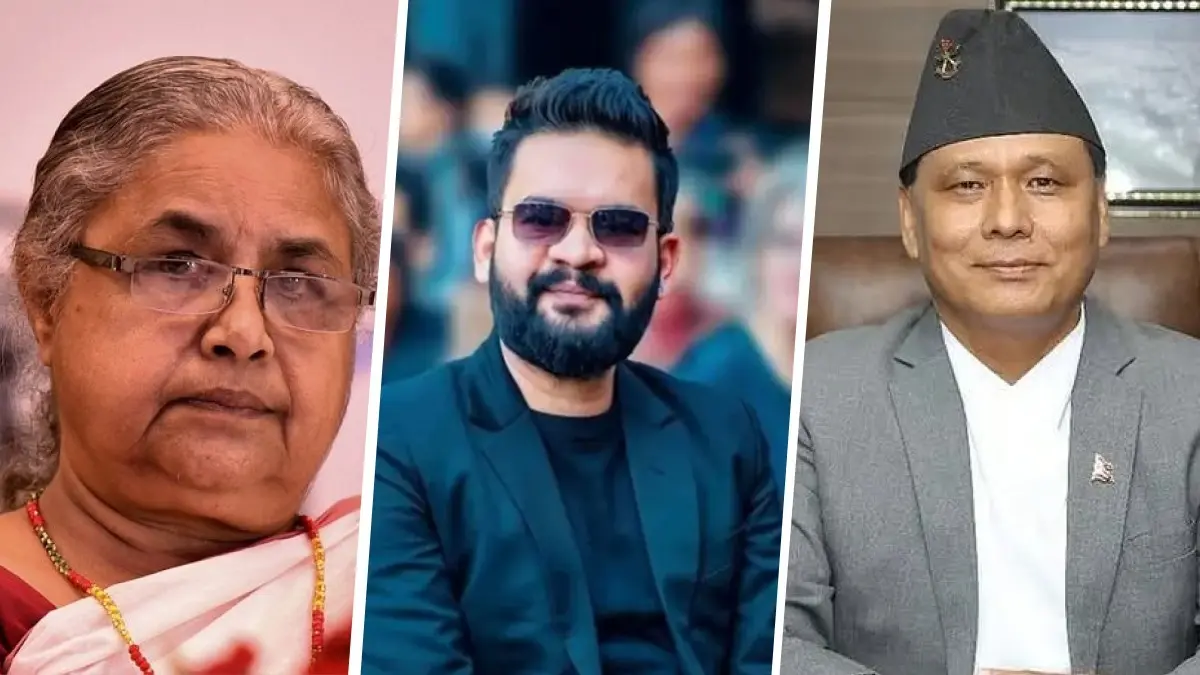
While Gen-Z leaders are backing former Chief Justice Sushila Karki, known for her firm anti-corruption stance, to head the interim government, 54-year-old Kulman Ghising, former managing director of the Nepal Electricity Authority, has also emerged as a strong candidate for the interim PM's post. Kathmandu Mayor Balendra Shah and Dharan Mayor Harka Sampang are also being considered for the interim leadership. Though sources say Shah has backed Karki’s candidacy, there is no consensus yet on who will head the new cabinet.
Purushottam Yadav, one of the Gen-Z leaders, supported Karki, reflecting trust in her leadership, highlighting the initial peaceful intent, and blaming the government for turning it into a revolution.
He said, "...We wanted it to be a peaceful protest, but we feel that the Government turned this into a revolution. The government should take full responsibility. We started the movement against corruption. Youth everywhere should rise against corruption. Only 3-4% of the people in Nepal hold all properties. All politicians are corrupt... We will investigate every corrupt leader, businessman and whoever is involved in corruption."
Advertisement
On the demand for an interim administration, Yadav said, "We fully support Sushila Karki."
Advertisement
Another leader, Ojaswi, underscored the decentralised, leaderless nature of Gen Z's push for change, focusing on building the nation without undermining the Constitution.
"We don't have leaders in Gen-Z. It was something that started overnight... We don't have leaders; we are all Gen-Z, and we are all leaders... Right now, we are trying to dissolve the Parliament... We are not trying to dissolve our Constitution or void our Constitution in any way. Maybe certain changes need to be made in the Constitution for now. But other than that, the Constitution will remain intact because the Constitution needs to be there... While we advance, we should make sure that we do not take any steps that are unlawful, illegal...," she added.
Ojaswi outlined the three key demands of the movement. "...Right now, we need an interim government, for which we have proposed the name of Sushila Karki... We want to choose her because she would help us build this nation... Second, dissolving the current Parliament. Third, maintaining law and order in the country..."
Sushila Karki
Sushila Karki made history as she became Nepal's first female Chief Justice, serving in the role from July 2016 to June 2017. Born on June 7, 1952, in Biratnagar, Karki is the eldest of seven children. She began her legal career in 1979 after completing her law education in Biratnagar. She became a Senior Advocate in 2007. Karki was appointed as an ad-hoc judge of the Supreme Court in January 2009 and became a permanent judge in 2010. Her tenure ended abruptly in 2017 after lawmakers filed an impeachment motion accusing her of bias and overreach following her decision to overturn a police chief appointment on seniority grounds. Although automatically suspended, the motion failed before her retirement in June 2017.
Balendra Shah
Balendra Shah, popularly known as Balen, is a youth leader and currently the Mayor of Kathmandu. A 34-year-old rapper and trained civil engineer, he stormed onto the political stage in 2022. He was the first Independent candidate to win the Kathmandu mayoral election in 2022, becoming the city's 15th mayor after defeating candidates from well-established political parties.He rose to fame in Nepal’s underground hip-hop scene before becoming a politician and is known for his anti-corruption stance and city reforms.
Kulman Ghising
Kulman Ghising, 54, former managing director of the Nepal Electricity Authority (NEA), has emerged as the leading choice to head Nepal’s interim government. Born on November 25, 1970, in rural Ramechhap, Ghising is celebrated for ending the country’s crippling power cuts. He is viewed as a clean and pragmatic technocrat whose apolitical image aligns with Gen Z protesters’ calls for a corruption-free administration. The KP Sharma Oli government had removed Ghising as executive director of the NEA on March 24, 2025, just four months before his tenure was set to end in August. His removal drew widespread criticism.
Situation Still Volatile
Meanwhile, 31 people have been killed and over 1,000 injured in clashes with security forces during the anti-corruption demonstrations across the country, according to local reports.
The protests began on September 8, 2025, in Kathmandu and other major cities, including Pokhara, Butwal and Birgunj, following the government's imposition of a ban on major social media platforms, citing concerns over tax revenue and cybersecurity.
Curfew was imposed in several cities, including Kathmandu, to control the situation, which will continue till Friday morning, as per a statement issued by the Nepalese Army.
Protesters have been demanding an end to "institutionalised corruption and favouritism" in governance. They want the government to be more accountable and transparent in its decision-making process.
Public frustration deepened further when the "Nepo Babies" trend on social media exposed the lavish lifestyles of politicians' children, highlighting the economic disparity between them and ordinary citizens. (With inputs from ANI)