
Tehran Hits Back At US Military Positions Following American Strikes On Iranian Missile Sites
Iran’s IRGC claimed strikes on US military sites after America bombed Iranian missile facilities over a cargo ship attack in Hormuz, with Tehran vowing an “unprecedented” response as a fragile ceasefire frays.
- World News
- 5 min read

;'%3e%3cpath%20d='m8,15.99c4.41,0,7.99-3.58,7.99-7.99S12.41,0,8,0,0,3.59,0,8s3.58,7.99,7.99,7.99Z'%20style='stroke:%23fff;%20stroke-miterlimit:10;%20stroke-width:.02px;'/%3e%3cpath%20d='m3.08,3.37l3.82,5.11-3.84,4.15h.87l3.37-3.64,2.72,3.64h2.94l-4.04-5.39,3.58-3.87h-.86l-3.1,3.35-2.5-3.35h-2.94Zm1.27.64h1.35l5.97,7.99h-1.35l-5.97-7.99Z'%20style='fill:%23fff;'/%3e%3c/g%3e%3c/svg%3e)


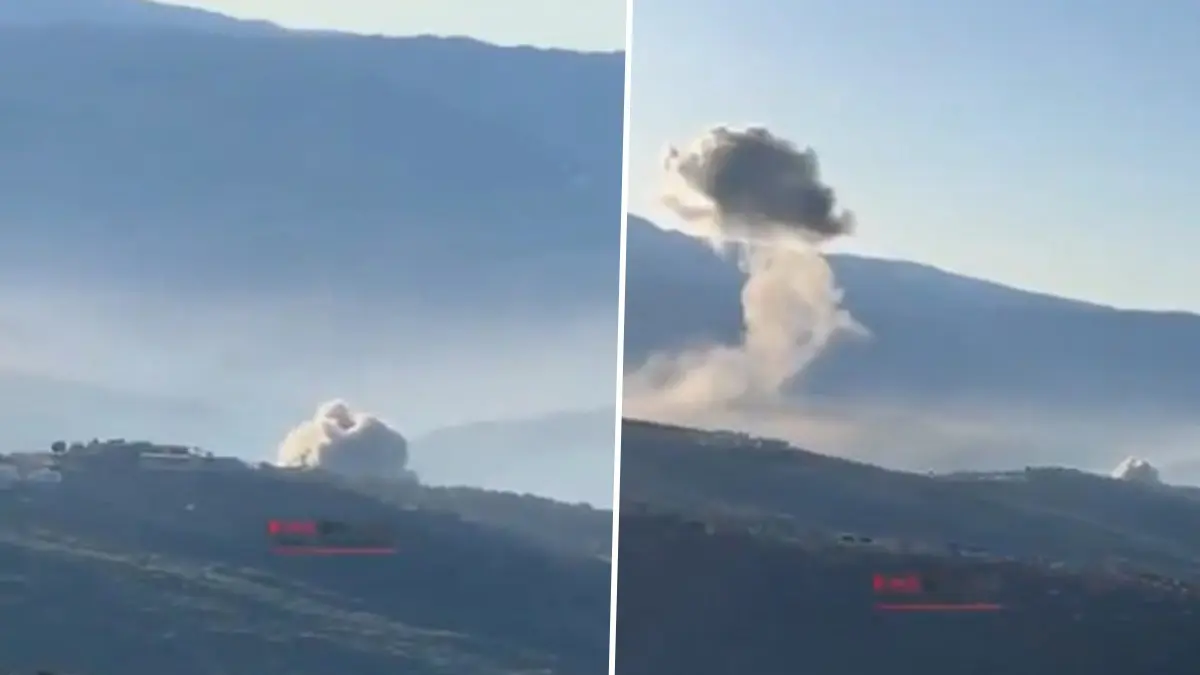
Tehran: Iran’s Islamic Revolutionary Guard Corps (IRGC) claimed on Saturday that it had targeted American military positions across the region, in retaliation for the fresh US strikes on Iranian missile and drone storage facilities and coastal radar sites. In a statement released through Iranian state media, the IRGC declared that the operation was a direct response to the latest American attack, though it did not identify which US installations were hit or offer further operational details.
Iran's reported attack targeting US military bases followed the strikes by the US forces against vital Iranian military establishments on Friday, accusing Tehran of attacking a commercial vessel in the Strait of Hormuz, according to a statement from US Central Command (CENTCOM). The Pentagon declared that the strikes hit missile and drone storage sites along with coastal radar installations. The strikes were Washington’s first direct military response since the two sides signed a fragile memorandum of understanding (MoU) in Switzerland.
Meanwhile, shortly after the US action, the official military spokesperson for Iran’s Khatam al-Anbiya Central Headquarters, Ibrahim al-Fiqar, said that Iran’s reply would be unprecedented. The Khatam al-Anbiya Central Headquarters serves as the operational command centre that coordinates the IRGC and the Iranian army. In a series of posts on X, Al Fiqar stated that Iran would select the appropriate time and place to respond to the strikes.
‘Our Response Will Shake The Earth To Its Core' Warns Tehran
“We affirm that this aggression will not go unanswered, and we will choose the appropriate time and place. We warn that any further act of folly will be met with a harsh response that will shatter the illusions of the aggressors in the region. No retreat… Our response will shake the earth to its core, and will erase your military presence as if it never existed,” Al Fiqar wrote.
Advertisement
He added, “When the three numbers match tonight, the flow will cease and the silence will become a storm. There will be nothing to say, only what will be seen. No summons and no options.. This is an unprecedented night, in which gunpowder will write the final line in your illusions. The response to the US attack will be swift and decisive.”
The renewed escalation erupted after Washington launched strikes against Iran, accusing Tehran of targeting a commercial cargo ship in the Strait of Hormuz. Shortly afterwards, the IRGC confirmed that it had responded by striking US military zones in the region. Reuters reported that the attacks on US sites came after the IRGC warned Washington that the earlier strikes would not go unanswered and that Tehran would provide a decisive answer. However, details about the specific military positions struck have yet to emerge.
Advertisement
Trump Hinted At Action Minutes Before Strikes Began
Earlier, the US military action came just minutes after President Donald Trump signalled that Washington was preparing to respond to Iran’s alleged actions. When asked by reporters whether the United States would retaliate, Trump replied, “You’ll find out.” US Central Command later termed the operation as “a powerful response to yesterday’s attack on a commercial ship that was transiting the Strait of Hormuz…..The unwarranted aggression against commercial shipping by Iranian forces clearly violated the ceasefire.”
According to reports, the US strikes in the area of the Strait of Hormuz on Friday marked the first such operation since Washington and Tehran signed a MoU. The MoU established a temporary ceasefire framework under which Iran agreed to keep the Strait of Hormuz open to commercial shipping without transit charges for 60 days, while the US agreed to lift its naval blockade and begin a 60-day period of nuclear talks.
The US strikes followed an incident a day earlier in which Iran’s IRGC allegedly fired at the Singapore-flagged cargo ship ‘Ever Lovely’ while it transited the Strait of Hormuz. The British maritime security agency UKMTO confirmed that the vessel was hit on its starboard side by a projectile about 7.5 nautical miles southeast of Oman’s port of Dahit. The UKMTO also confirmed that the projectile struck the vessel’s bridge, causing damage but no crew injuries. The incident occurred hours after Iran’s paramilitary navy warned ships against using transit routes through the strait without Tehran’s authorisation.
Tehran Condemns ‘Interventionist’ Gulf Statement On Transit Fees
The latest military exchange erupted amid a deepening dispute over control of the Strait of Hormuz, with Tehran insisting the strategic waterway should remain under regional oversight following last week’s memorandum with the US. After Thursday’s attack on the ‘M/V Ever Lovely’, Iran warned Gulf states against siding with Washington as maritime security tensions grew. Trump blamed Tehran for the drone strike, saying it breached the ceasefire understanding between the two sides.
Iran also criticised a joint statement issued by the US and 6 Gulf states rejecting the assertion that it could impose tolls on vessels using the Strait of Hormuz. Tehran called the statement “interventionist, irresponsible and provocative". Iranian Deputy Foreign Minister Kazem Gharibabadi wrote on X, saying, “Safe passage through the Strait of Hormuz cannot be guaranteed under ambiguous arrangements, parallel routes or decision-making that does not take Iran’s role as a coastal state into account.”
US, Israel, Lebanon Framework Of Agreement
Bloomberg News reported that Oman had informed allies that ships passing through the Strait of Hormuz may eventually have to pay transit fees. Iranian state television also said that the IRGC had warned off 3 foreign tankers attempting an “unauthorised passage” through the strait. The report did not name the vessels or give further details.
Even as tensions rose in the Gulf, a separate diplomatic breakthrough emerged elsewhere in the region. Israel and Lebanon signed a US-brokered framework agreement aimed at ending hostilities between Israel and the Iran-backed Hezbollah group. The deal envisaged Hezbollah’s eventual disarmament and a phased Israeli withdrawal from parts of southern Lebanon, though questions remain over how those provisions will be carried out. Hezbollah has already rejected the agreement and said it will not cooperate.
Further details regarding the fresh escalation in the Strait of Hormuz are awaited.