
'They Want To Talk': Trump Claims Iran Reached Out For Negotiations, Hints At Possible Dialogue Amidst Escalating Middle East Tensions
President Donald Trump says Iran wants fresh talks after US strikes killed Ayatollah Ali Khamenei, as he weighs negotiations, unrest, casualties and oil impact.
- World News
- 6 min read

;'%3e%3cpath%20d='m8,15.99c4.41,0,7.99-3.58,7.99-7.99S12.41,0,8,0,0,3.59,0,8s3.58,7.99,7.99,7.99Z'%20style='stroke:%23fff;%20stroke-miterlimit:10;%20stroke-width:.02px;'/%3e%3cpath%20d='m3.08,3.37l3.82,5.11-3.84,4.15h.87l3.37-3.64,2.72,3.64h2.94l-4.04-5.39,3.58-3.87h-.86l-3.1,3.35-2.5-3.35h-2.94Zm1.27.64h1.35l5.97,7.99h-1.35l-5.97-7.99Z'%20style='fill:%23fff;'/%3e%3c/g%3e%3c/svg%3e)


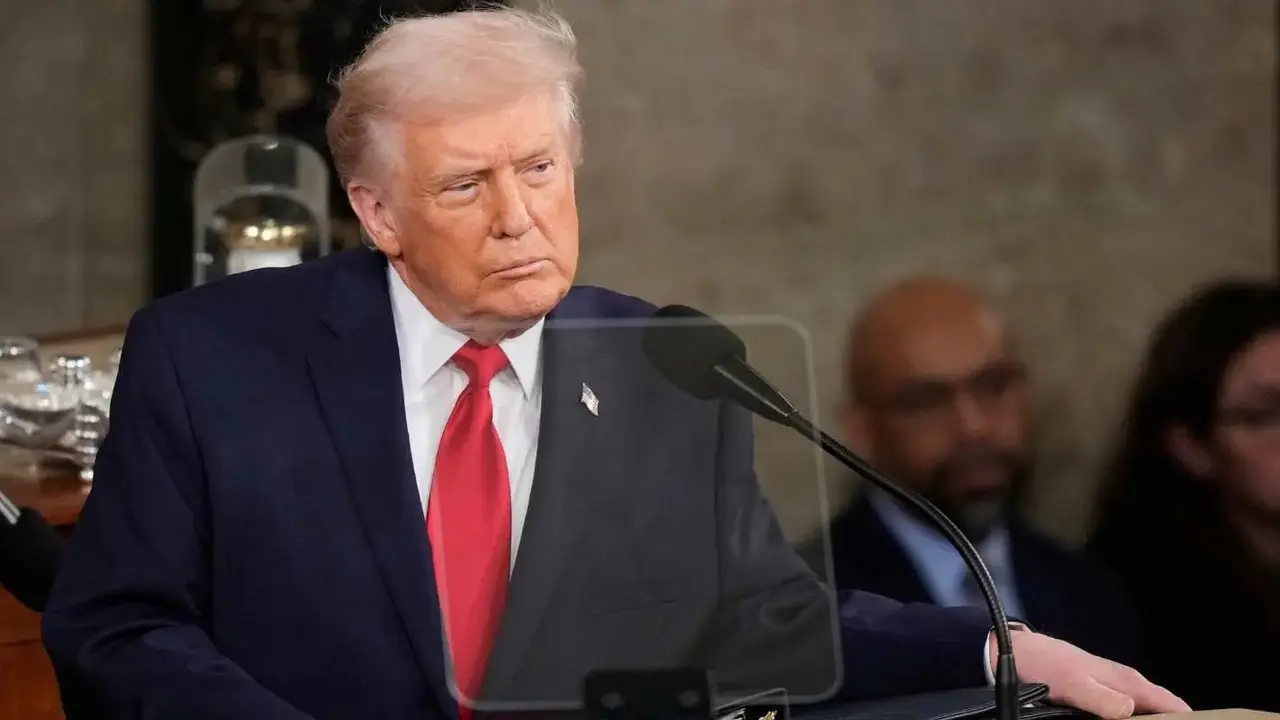
New Delhi: A day after US strikes killed Iran's Supreme Leader Ayatollah Ali Khamenei and heightened the regional crisis, US President Donald Trump announced he is getting ready to hold new talks with Iran's leadership amid rising tensions in the Israel-Iran-US conflict.
In a phone call with The Atlantic on Sunday morning, Trump confirmed that ways to communicate with Tehran are reopening.
Iran Wants To Talk, Trump Agrees
“They want to talk, and I have agreed to talk, so I will be talking to them.” Trump said the Iranian side had delayed negotiations unnecessarily.
“They should have done it sooner. They should have given what was very practical and easy to do sooner. They waited too long.”
Advertisement
When asked whether the talks would happen immediately, Trump said, “I can’t tell you that.”
He also noted that several Iranian officials previously involved in negotiations were no longer alive following the strikes.
Advertisement
“Most of those people are gone. Some of the people we were dealing with are gone, because that was a big, that was a big hit,” he said. “They should have done it sooner, Michael. They could have made a deal. They should’ve done it sooner. They played too cute.”
Call For Uprising, Uncertain On Military Support
A day earlier, in a video message posted on social media, Trump urged Iranians to rise against the current regime after the bombing campaign concludes.
“Now you have a president who is giving you what you want. So let’s see how you respond,” he said. “Now is the time to seize control of your destiny and to unleash the prosperous and glorious future that is close within your reach.”
However, when asked whether the United States would continue military support if a popular uprising takes time to succeed, Trump did not give a direct answer.
“I have to look at the situation at the time it happens, Michael. You can’t give an answer to that question,” he said.
He expressed confidence that internal unrest would grow, pointing to reports of celebrations in parts of Iran and gatherings of expatriate Iranians in cities such as New York and Los Angeles.
“That is going to happen. You are seeing that, and I think it’s gonna happen. A lot of people are extremely happy over there and in Los Angeles and in many other places,” he said.
At the same time, large anti-war protests have also taken place in several cities, some close to pro-regime-change demonstrations.
Trump acknowledged the dangers on the ground. “Knowing it’s very dangerous, knowing I’ve told everybody to stay in place, I think it’s a very dangerous place right now,” he said. “The people over there are shouting in the streets with happiness, but at the same time, there are a lot of bombs coming down.”
Casualties, Security Concerns And Economy
US military officials later confirmed that three American service members were killed in the operation and five others were seriously wounded, the first known US casualties of the campaign.
For years, US intelligence agencies have tracked and disrupted alleged Iranian assassination plots targeting American officials, including Trump, inside the United States. Asked whether there were renewed threats to the US homeland since the start of the latest strikes, Trump declined to provide details.
“I don’t want to tell you that,” he said.
Trump also said he does not believe the military action will hurt Republican efforts ahead of the upcoming midterm elections. He insisted the economy remains strong.
“We have the greatest economy we’ve ever had,” he said. “The word isn’t out because people like you don’t write about it properly. But the economy is ready to go through the roof. And it already is in many cases.”
On oil prices, Trump argued that markets may not react as sharply as some analysts fear. “This could have been a huge price increase with respect to oil, if things went wrong,” he said.
Before ending the conversation, he defended his decision to launch strikes on Iran again.
“So we’ll see what happens,” he said. “People have wanted to do it for 47 years. They’ve killed people for 47 years, and now it’s reversed on them.”
WHY US AND ISRAEL ATTACKED IRAN?
The United States said it carried out strikes on Iran after accusing Tehran of running an “unending campaign of bloodshed and mass murder targeting the United States.”
According to President Donald Trump, Iran has turned down every chance to abandon its nuclear program. Additionally, he asserted that Iran was producing long-range missiles that might endanger US troops abroad, Europe, and maybe “soon reach the American homeland.”
Trump made reference to other events, such as the 1979 takeover of the US embassy in Tehran, which resulted in the 444-day hostage-taking of dozens of Americans, and the 1983 bombing of a US Marine barracks in Beirut by organizations supported by Iran, which claimed 241 lives. He had also pledged to take action in January if Iranian security forces suppressed demonstrations related to the nation's economic problems.
The United States destroyed three Iranian nuclear sites in June of last year. Trump said that Iran's nuclear program had been "obliterated" by Operation Midnight Hammer. The 12-day battle between Iran and Israel came to an end as a result of the strikes. Iran fired hundreds of rockets and drones at Israel in retaliation after Israel attacked Iranian military, nuclear, and infrastructure facilities during that battle.
Iran has long been considered Israel's greatest threat. Benjamin Netanyahu, the prime minister, has stated time and time again that Iran should not be let to acquire nuclear weapons. Israel initiated direct attacks on Iran last summer following the overthrow of Bashar al-Assad's regime in Syria, a crucial supporter of Iran, and after Israel undermined the Iran-backed Hezbollah organization in Lebanon.
Although Israel halted its earlier campaign after the US strikes on Iran’s nuclear installations, many analysts believed Netanyahu could resume military action if a chance arose. Some others think the rekindled battle could improve his standing at home, especially with elections in October.
Netanyahu reiterated that Iran's Islamic dictatorship must not be let to acquire nuclear weapons in a video address outlining the most recent strikes. The Israeli military also connected the operations to the October 7, 2023, Hamas attacks on Sunday. A military spokesperson said Israel “will not forget” the Iran-backed assault, adding: “We will continue to pursue Israel’s enemies, from the architects of the attack to the terrorists who took part in the massacre.”