
UK researchers discover over 30 potential new species at ocean's bottom using robots
In what can be considered to be a breakthrough scientific development, over 30 potentially new species have been discovered by UK scientists at ocean's bottom.
- World News
- 3 min read

;'%3e%3cpath%20d='m8,15.99c4.41,0,7.99-3.58,7.99-7.99S12.41,0,8,0,0,3.59,0,8s3.58,7.99,7.99,7.99Z'%20style='stroke:%23fff;%20stroke-miterlimit:10;%20stroke-width:.02px;'/%3e%3cpath%20d='m3.08,3.37l3.82,5.11-3.84,4.15h.87l3.37-3.64,2.72,3.64h2.94l-4.04-5.39,3.58-3.87h-.86l-3.1,3.35-2.5-3.35h-2.94Zm1.27.64h1.35l5.97,7.99h-1.35l-5.97-7.99Z'%20style='fill:%23fff;'/%3e%3c/g%3e%3c/svg%3e)


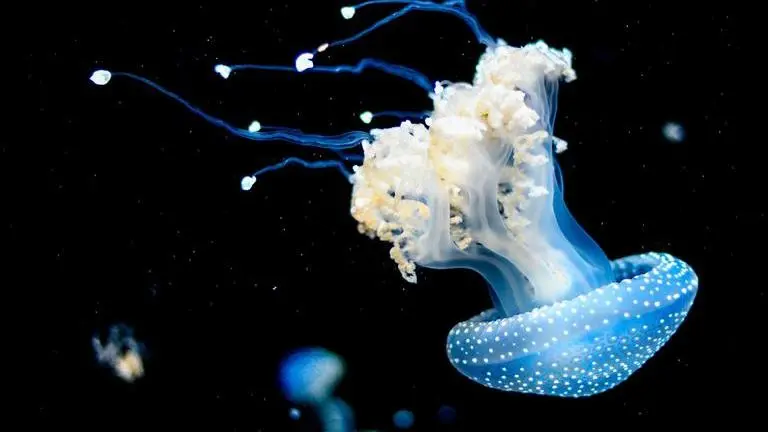
In what can be considered to be a breakthrough scientific development, over 30 potentially new species have been discovered by scientists at the ocean's bottom. According to The Guardian report, scientists from the United Kingdom's Natural History Museum collected specimens from the central Pacific's abyssal plains of the Clarion-Clipperton Zone. Further, the researchers collected them by using a remotely operated vehicle (ROV), The Guardian reported. Notably, the creatures from this region were previously studied only from photographs.
The undescribed animals, according to scientists at the Natural History Museum, are just a portion of the unidentified species from the deep water that researchers are trying to comprehend, the Independent reported.
New species in Sea in the UK
36 specimens were discovered in depths of over 4,800 metres, two were collected at 4,125 metres on a seamount slope, and 17 were discovered at depths of between 3,095 and 3,562 metres. In addition to this, larger organisms in the abyss have a high species variety, according to the study, which was published in the journal Zookeys, The Guardian reported.
It is worth mentioning that 48 of the 55 retrieved specimens belonged to distinct species. Segmented worms, invertebrates from the same family as centipedes, marine creatures from the same family as jellyfish, and several varieties of coral are among the discovered creatures.
Advertisement
The discoveries may have significant ramifications for deep-sea mining as people become more interested in mining for minerals from the seabed and it appears that this activity may disrupt a variety of organisms, The Guardian reported.
Although it is well known that microscopic organisms (macrofauna) in the abyss are incredibly biodiverse, less is known about bigger animals (megafauna), and the results suggest that this group may also be incredibly diverse, as per the Independent report.
Advertisement
Experts talk about new species in Sea
Dr. Guadalupe Bribiesca-Contreras of the Natural History Museum, who is the study's primary author, stated, “This research is important not only due to the number of potentially new species discovered, but because these megafauna specimens have previously only been studied from seabed images." Bribiesca-Contreras further noted, "Without the specimens and the DNA data they hold, we cannot properly identify the animals and understand how many different species there are”, The Guardian reported.
According to the report from the Independent, along with microscopic organisms adhering to the hard substrate or anchored to the silt, the crew also found sea anemones, geese barnacles, sea lilies, sea sponges, and an enormous glass sponge. The gummy squirrel, Psychropotes longicauda, is one of the recently found deep water animals.
Besides this, Dr. Adrian Glover, who leads the UK's Natural History Museum’s deep-sea research group, highlighted, “This study is the first to suggest that diversity may be very high in these groups (megafauna) as well,” The Guardian reported.
(Image: Unsplash/ representative Image)