
Japan, Australia Reject Trump’s Call For Strait Of Hormuz Escort Mission, Sanae Takaichi Says ‘No Plans’
US President Donald Trump has warned that NATO faces a 'very bad' future if US allies fail to assist in opening up the critical oil route Strait of Hormuz.
- World News
- 2 min read

;'%3e%3cpath%20d='m8,15.99c4.41,0,7.99-3.58,7.99-7.99S12.41,0,8,0,0,3.59,0,8s3.58,7.99,7.99,7.99Z'%20style='stroke:%23fff;%20stroke-miterlimit:10;%20stroke-width:.02px;'/%3e%3cpath%20d='m3.08,3.37l3.82,5.11-3.84,4.15h.87l3.37-3.64,2.72,3.64h2.94l-4.04-5.39,3.58-3.87h-.86l-3.1,3.35-2.5-3.35h-2.94Zm1.27.64h1.35l5.97,7.99h-1.35l-5.97-7.99Z'%20style='fill:%23fff;'/%3e%3c/g%3e%3c/svg%3e)


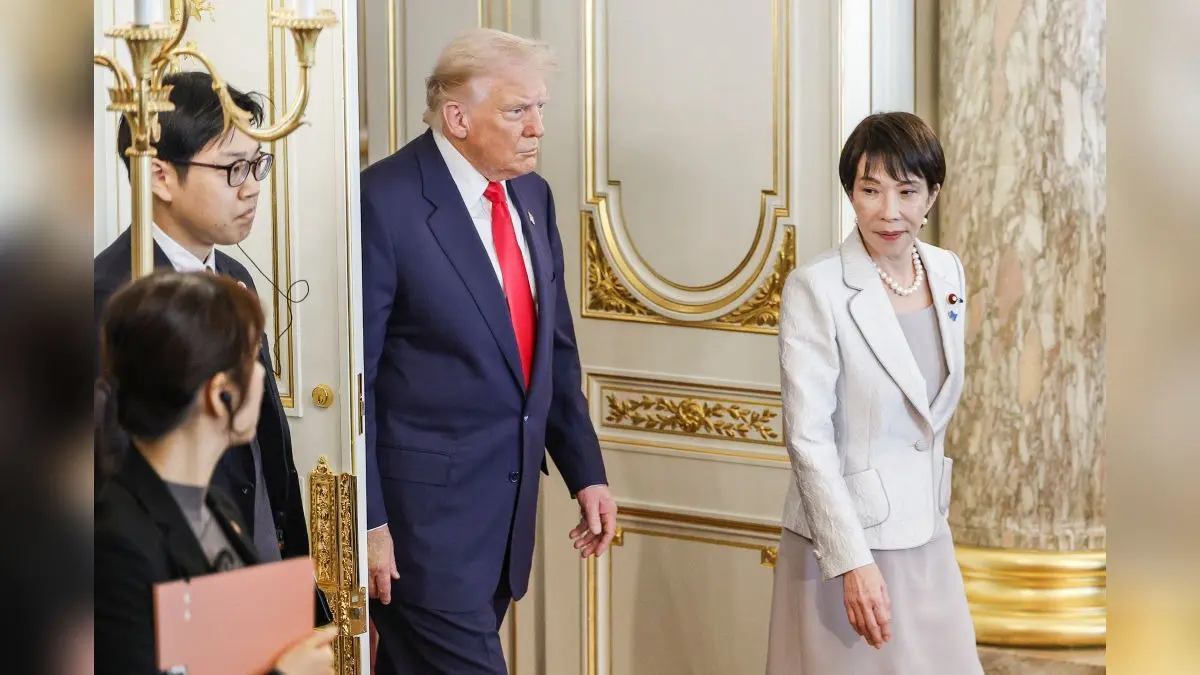
After US President Donald Trump called on NATO allies to protect tankers traversing through the Strait of Hormuz, Japanese Prime Minister Sanae Takaichi on Monday said that it has no plan to dispatch naval vessels to escort vessels in the Middle East.
"We have not made any decisions whatsoever about dispatching escort ships. We are continuing to examine what Japan can do independently and what can be done within the legal framework," Takaichi told parliament.
Another NATO ally Australia also rejected Trump's appeal and informed it will not send naval ships to assist in reopening the Strait of Hormuz.
"We won't be sending a ship to the Strait of Hormuz. We know how incredibly important that is, but that's not something that we've been asked or that we're contributing to," Catherine King, a member of Prime Minister Anthony Albanese's cabinet, said in an interview with state broadcaster ABC.
Australia has already provided aircraft to assist with the defence of the United Arab Emirates after a request from the country.
Trump's call in a social media post for U.S. allies, including Japan, to help protect oil and gas shipments through the strategic waterway puts Tokyo in a difficult position because while it relies heavily on Middle East energy its war-renouncing constitution limits the scope of overseas military operations it can conduct.
Advertisement
Around a fifth of global oil and liquefied natural gas normally passes through the Strait of Hormuz, that has been effectively shut for weeks since the U.S.-Israeli war against Iran began on February 28.
Japan's Maritime Self-Defense Force has conducted anti-piracy operations in waters near the Middle East, but those missions were policing operations rather than combat missions against state actors. Japan can deploy its military overseas to respond to what it determines to be an existential threat to the nation, but that would be politically difficult and a high legal threshold for Takaichi's government to justify.
Advertisement
Takaichi will travel to Washington this week for talks with Trump that she said will cover the conflict with Iran.
"I would like to engage in solid discussions based on Japan’s views and position regarding the need for early de-escalation," she told lawmakers.