
US enters Afghanistan on this day in 2001: Tracing America's 'longest war'
On this day in 2001, US-led coalition started its mission in Taliban-controlled Afghanistan with the backing of the UK military and staritng its 20-yr-old war.
- World News
- 4 min read

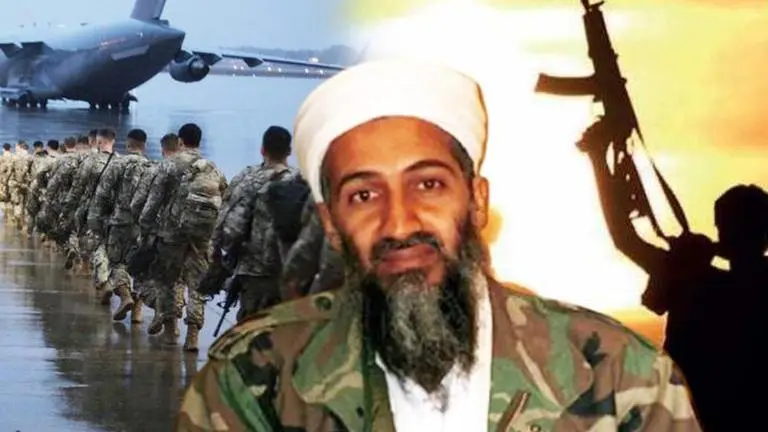
On this day in 2001, the US-led coalition started its mission in Taliban-controlled Afghanistan with the backing of the UK military which also marked the onset of what would be called 'America's longest war.' On October 7, 2001, the American troops started a bombing campaign against the Taliban forces, officially launching ‘Operation Enduring Freedom’ which went on to cement the US presence in the South Asian country for several years.
The 20-year-old presence of the US and its allied forces in Afghanistan finally ended on August 31, 2021, after the peace deal was reached in Doha between the Taliban and the US under America’s former President Donald Trump’s administration. Additionally, Canada, Australia, Germany, and France also pledged full support to the US mission in 2001.
Why did the US enter Afghanistan?
Devastated with the al-Qaeda attack on the World Trade Center in New York and the Pentagon in Washington on September 11, 2001, then US President George W. Bush September 18, 2001, signed a joint resolution into law. Bush’s this move authorised the US on 9/11. His administration cited this resolution as a legal rationale for all its measures to tackle terrorism.
How did the operation start in 2001?
As per the timeline mentioned on the official website of the Council on Foreign Relations (CFR), the early phase of the US war in Afghanistan included the US airstrikes on al-Qaeda and the Taliban forces. These air combats directed by the US were assisted by a partnership of around 1,000 US special forces, the Northern Alliance and ethnic Pashtun anti-Taliban forces.
Advertisement
At least 12 days after the US started its airstrikes, the first wave of conventional ground forces arrive in the country with a majority of ground combat involving the Taliban and the Afghan opponents. In the aftereffects of the US mission launched on October 7, 2001, eventually, the Taliban regime fell to the western forces.
How did the Taliban fall?
CFR has stated in its official timeline that the Taliban regime unravelled rapidly after it lost at Mazar-e-Sharif on November 9, 2001, to the forces loyal to an ethnic Uzbekistan’s military leader, Abdul Rashid Dostum. In the week that followed, the extremist group began losing its strongholds due to the offensives of the coalition and the Northern alliance.
Advertisement
On November 14, 20001, the United Nations (UN) Security Council passed a resolution calling for a “central role” for the UN in the establishment of a transitional administration and invited member states to send peacekeeping forces to promote stability and aid delivery in Afghanistan.
Gradually, with the aggression of the foreign forces the end of the Taliban is tied to December 9, 2001, when the group surrender Kandahar and its leader Mullah Omar fled the city. However, despite the Taliban’s fall, al-Qaeda leaders were still present in the mountains.
When was Osama bin Laden killed?
After Bush decided to reconstruct the country, assisted the formation of the government and took other responsibilities, the years that followed 2001 included American forces combatting a terror round the clock in the foreign nation. However, its main mission of taking out the al-Qaeda leader Osama bin laden who is also considered the mastermind of the 9/11 attacks was killed on May 2, 2011. He was killed by the US forces in Pakistan marking the death of the primary target of the US for a war that started in 2001.
In 2011, then US President Barack Obama’s administration government had sought to hand over the nation's security and leave Afghanistan. However, the US presence in Afghanistan finally ended this year under the administration of US President Joe Biden. The efforts by the US government had produced an army that modelled the image of American troops but with an Afghan institution that was supposed to outlast the US war.