
US and China should cooperate on supply chains, monetary policies, says ex-IMF official
China and the US should work together on a range of issues including stabilizing global supply chains and coordinating their monetary policies.
- World News
- 2 min read

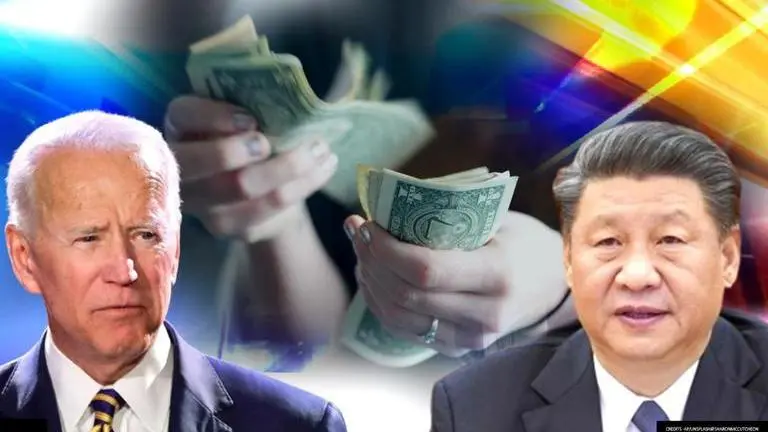
China and the US should work together on a range of issues including stabilising global supply chains and coordinating their monetary policies, a former International Monetary Fund (IMF) official said on March 19. Zhu Min, who previously served as Deputy Managing Director of the IMF from 2011 to 2015, further stated that rising geopolitical tensions threaten to hurt global economic growth and financial stability. The remarks came as Min addressed crowds at China Development Forum, hosted annually by the Chinese Communist Party (CCP).
The US and China have been trading barbs on a multitude of matters including the coronavirus pandemic, unrest in Hong Kong and Taiwan, Beijing’s regional domination amongst others. As per the US government data, the mutual trade between both countries amounted to 124,648.5 million in exports and $435,449.0 in imports. While the COVID-19 health disaster has left the global economy struggling for survival, Min pointed out that a “better cooperation” between the two could stabilise supply chains, situate economic growth and ensure financial stability.
Cooperation on global trade
Additionally, he also said that it was very important for the two sides to work closely on monetary policy. Speaking further, he said that they should coordinate if any further stimulus package is planned “since inflation is coming back faster and stronger than expected”. Concluding his speech, he also called for cooperation in other areas-namely global trade, governance issues and the digital economy.
This comes as the first high-level session of talks between the US and China that witnessed a fiery start in Alaska, concluded on Friday with national security adviser Jake Sullivan describing the meeting as 'tough and direct'. On the other hand, State Secretary Antony Blinken stated that the talks made the Chinese 'defensive'. "We certainly know and knew going in that there are a number of areas where we are fundamentally at odds, including China's actions in Xinjiang, with regard to Hong Kong, Tibet, increasingly Taiwan, as well as actions it is taking in cyberspace," Blinken told reporters after the last session wrapped on Friday.