
Marco Rubio Signals Approaching End to Iran War, Questions Future of NATO Ties Ahead of Trump's Address to the Nation
US Secretary of State Marco Rubio also indicated that indirect communications are underway between Washington and Tehran, raising the possibility of a direct meeting. The Secretary of State emphasized that no external support for Iran has hindered U.S. objectives.
- World News
- 3 min read

;'%3e%3cpath%20d='m8,15.99c4.41,0,7.99-3.58,7.99-7.99S12.41,0,8,0,0,3.59,0,8s3.58,7.99,7.99,7.99Z'%20style='stroke:%23fff;%20stroke-miterlimit:10;%20stroke-width:.02px;'/%3e%3cpath%20d='m3.08,3.37l3.82,5.11-3.84,4.15h.87l3.37-3.64,2.72,3.64h2.94l-4.04-5.39,3.58-3.87h-.86l-3.1,3.35-2.5-3.35h-2.94Zm1.27.64h1.35l5.97,7.99h-1.35l-5.97-7.99Z'%20style='fill:%23fff;'/%3e%3c/g%3e%3c/svg%3e)


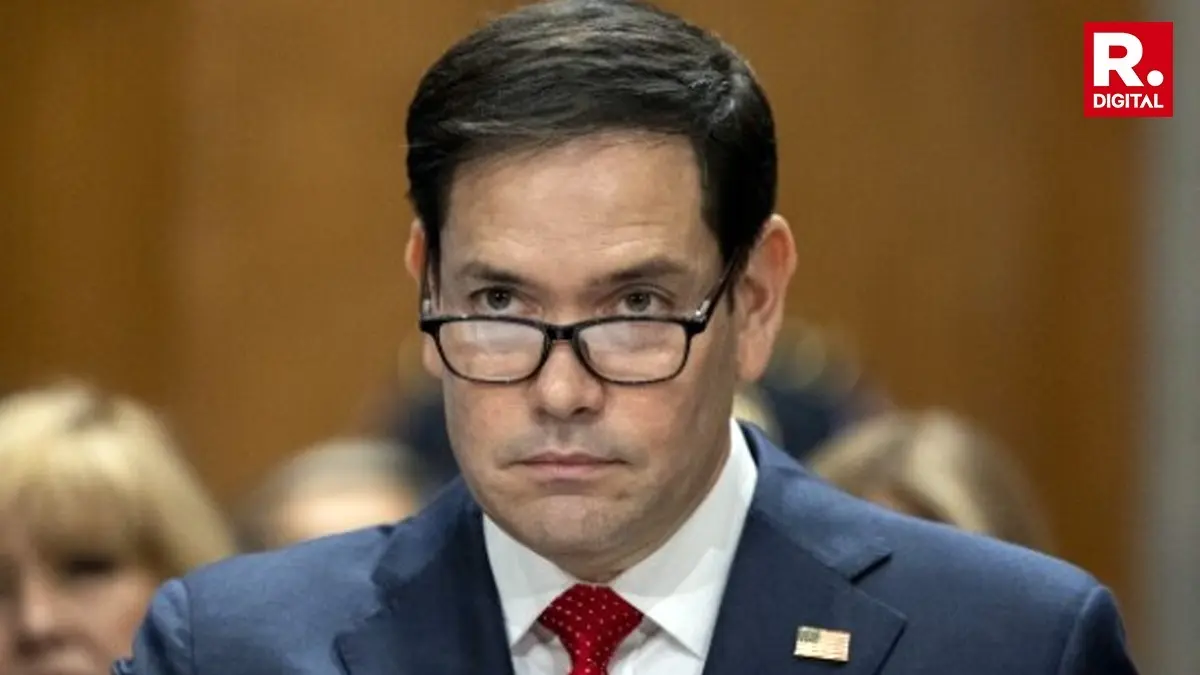
Washington, D.C: U.S. Secretary of State Marco Rubio said on Tuesday Washington could see the "finish line" in the Iran war, currently in its fifth week, and the U.S. will have to reexamine ties with NATO after the conflict.
"We can see the finish line. It's not today, it's not tomorrow, but it is coming," Rubio told Fox News Channel's "Hannity" on Tuesday.
The conflict erupted on February 28 when U.S. and Israeli forces launched strikes on Iranian targets, prompting Tehran to retaliate with attacks on Israel and Gulf states hosting U.S. bases. Joint operations, including strikes in Iran and Lebanon, have resulted in thousands of deaths and millions displaced, while driving up global oil prices and unsettling financial markets.
Rubio indicated that indirect communications are underway between Washington and Tehran, raising the possibility of a direct meeting.
Advertisement
"There are messages being exchanged, there are talks going on. There is the potential for direct meeting at some point," he said.
President Donald Trump, whose administration has articulated evolving goals, from curbing Iran's nuclear ambitions and missile capabilities to diminishing its regional influence, stated Tuesday that U.S. military actions against Iran could wrap up in two to three weeks.
Advertisement
The Secretary of State emphasized that no external support for Iran has hindered U.S. objectives.
"There's nothing any government is doing, or any country in the world is doing now to help Iran that is in any way impeding our mission," Rubio added.
He also pointed to strains within the NATO alliance, suggesting a post-conflict review is likely. European leaders have declined direct military involvement in operations against Iran, with some reportedly denying U.S. requests for basing rights or overflight permissions.
"Ultimately, that's a decision for the president to make, and he'll have to make it," Rubio said.
"But I do think, unfortunately, we are going to have to reexamine whether or not this alliance that has served this country well for a while is still serving that purpose, or has it now become a one-way street where America is simply in a position to defend Europe, but when we need the help of our allies, they're going to deny us basing rights, and they're going to deny us overflight," he said.
The remarks come amid ongoing U.S.-Israeli efforts focused on degrading Iran's air defenses, navy, missile production, and launch capabilities, with officials claiming progress is ahead of schedule and achievable without ground troops.
Global markets have reacted to signals of potential de-escalation, though the humanitarian toll and economic ripple effects, particularly on energy supplies, continue to draw international concern. No immediate ceasefire has been announced, but both sides appear to be weighing next steps as the conflict enters a critical phase.