
Alabama To Introduce First Nitrogen Gas Execution, Know How Will It Work
Kenneth Eugene Smith, who survived a previous execution attempt in 2022 will now face death by nitrogen hypoxia.
- World News
- 3 min read

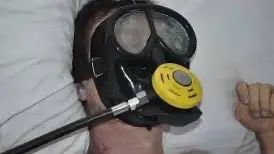
Scheduled for Thursday, Jan 18 Kenneth Eugene Smith, who survived a previous execution attempt in 2022 will now face death by nitrogen hypoxia. If executed, it marks the first change in execution method since the introduction of lethal injection in 1982. While the state asserts that nitrogen gas will induce rapid unconsciousness, critics liken the unused execution method to human experimentation.
What is nitrogen hypoxia and how does it work?
Execution by nitrogen hypoxia involves causing death by compelling the inmate to breathe pure nitrogen, thereby depriving them of the necessary oxygen to sustain bodily functions.
Why Nitrogen Hypoxia?
In response to the growing difficulty in obtaining drugs for lethal injections, the use of nitrogen hypoxia as an execution method is being explored.
Although no state has executed a death sentence through nitrogen hypoxia, Alabama in 2018 followed Oklahoma and Mississippi in authorising its use. This signifies a notable shift in execution protocols raising ethical concerns and positioning nitrogen hypoxia as a potential alternative to the traditional lethal injection method.
Advertisement
How will it work on the inmates?
Nitrogen, constituting 78% of the air humans breathe is a colourless, odourless gas. When appropriately mixed with oxygen, it poses no harm during inhalation. The premise of nitrogen hypoxia is altering the air composition to 100% nitrogen, inducing unconsciousness in Smith and ultimately leading to death due to oxygen deprivation. Information on nitrogen-induced fatalities is primarily documented in medical literature through industrial mishaps such as nitrogen leaks causing worker fatalities and suicide attempts.
Nitrogen hypoxia procedure details
Once strapped to the gurney, Smith will have a "NIOSH-approved Type-C full facepiece supplied air respirator" placed over his face.
Advertisement
The warden, after reading the death warrant will activate the "nitrogen hypoxia system" from another room.
The administration of nitrogen gas will last for at least 15 minutes or "five minutes following a flatline indication on the EKG, whichever is longer," according to the state protocol.
Specific details about the storage and testing of the gas system are heavily redacted in the state's document.
The Alabama attorney general's office assured a federal judge that nitrogen gas will induce unconsciousness within seconds and cause death within minutes.
Who is the inmate, Kenneth Eugene Smith?
Smith, convicted in 1988 for the murder-for-hire of a preacher's wife was paid $1,000 to kill Elizabeth Sennett on behalf of her indebted husband.
Alabama's 2022 attempt to execute him by lethal injection was halted due to difficulty in establishing intravenous lines. Strapped to the gurney for almost four hours, Smith awaited the uncertain outcome of the execution.
Legal challenges involved in Smith's execution
The fate of the execution's continuation will reach the U.S. Supreme Court. The 11th U.S. Circuit Court of Appeals is reviewing Smith's request to halt the execution, and after their ruling either party can appeal.
Smith contends that the state's proposed procedures breach the ban on cruel and unusual punishment and violate his due process rights.
He also argues that scheduling the execution with pending appeals and the use of a face mask interfere with his ability to pray. In a separate case, Smith asserts that a second execution attempt violates the constitutional ban on cruel and unusual punishment, prompting his legal team to seek a stay from the U.S. Supreme Court.