
Updated 3 February 2022 at 16:38 IST
Expert: Palin v. NYT could change free press
After being delayed a week because of her positive COVID test, Sarah Palin's libel case against the New York Times is set to start on Thursday.
- World News
- 3 min read

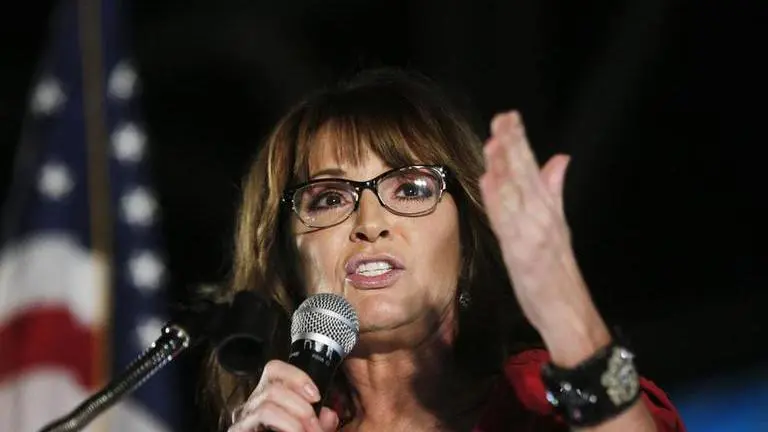
After being delayed a week because of her positive COVID test, Sarah Palin's libel case against the New York Times is set to start on Thursday.
Palin claims the Times damaged her reputation with an opinion piece penned by its editorial board that falsely asserted her political rhetoric helped incite the 2011 shooting of then-Arizona U.S. Rep. Gabby Giffords.
The newspaper has conceded the initial wording of the editorial was flawed, but not in an intentional or reckless way that made it libelous.
Doug Mirell, a first amendment lawyer and historian, said it is very unusual for a case like Palin's to make it to trial.
Advertisement
"In a case involving defamation claims by a public figure, the media ought to feel very confident because the standard established by the New York Times vs Sullivan case from 1964 is an extraordinarily high bar. But in many of these cases, there is a threshold issue which also arises, which is was what was published false in the first place, but in this case, the Times has effectively conceded by issuance of its correction," said Mirell.
Mirell said that if Palin case is appealed and eventually makes it the U.S. Supreme Court, it could change media freedom in the U.S.
Advertisement
"The Palin vs. New York Times case does run the risk that our conception of what a free press is and what it should be allowed to do and what sorts of mistakes are permissible," said Mirell.
Palin sued the Times in 2017, citing the editorial about gun control published after Louisiana U.S. Rep. Steve Scalise, also a Republican, was wounded when a man with a history of anti-GOP activity opened fire on a Congressional baseball team practice in Washington.
In the editorial, the Times wrote that, before the 2011 mass shooting that severely wounded Giffords and killed six others, Palin's political action committee circulated a map of electoral districts that put Giffords and 19 other Democrats under stylized crosshairs.
In a correction two days later, The Times said the editorial had "incorrectly stated that a link existed between political rhetoric and the 2011 shooting" and that it had "incorrectly described" the map.
The disputed wording had been added to the editorial by James Bennet, then the editorial page editor. At trial, a jury would have to decide whether he acted with "actual malice," meaning that he knew what he wrote was false, or with "reckless disregard" for the truth.
In pretrial testimony, Bennet cited deadline pressures as he explained that he did not personally research the information about Palin's political action committee before approving the editorial's publication.
He said he believed the editorial was accurate when it was published.
IMAGE: AP
Published By : Associated Press Television News
Published On: 3 February 2022 at 16:38 IST